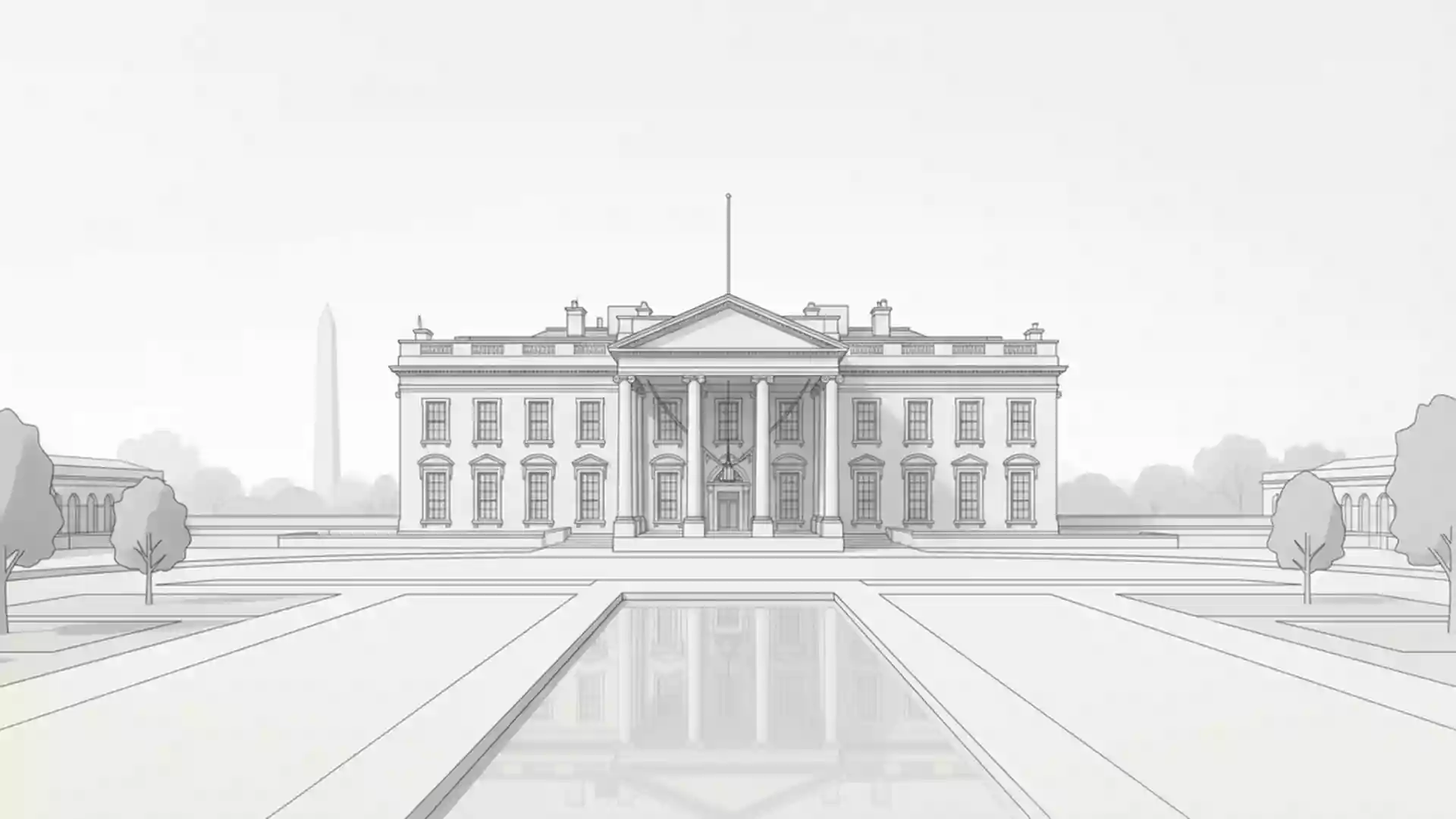
White House, a sandstone presidency on Pennsylvania Avenue
Published on 09/11/2026 at 19:44 | Editorial responsibility: Rafael Müller, Editor-in-Chief AD HOC NEWS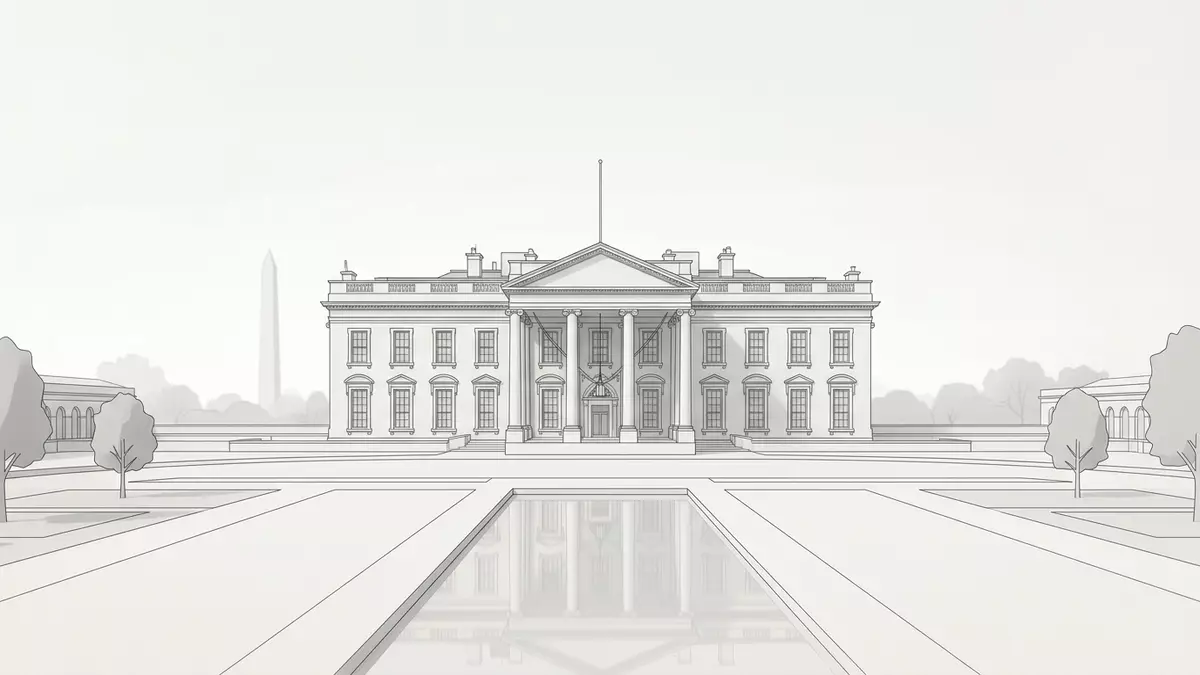
White House on Pennsylvania Avenue in Washington, D.C. is both an official residence and a working office, wrapped in pale sandstone and classical detail that have framed United States presidencies since 1800.
A neoclassical mansion built for a new capital
The story of White House begins in the 1790s, when a site was selected in the fledgling capital of Washington along Pennsylvania Avenue and a public competition was launched for a presidential residence. Irish-born architect James Hoban submitted a neoclassical design drawing on Georgian and Palladian traditions, and his scheme was chosen as the basis for the new executive mansion.Irish-born architect James Hoban Construction began in 1792 and continued throughout the decade as masons and labourers raised sandstone walls and carved classical ornament for the facades.Construction began in 1792
By November 1800 the house was sufficiently complete for President John Adams to move in, although interior work and detailing carried on into the early nineteenth century.John Adams became the first resident in 1800 The building was clad in Aquia Creek sandstone, a pale stone quarried in Virginia and painted white, giving rise to the name that later became official.Aquia Creek sandstone painted white Set at 1600 Pennsylvania Avenue NW, it formed one of the earliest major public structures in the District of Columbia and established a formal, axial presence opposite the open expanse of Lafayette Square.1600 Pennsylvania Avenue NW
Fire, rebuilding and expanding the presidential complex
The sandstone shell of White House has endured wars, fires and structural reconstructions, while its internal layout and flanking wings have altered with presidential needs. During the War of 1812 British forces set fire to the building, gutting the interiors but leaving the outer stonework standing; James Hoban was once again entrusted with overseeing the reconstruction work in the years after the conflict.Rebuilding after the War of 1812 fire In the 1820s, porticoes were added to the north and south, bringing columned entrances that strengthened the building’s classical composition and created formal approaches from both sides.North and south porticoes in the 1820s
The twentieth century saw White House evolve into a larger complex with dedicated office wings. In 1902 Theodore Roosevelt commissioned major alterations that relocated the president’s working spaces from the main residence to a new structure on the west side, the building that became known as the West Wing.Creation of the West Wing in 1902 Later administrations oversaw additions and adjustments, including an enlarged West Wing with the first Oval Office and a mid twentieth-century internal reconstruction under President Harry S. Truman, when the unstable interiors were removed and rebuilt behind the preserved sandstone facades.Truman-era internal reconstruction
Architecture, setting and what visitors see from outside
White House is a rectangular mansion in a neoclassical and Palladian idiom, with symmetrical elevations, columned porticoes and evenly spaced windows defining its principal facades.Georgian mansion in the Palladian style The north side faces Pennsylvania Avenue and the expanse of the northern lawn, while the south side opens towards a broader garden and the long view down to the Ellipse and the National Mall. Railings, lawns, and ornamental planting shape the immediate grounds, setting the pale stone structure against greenery and distant monuments.
Over time the name White House, once a colloquial reference to its colour, became the formal title of the building. Various earlier labels such as “President’s House” and “Executive Mansion” were superseded when Theodore Roosevelt adopted the current name in the early twentieth century and used it on official documents.Theodore Roosevelt formalised the name White House For travellers, its form and address—1600 Pennsylvania Avenue NW—have entered everyday language as shorthand for the presidency, even when experienced only from outside the railings along the avenue.The 1600 Pennsylvania Avenue address
Visiting White House: what travellers from Western Europe should know
- White House stands at 1600 Pennsylvania Avenue NW in the north-west quadrant of Washington, D.C., reached on foot from surrounding streets and nearby Metro stations.
- Approaching the building from Pennsylvania Avenue involves passing security barriers and railings, with level pavements and broad open areas around the northern side.
- The grounds around White House sit within the wider parkland of President’s Park, with views towards Lafayette Square to the north and the Ellipse and monuments further south.
- The official language in Washington, D.C. is English and the currency is the United States dollar.
- Entry requirements depend on your nationality; UK travellers can check the FCDO travel advice at gov.uk/foreign-travel-advice, Irish travellers the Department of Foreign Affairs at ireland.ie.
Searching for White House on social platforms
These links open searches for White House on each platform.
Frequently asked questions about White House
Where is White House in Washington, D.C.?
White House stands at 1600 Pennsylvania Avenue NW in the north-west quadrant of Washington, D.C., as part of President’s Park near Lafayette Square.
What do visitors usually see of White House?
Most visitors experience White House from outside the railings along Pennsylvania Avenue or the southern parkland, viewing its neoclassical sandstone facades and surrounding lawns and gardens.
What makes White House distinctive among government buildings?
White House combines an eighteenth-century neoclassical mansion by James Hoban with later wings and porticoes, forming a presidential complex where sandstone facades enclose repeatedly rebuilt interiors.