
Westminster Abbey and the Gothic heart of British ceremony
Published on 09/18/2026 at 15:23 | Editorial responsibility: Rafael Müller, Editor-in-Chief AD HOC NEWS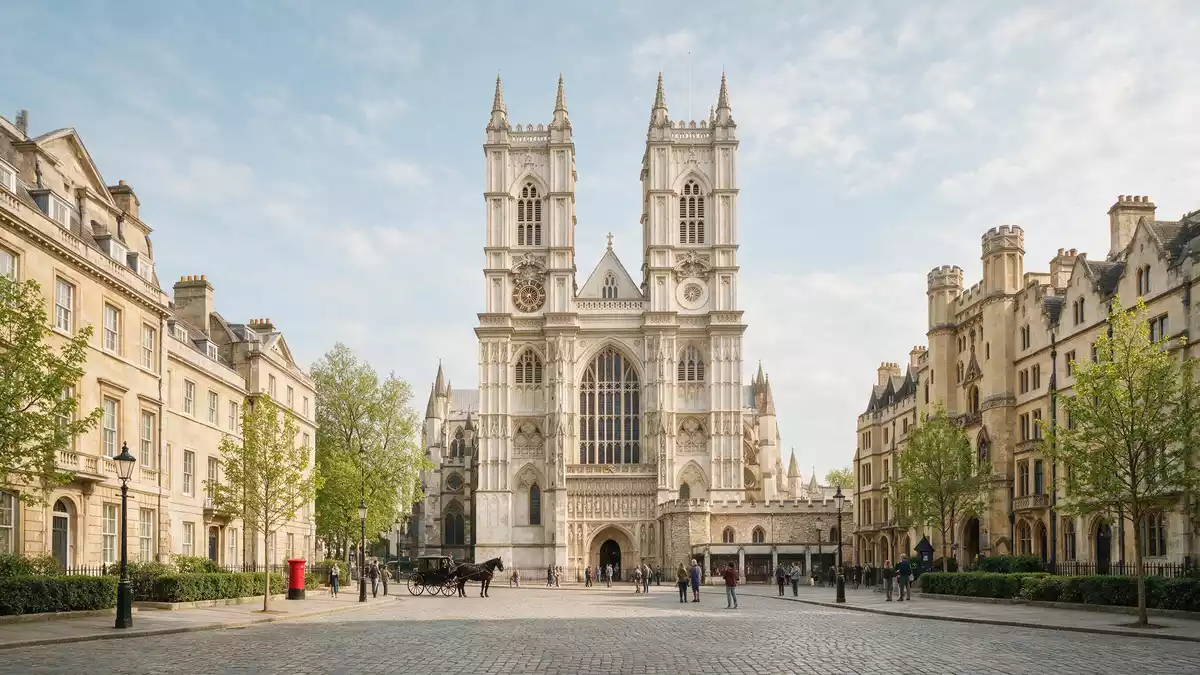
Westminster Abbey is a great medieval church in central London, built in the Gothic style and embedded in more than a thousand years of English and British history. It stands beside the Houses of Parliament, and for centuries it has been the setting for royal coronations, burials and national ceremonies.
A Gothic church shaped in the thirteenth century
The origins of Westminster Abbey lie in a Benedictine monastery established on Thorney Island on the Thames in the tenth century, when a community of monks formed a religious house here.Benedictine monastery In the eleventh century, King Edward the Confessor rebuilt the existing church on a far grander scale as his royal burial church, and this Norman abbey was consecrated in 1065 shortly before his death.Edward the Confessor’s church
The building seen today dates largely from the reign of King Henry III in the thirteenth century, when the Norman church was rebuilt in the new Gothic style then prominent in Europe.Henry III’s rebuilding The main fabric is an example of Early English Gothic, later complemented by Perpendicular Gothic elements such as the western front and Henry VII’s chapel, creating a layered architectural record of medieval England.Early English and Perpendicular Gothic
Architecture in stone, glass and vertical lines
Westminster Abbey’s plan follows the traditional Latin cross form, with a long nave, north and south transepts, and a choir and sanctuary flanked by chapels. The nave is divided into bays by clustered stone piers, and above them rise pointed arches and tall windows that emphasise the building’s vertical lines.nave and transepts Outside, tiers of flying buttresses brace the high walls and roof, a characteristic Gothic solution to the challenge of supporting tall stone vaults.
The materials and details add further character. Much of the facing stone was quarried at Reigate in Surrey, giving the exterior its pale colour and texture.Reigate stone facings Inside, the choir and sanctuary show intricate stone carving, medieval stained glass and later memorials. The Henry VII Lady Chapel at the eastern end is known for its elaborate fan vaulting, where multiple ribs spread out across the ceiling like decorative tracery in stone.Henry VII’s chapel fan vaulting
Ceremony, monarchy and memory
Westminster Abbey holds a distinctive place in British public life as the coronation church of English and later British monarchs. Every coronation since William the Conqueror in 1066 has taken place here, with the monarch anointed and crowned within the church.coronation church since 1066 Over time the Abbey has also hosted royal weddings and funerals, embedding many major state occasions within its walls.
The interior is crowded with tombs and memorials. Kings and queens from the medieval and early modern periods are buried here, alongside writers, scientists, politicians and other public figures commemorated in stone or brass.monarchs and memorials In the sixteenth century the former monastery was dissolved, and in 1560 the church was refounded as the Collegiate Church of Saint Peter at Westminster, a “Royal Peculiar” directly subject to the reigning monarch rather than to a bishop.Royal Peculiar status
Visiting Westminster Abbey: what travellers from Western Europe should know
- Westminster Abbey stands beside the Palace of Westminster and Parliament Square in the Westminster district of central London, near the River Thames.
- The interior rises through multiple levels of stone vaulting, and certain areas are reached by staircases that can be narrow and steep.
- The official language is English and the currency is the pound sterling.
Searching for Westminster Abbey on social platforms
These links open searches for Westminster Abbey on each platform.Frequently asked questions about Westminster Abbey
Where is Westminster Abbey located?
Westminster Abbey is in the Westminster district of central London, beside the Palace of Westminster and close to Parliament Square.
What can visitors expect inside Westminster Abbey?
Visitors encounter a large Gothic church with a high vaulted nave, chapels, royal tombs and memorials, all set within a richly carved and historic interior.
What makes Westminster Abbey distinctive among London churches?
Westminster Abbey combines medieval Gothic architecture with its role as the coronation church and as a major burial and memorial place for monarchs and notable figures.


