
Westminster Abbey and the Gothic heart of British ceremony
Published on 09/16/2026 at 19:05 | Editorial responsibility: Rafael Müller, Editor-in-Chief AD HOC NEWS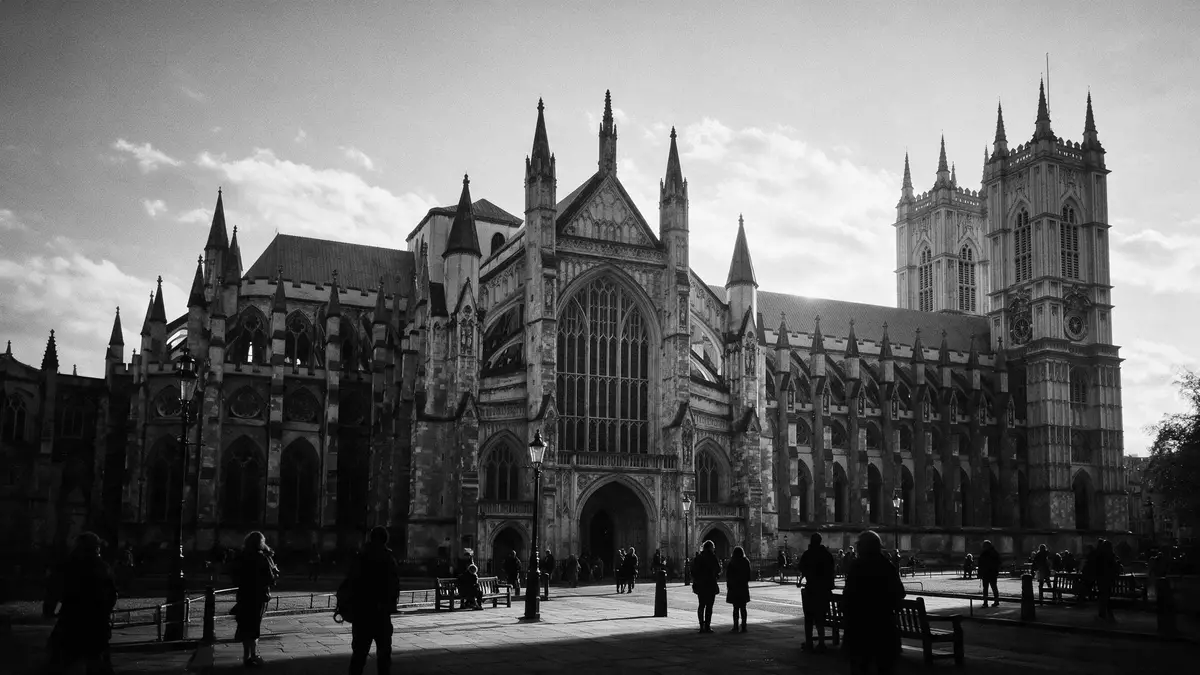
Few buildings concentrate British ceremony and craftsmanship as clearly as Westminster Abbey, the great Gothic church beside the Palace of Westminster in London. Rising from monastic origins on Thorney Island in the eleventh century, it has evolved over centuries into the Collegiate Church of Saint Peter at Westminster, a place where the English and British monarchs have been crowned since the Norman conquest and where royal burials and national memorials share the same intricate stonework.
From Thorney Island to a royal church in stone
Westminster Abbey stands on ground that once formed Thorney Island, a small patch of higher land in the Thames marshes where an early Benedictine community was established in the tenth century. King Edward the Confessor rebuilt the church on this site on a grand scale and his new abbey was consecrated in December 1065 in a Romanesque style that reflected the architecture of his time.Consecrated in 1065 His abbey, cruciform in plan, became closely associated with royal power and devotion, and Edward himself was buried within its walls, a presence later marked by a shrine at the heart of the church.shrine of St Edward the Confessor
In the thirteenth century King Henry III began a major rebuilding campaign that would give Westminster Abbey much of the form seen now. From 1245 he ordered the demolition of the eastern parts of Edward’s church and their replacement with a new structure in the pointed Gothic style, influenced by contemporary French cathedrals yet adapted to English traditions.Henry III’s Gothic rebuilding The result is an architectural composition that combines soaring stone vaults, clustered piers and tall traceried windows with a long, high nave, all aligned with the liturgical east–west axis that shaped medieval church design.
Gothic fabric layered with Tudor and later additions
The Gothic fabric created under Henry III forms the core of Westminster Abbey, but the building carries later layers that make a visit a journey through several centuries of English architecture. The Henry VII Lady Chapel at the eastern end, begun in the early sixteenth century, is a celebrated example of Perpendicular Gothic, with dense fan vaulting and finely carved stone details that drew admiration from antiquaries such as John Leland.Henry VII Chapel Its position behind the high altar and the shrine of Edward the Confessor turns the east end into a sequence of chapels and spaces that reflect late medieval ideas about dynastic memory and devotion.
Further changes continued into the post-medieval period. The nave of the abbey was rebuilt and completed between the later fourteenth century and Tudor times, extending Henry III’s design westwards with stonework that maintained the Gothic character while reflecting changing craft practice.rebuilt nave in Gothic style In the eighteenth century the two western towers were constructed to complete the west front, drawing on Gothic forms filtered through the sensibilities of architects such as Nicholas Hawksmoor. The result is a west façade with prominent towers and a large window, facing Parliament Square and forming one side of a stone panorama that includes the Palace of Westminster and St Margaret’s Church.Palace of Westminster and Westminster Abbey World Heritage
Coronations, burials and national memory
Beyond its stonework, Westminster Abbey holds a continuous role in British public life. Since 1066 it has been the setting for the coronations of English and later British monarchs, with the building arranged to accommodate the coronation chair, clergy, nobility and invited guests in a space that merges liturgy with state ritual.setting for every Coronation since 1066 Around the main processional route stand tombs and monuments to kings, queens and other members of the royal family, marking the abbey as a burial place tied directly to the history of the monarchy.
The interior also carries memorials to writers, scientists, politicians and military figures, including the tomb of the Unknown Warrior in the nave, which represents those who died in war without identified graves.tomb of the Unknown Warrior Chapels and aisles hold inscriptions and statues that collectively form a record of British cultural and political life, from the medieval period through the twentieth century. This blend of royal ritual, national commemoration and daily Anglican worship reflects the abbey’s status as a Royal Peculiar, a church answerable directly to the monarch rather than to a diocesan bishop.Royal Peculiar status
Visiting Westminster Abbey: what travellers from Western Europe should know
- Westminster Abbey stands in the City of Westminster, London, beside the Palace of Westminster and Parliament Square; the nearest Underground station is Westminster on lines that run under the river.
- The church interior rises in tall stone arcades and vaults, with stone steps, narrow passages in some upper areas and uneven historic flooring that call for steady footwear.
- The abbey lies close to the River Thames and major London landmarks, with views towards the Houses of Parliament and nearby St Margaret’s Church from its precincts.
- The official language is English and the currency is the pound sterling.
Searching for Westminster Abbey on social platforms
These links open searches for Westminster Abbey on each platform.Frequently asked questions about Westminster Abbey
Where is Westminster Abbey in London?
Westminster Abbey stands at Dean’s Yard, in the City of Westminster, beside the Palace of Westminster and close to the River Thames.
What should visitors expect inside Westminster Abbey?
Visitors encounter a high Gothic nave, chapels, royal tombs and memorials, with stone vaulting, stained glass and an arrangement shaped by centuries of coronations and burials.
What makes Westminster Abbey distinctive among London churches?
Its combination of thirteenth-century Gothic architecture, the long coronation tradition since 1066 and its role as a burial and memorial place for monarchs and national figures gives it a distinctive character.


