
Waza National Park, a Sahelian wildlife reserve on Cameroon’s northern frontier
Published on 08/22/2026 at 11:56 | Editorial responsibility: Rafael Müller, Editor-in-Chief AD HOC NEWS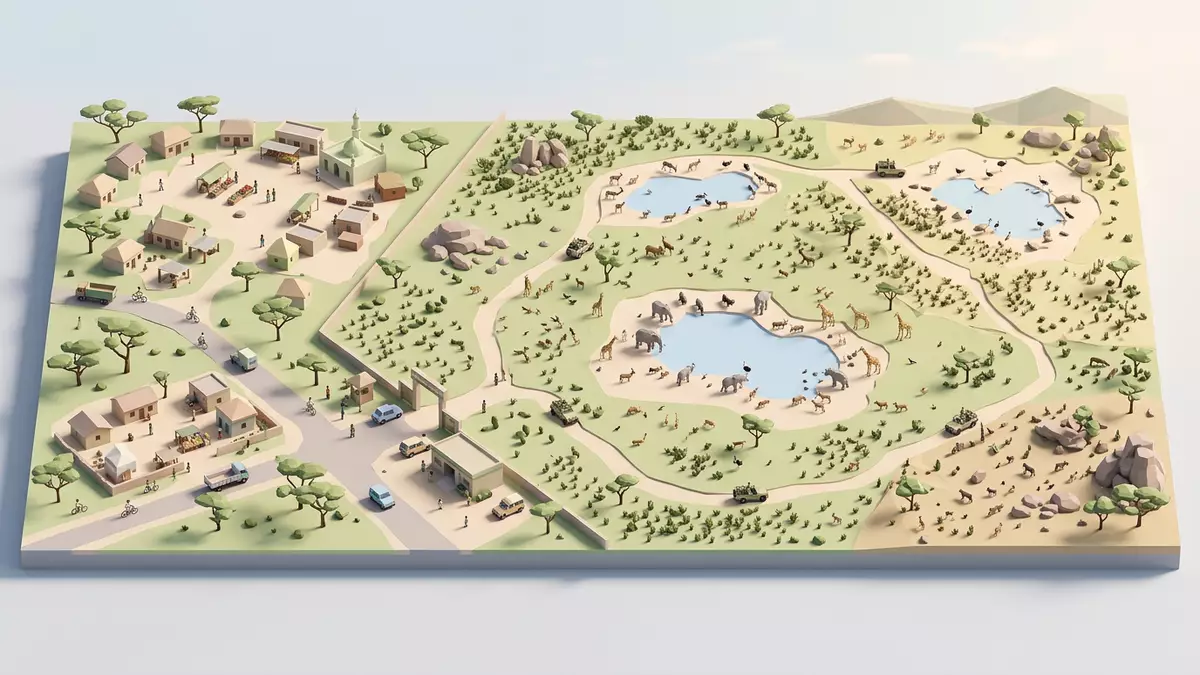
Waza National Park in northern Cameroon is a broad sweep of Sahelian savanna where acacia woodland, open grassland and floodplains spread across the Chad depression near the town of Waza. The park was first established as a hunting reserve in 1934 and gained national park status in 1968, later becoming part of the UNESCO Man and the Biosphere network in 1979.
Sahelian savanna in the Chad depression
Waza National Park lies in Cameroon’s Far North Region, in the Department of Logone-et-Chari, in low-lying terrain linked to the wider Chad depression once associated with the Lake Chad basin.Far North Region The protected area covers about 1,700 km² (656 sq mi), forming a substantial block of semi-arid landscape a short distance east of the town of Waza and less than 10 km from the borders with both Nigeria and Chad.about 1,700 km²
The park sits between the Sahel and Sudan savanna zones, with open plains at elevations around 300 m (984 ft) and a mixture of acacia forest, grassland and seasonally inundated floodplains along the Logone River system.transition zone between the Sahel and Sudan savanna Within this wider biosphere, Waza National Park forms a core conservation area, surrounded by zones where villages use the land for grazing and agriculture under defined management frameworks.Waza Biosphere Reserve
From hunting reserve to biosphere reserve
The area that is now Waza National Park was set aside as a hunting reserve in 1934 during the colonial period, reflecting early efforts to regulate elephant and antelope hunting in northern Cameroon.founded in 1934 as a hunting reserve In 1968 it was formally designated a national park, and in 1979 the wider Waza Biosphere Reserve was recognised under UNESCO’s Man and the Biosphere Programme, marking its importance as a Sahelian conservation landscape.recognised in 1979
This change of status shifted Waza from a regulated hunting area to a protected savanna reserve where conservation, research and controlled tourism take precedence over extraction. Within the biosphere framework the national park functions as a strictly protected core zone, bordered by buffer areas where human use is managed rather than excluded, a pattern seen in several Sahelian reserves across the Lake Chad basin.core zone in a wider biosphere
Wildlife on the plains and floodplains
Waza National Park is widely recognised for its large mammals, including elephants, giraffes, antelopes, lions and hyenas that move between the acacia stands, open grasslands and seasonal waterholes.elephants, giraffes and antelope The park also supports monkeys and baboons, alongside a wide assortment of birds ranging from pelicans to waders that concentrate around floodplain pools and channels on the Logone plain.numerous species of birds
Within the broader Lake Chad basin network of protected areas, Waza National Park is noted for sustaining Sahelian savanna fauna in a semi-arid climate with a short rainy season and a long dry season.Sahelian savanna fauna Surveys have recorded dozens of mammal species and significant populations of kob and other antelopes, with elephants known to congregate at well-known waterholes such as Mare aux Éléphants during the dry months when surface water is scarce on the plains.Mare aux Éléphants watering hole
Visiting Waza National Park: what travellers from Western Europe should know
- Waza National Park lies in Cameroon’s Far North Region near the town of Waza, east of the Maroua–Kousséri road and not far from the borders with Nigeria and Chad. Travellers generally reach the area by road from Maroua, a regional centre in northern Cameroon.
- The terrain is largely flat savanna and floodplain at around 300 m (984 ft) above sea level, with rough tracks rather than paved internal roads. Safaris use vehicles and, where permitted, guided walks; there are no marked hiking trails across the park.
- The climate follows a semi-arid Sudano-Sahelian pattern with a short rainy season and a long dry season, so conditions range from green floodplain landscapes after the rains to dusty grassland late in the dry season.
- English is widely used in tourism contexts, but the official languages of Cameroon are French and English and the currency is the Central African CFA franc.
- Entry requirements depend on your nationality; UK travellers can check the FCDO travel advice at gov.uk/foreign-travel-advice, Irish travellers the Department of Foreign Affairs at ireland.ie.
Searching for Waza National Park on social platforms
These links open searches for Waza National Park on each platform.
Frequently asked questions about Waza National Park
Where is Waza National Park located?
Waza National Park is in Cameroon’s Far North Region, in the Department of Logone-et-Chari, immediately east of the town of Waza and close to the borders with Nigeria and Chad.
What can visitors expect on a visit to Waza National Park?
Visitors encounter wide Sahelian savanna, acacia woodland and floodplain landscapes, with vehicle-based safaris and guided excursions focusing on elephants, antelopes, giraffes, lions and a rich bird community.
What makes Waza National Park distinctive among African parks?
Waza is distinctive for combining a semi-arid Sahelian setting in the Chad depression with its status as a UNESCO biosphere reserve, protecting a large block of savanna and floodplain habitat for elephants, lions and other wildlife near the Lake Chad basin.


