
Wat Rong Suea Ten and its luminous blue vision in Chiang Rai
Published on 08/21/2026 at 10:45 | Editorial responsibility: Rafael Müller, Editor-in-Chief AD HOC NEWS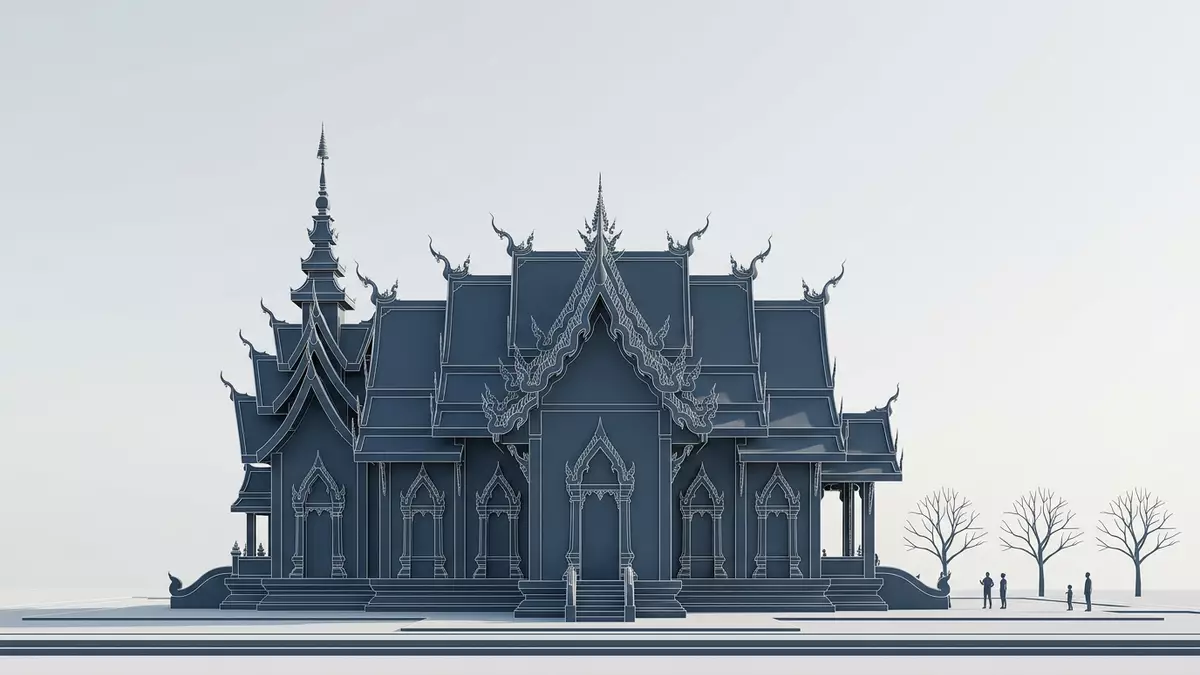
Wat Rong Suea Ten in Chiang Rai is a contemporary Buddhist temple whose deep blue surfaces turn a small riverside complex into an almost theatrical encounter with colour and light. Built on the site of an earlier shrine and completed in 2016, it has become a prominent example of how northern Thailand’s temple tradition can be reimagined with modern materials and imagery while remaining a working place of worship.modern Buddhist temple
The blue temple beside the Kok River
Wat Rong Suea Ten stands in Rim Kok, a district on the north side of Chiang Rai where the city begins to thin out towards the Mae Kok River. The temple occupies a modest plot in Rong Suea Ten village, with its ordination hall and associated structures gathered close together rather than spread across extensive grounds.Rong Suea Ten Village setting The name translates as “house of the dancing tiger”, a reference to the wildlife once associated with this stretch of riverbank, and tiger motifs appear around the complex as a subtle reminder of that origin.
Approaching from Chiang Rai, the first encounter is with the bright blue exterior of the main hall, its walls and roof lines densely ornamented with stylised flames, serpents and guardian figures worked in gold and contrasting tones. This colour palette marks the building out among the more traditional red and white structures in the region and gives the complex a distinct visual identity along the road. Around the hall, smaller shrines, statues and decorative elements continue the theme, so that almost every surface carries some form of sculpted or painted detail.blue-and-gold exterior
Inside the indigo hall: white Buddha and murals
Stepping inside the main ubosot, the focus shifts from the exterior ornament to a large white seated Buddha image at the far end of the hall. The figure is set against intensely coloured murals that cover the interior surfaces, including depictions of celestial beings, abstract patterns and narrative scenes drawn from Buddhist cosmology.white Buddha against blue murals The floor and supporting columns continue the blue theme, so the white statue stands out with particular clarity, becoming the visual anchor of the space.
Tiger imagery, linked to the temple’s name, appears in these murals and in freestanding sculptures around the grounds. Alongside the tigers, visitors encounter naga serpents flanking stairways, guardian creatures at entrances and elaborate finials rising from roofs and gables. The combination of familiar temple elements with unconventional colour choices and modern sculptural forms produces a setting where new details reveal themselves gradually as attention moves from the central Buddha to the margins of the hall.House of the Dancing Tiger motifs
A contemporary addition to Chiang Rai’s temple landscape
Wat Rong Suea Ten belongs to a wave of recent temple construction in Chiang Rai that engages directly with contemporary art while maintaining conventional religious functions. Construction on the present complex began in 2005, and it reached completion in 2016, giving it a clear dating within the early twenty-first century.completed in 2016 The designer, Phuttha Kabkaew, has links to Chalermchai Kositpipat, the artist associated with Wat Rong Khun, and the relationship between the two temples is often pointed out in discussions of Chiang Rai’s cultural landscape.Phuttha Kabkaew as designer
The present blue complex stands where an earlier temple once existed, that older structure having fallen into disrepair decades before the current project began.earlier abandoned temple In its present form, Wat Rong Suea Ten functions both as a neighbourhood religious centre and as a visually distinctive landmark within Chiang Rai’s network of temples. Monastic buildings, statues and decorative gateways cluster around the main hall, creating a compact ensemble that can be explored in a relatively short visit but offers substantial detail for those who spend longer tracing the imagery and craftsmanship.
Visiting Wat Rong Suea Ten: what travellers from Western Europe should know
- Wat Rong Suea Ten lies a short distance north of central Chiang Rai, in Rim Kok district near the Mae Kok River, and is reached by road from the city.
- The complex is level around the main hall, but access to certain statues and viewpoints involves short flights of steps and outdoor walkways exposed to the weather.
- The official language is Thai and the currency is the baht.
- Entry requirements depend on your nationality; UK travellers can check the FCDO travel advice at gov.uk/foreign-travel-advice, Irish travellers the Department of Foreign Affairs at ireland.ie.
Searching for Wat Rong Suea Ten on social platforms
These links open searches for Wat Rong Suea Ten on each platform.
Frequently asked questions about Wat Rong Suea Ten
Where is Wat Rong Suea Ten located?
Wat Rong Suea Ten is in Rim Kok district of Chiang Rai, in Rong Suea Ten village near the Mae Kok River on the northern side of the city.
What should visitors expect during a visit?
Visitors encounter a compact temple complex dominated by a vivid blue ordination hall, a large white Buddha image, intricate murals and sculpted guardians around the grounds.
What makes Wat Rong Suea Ten distinctive among Chiang Rai temples?
The temple is distinctive for its intense blue-and-gold colour scheme, contemporary sculptural style and the contrast between its white central Buddha and richly painted interior surfaces.


