
Wat Rong Khun and the white spectacle near Chiang Rai
Published on 09/08/2026 at 17:59 | Editorial responsibility: Rafael Müller, Editor-in-Chief AD HOC NEWS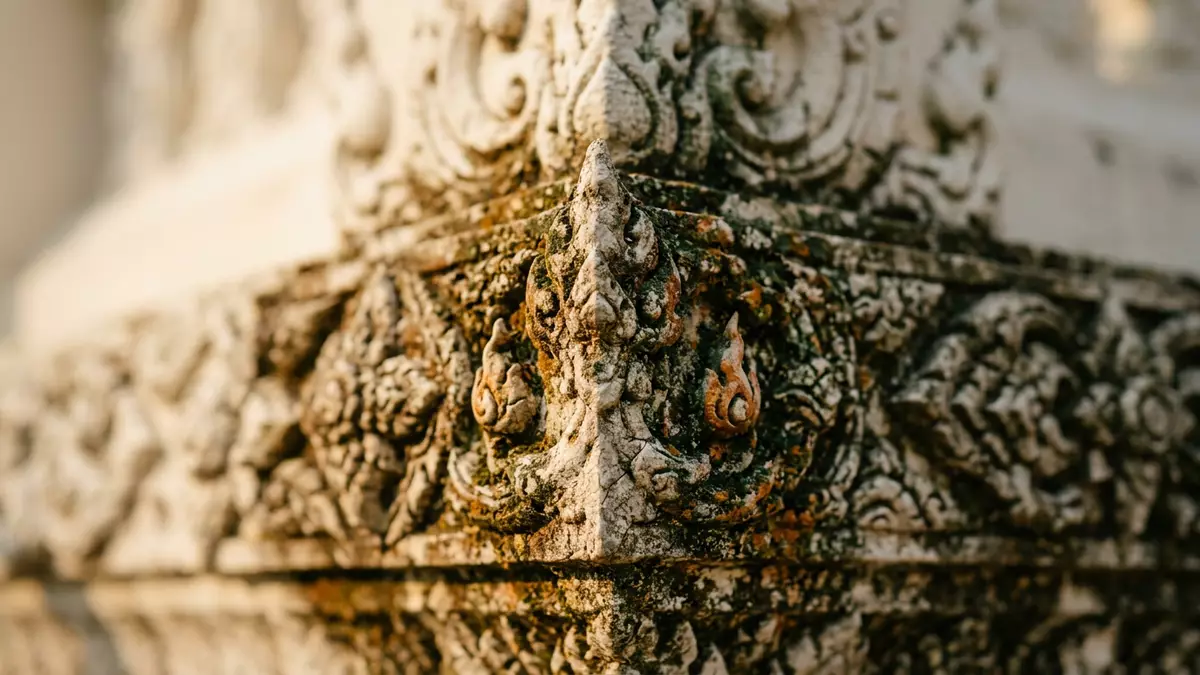
Wat Rong Khun in Chiang Rai is the White Temple complex associated with Pa O Don Chai and the artist Chalermchai Kositpipat. It combines a temple setting with an all-white, highly reflective complex that makes material and surface the first things a visitor notices.
White surfaces and temple forms
The complex presents pointed roofs, filigreed decoration and sculpted bridges in bright white plaster. Glass fragments are set into the surfaces, so the building reads as both temple and art work.
The main hall is an ordination hall, the central building of a Buddhist temple. Its appearance departs from the sober brick-and-teak traditions many travellers expect in northern Thailand, and that contrast is immediate.
Chalermchai Kositpipat’s long project
Construction began in 1997 under Chalermchai Kositpipat, who tied the site to his own artistic practice. The result is a contemporary temple environment rather than a preserved ancient ruin.
The name Wat Rong Khun belongs to a place that is both religious and artistic in character. Its iconography, bridges and guardian figures turn the approach into a sequence of symbolic forms, yet the overall impression remains one of white architecture against open space.
A temple complex with an artist’s hand
The site is commonly discussed as a work shaped by a single artist, and that personal authorship is visible in the coherent white palette. The effect is not of a conventional monastery compound, but of a place where temple elements and modern sculpture meet.
Wat Rong Khun has become closely linked with contemporary Thai art because of that unusual mix. The complex is still identified by its central hall, sculptural ornament and polished whiteness rather than by age alone.
Visiting Wat Rong Khun: what travellers from Western Europe should know
- The temple lies in Chiang Rai province in northern Thailand, on the approach from Chiang Rai city towards Pa O Don Chai. Roads lead to the complex from the local area, and the setting is lowland rather than mountain terrain.
- The grounds include paved walkways, bridges and steps, with a clear emphasis on walking between the buildings. The surfaces are bright, detailed and exposed, so the site reads as a built ensemble rather than a single hall.
- The official language is Thai and the currency is the baht.
- Entry requirements depend on your nationality; UK travellers can check the FCDO travel advice at gov.uk/foreign-travel-advice, Irish travellers the Department of Foreign Affairs at ireland.ie.
Searching for Wat Rong Khun on social platforms
These links open searches for Wat Rong Khun on each platform.
Frequently asked questions about Wat Rong Khun
Where is Wat Rong Khun?
Wat Rong Khun is in Chiang Rai province in northern Thailand, near Chiang Rai city and the village of Pa O Don Chai. It is the White Temple complex associated with Chalermchai Kositpipat.
What can be expected inside the complex?
The site is a temple compound with white buildings, sculpted details, bridges and an ordination hall. Its design combines religious architecture with contemporary artistic treatment.
What makes Wat Rong Khun distinctive?
Its all-white surfaces and mirrored decoration give the complex a unified visual identity. The association with Chalermchai Kositpipat and the 1997 rebuilding project adds a clear modern layer to the temple setting.


