
Wat Preah Keo Morakot and the silver floor of Phnom Penh’s Royal Palace
Published on 09/01/2026 at 11:31 | Editorial responsibility: Rafael Müller, Editor-in-Chief AD HOC NEWS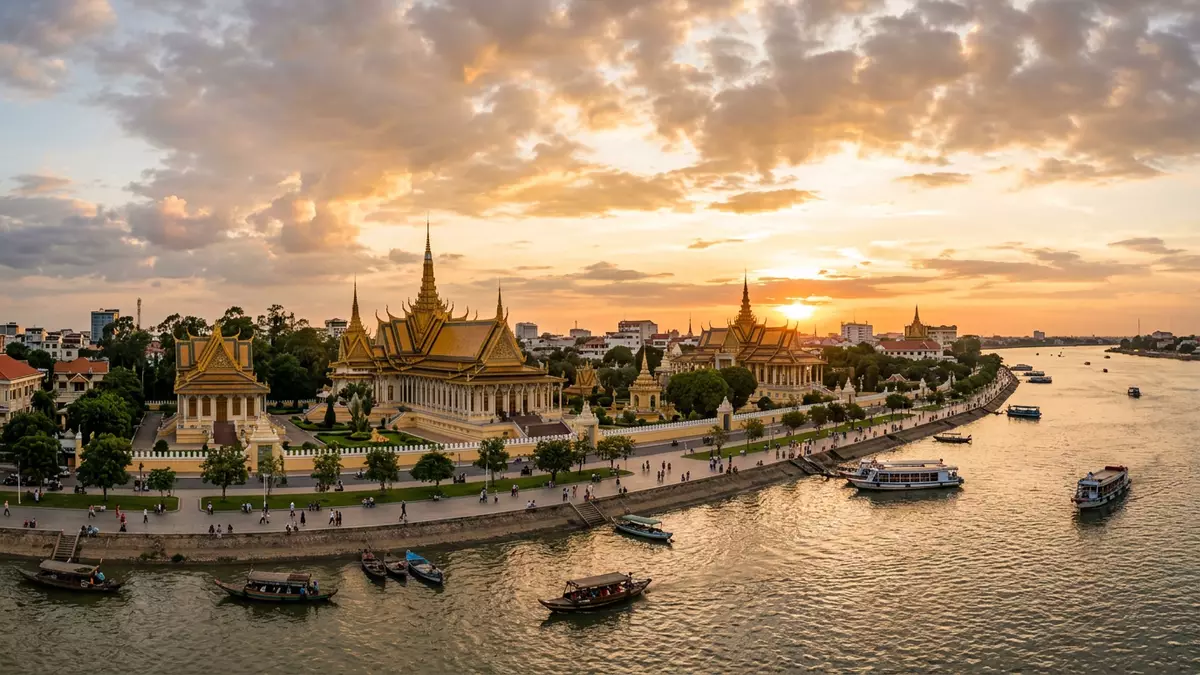
Wat Preah Keo Morakot in Phnom Penh, widely known in English as the Silver Pagoda, is the royal temple embedded within Cambodia’s Royal Palace compound and distinguished by a ceremonial hall paved with silver tiles around a central emerald-hued Buddha image.Silver Pagoda Officially named Preah Vihear Preah Keo Morakot, meaning “Temple of the Emerald Buddha”, it serves as the royal chapel beside the palace rather than a typical city monastery.Preah Vihear Preah Keo Morakot
Royal temple on the palace’s southern side
Wat Preah Keo Morakot stands within the southern section of the Royal Palace complex in central Phnom Penh, facing Samdech Sothearos Boulevard where the palace grounds approach the meeting of the Tonlé Sap and Mekong rivers.southern section of the Royal Palace complex The pagoda forms part of a broader royal compound of throne halls, courtyards and pavilions, but its role is specific: it functions as the chapel for the monarch and court ceremonies rather than as a residence for monks.royal palace compound temple
Approaching the pagoda from Samdech Sothearos Boulevard, visitors pass the palace walls and enter a sequence of open courts before reaching the temple terrace itself, where Wat Preah Keo Morakot rises with its layered roof, towered shrine and surrounding galleries.Wat Preah Keo Morokat terrace The layout places the main temple hall slightly elevated above its immediate courtyard, reinforcing a ceremonial axis that runs from the palace buildings towards the shrine.
The silver floor and the emerald-hued Buddha
Inside the main hall of Wat Preah Keo Morakot, the floor is paved with thousands of silver tiles, a feature that has given the temple its widely used English name, the Silver Pagoda.thousands of silver tiles These silver pieces form a metallic carpet beneath an array of Buddha images and royal gifts, turning the entire hall into a showcase of Khmer craftsmanship and devotional art rather than a plain worship space.floor paved with 5,329 silver tiles
The temple’s principal image is an emerald-hued Buddha, a sculpture that gives the shrine its Khmer name Preah Keo Morakot, “Precious Emerald Buddha”.Temple of the Emerald Buddha Around this central figure sit and stand further Buddha statues and royal offerings in gold, silver and other precious materials, many of them assembled over the reigns of successive Cambodian kings.collection of priceless Buddha statues
Architecture and royal history
The present Wat Preah Keo Morakot grew out of a wooden temple completed in the late nineteenth century during the reign of King Norodom, before taking its current reinforced-concrete and marble-clad form in the twentieth century.originally constructed of wood in 1892 By the early 1960s Queen Mother Kossamak Nearyreath and King Norodom Sihanouk oversaw a rebuilding that introduced concrete structure, Italian marble columns and the extensive silver floor that defines the pagoda’s identity.rebuilt in 1962 with marble and silver tiles
The architectural language reflects Cambodian temple traditions on a grand royal scale: a multi-tiered tiled roof, sculpted pediments and finials, and a high central sanctuary flanked by surrounding structures such as open-sided galleries and smaller shrines.Cambodian temple architecture Within the broader history of the palace, Wat Preah Keo Morakot marks Cambodia’s Buddhist court culture in both its layout and its treasures, preserving royal devotional objects even through twentieth-century upheavals.
Visiting Wat Preah Keo Morakot: what travellers from Western Europe should know
- Wat Preah Keo Morakot stands inside the Royal Palace compound in central Phnom Penh, on the side facing Samdech Sothearos Boulevard and close to the junction of the Tonlé Sap and Mekong rivers.
- The temple terrace and surrounding courts involve walking over stone paving and steps, including stairways up to the main hall, so visits include short climbs and movement across uneven surfaces.
- The Royal Palace compound lies south of the riverside area where many hotels cluster, and the entrance for visitors stands along Samdech Sothearos Boulevard near Oknha Chhun Street (240).
- The official language is Khmer and the currency is the Cambodian riel, though other currencies may circulate in Phnom Penh.
- Entry requirements depend on your nationality; UK travellers can check the FCDO travel advice at gov.uk/foreign-travel-advice, Irish travellers the Department of Foreign Affairs at ireland.ie.
Searching for Wat Preah Keo Morakot on social platforms
These links open searches for Wat Preah Keo Morakot on each platform.
Frequently asked questions about Wat Preah Keo Morakot
Where is Wat Preah Keo Morakot located in Phnom Penh?
Wat Preah Keo Morakot stands in the southern part of Cambodia’s Royal Palace compound in central Phnom Penh, along Samdech Sothearos Boulevard near Oknha Chhun Street (240).
What should travellers expect when visiting the temple?
Travellers encounter a royal chapel with an emerald-hued Buddha image, silver-paved interior floors and a sequence of palace courtyards and terraces reached by stone steps.
What makes Wat Preah Keo Morakot distinctive among Cambodian temples?
The combination of its role as the royal chapel, its silver-tiled floor and its central emerald-hued Buddha image give Wat Preah Keo Morakot a distinctive position within Cambodia’s Buddhist and royal landscape.


