Wat Phou and the mountain-river landscape of Champasak
Published on 09/03/2026 at 14:41 | Editorial responsibility: Rafael Müller, Editor-in-Chief AD HOC NEWS
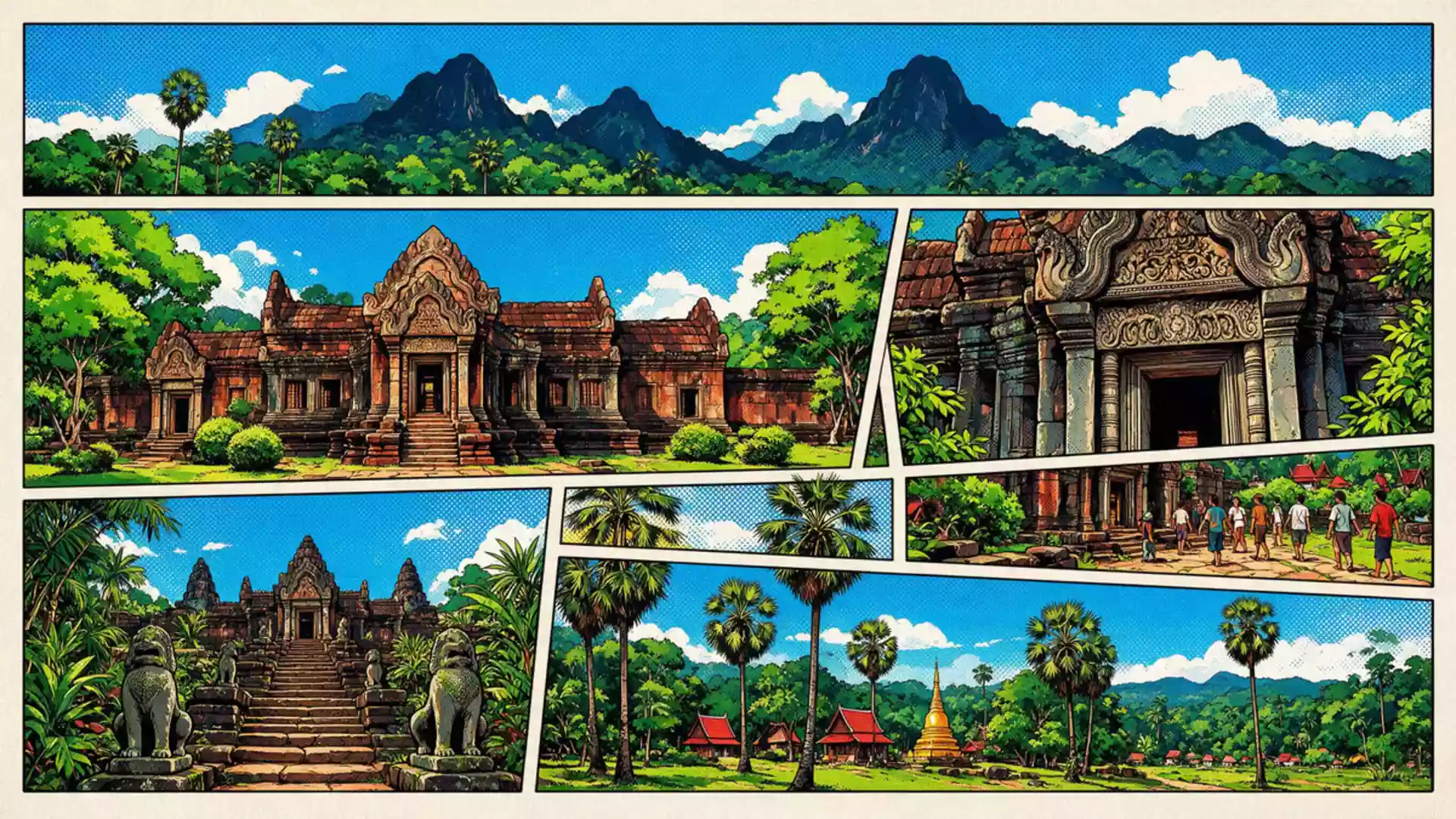
Wat Phou is a Khmer temple complex in Champasak, southern Laos, and a UNESCO World Heritage Site. Its strongest feature is the long alignment from river plain to mountain slope, ending beneath Phou Kao.
Wat Phou’s mountain-river setting
The site belongs to the Champasak cultural landscape, a planned setting that stretches across temples, shrines and waterworks. The ensemble is linked to the Khmer Empire and spans the period from the fifth to the fifteenth century Champasak cultural landscape.
Wat Phou stands at the foot of Phou Kao, with the Mekong basin nearby and the mountain rising behind the sanctuary terraces. The place is defined by stone steps, open terraces and a sequence of built spaces that climb the slope.
Khmer architecture and sacred spring
The main structures visible today belong to the eleventh to thirteenth centuries. They form a Khmer religious complex with earlier roots in the same sacred landscape, and the mountain spring remains part of the setting eleventh to thirteenth centuries.
The layout runs along an east-west axis, with terraces, stairs and shrine areas leading towards the upper sanctuary. Phou Kao rises directly above the complex, and the hill itself is part of the site’s historical identity Phou Kao mountain.
From temple sanctuary to World Heritage
Wat Phou is closely tied to the wider history of the Khmer world in mainland south-east Asia. The heritage listing identifies the site as a cultural landscape, not only a temple, and notes its association with long-lived settlement around the Mekong UNESCO document.
That wider setting gives the place its depth: mountain, spring, river and ruins belong to one historical ensemble. The result is a site where architecture and landscape remain visibly joined, from the lower terraces to the sanctuary above.
Visiting Wat Phou: what travellers from Western Europe should know
- Wat Phou lies in Champasak Province in southern Laos, near the Mekong and the town of Champasak. The heritage zone also includes Phou Kao mountain and the ancient landscape around it.
- The visit involves steps, terraces and a steady climb up the slope. The upper sanctuary stands higher than the lower entrance area.
- The site combines stone ruins, brick remains and open viewpoints across the temple line. The mountain spring is part of the religious setting.
- English is not an official language in Laos. The official language is Lao and the currency is the Lao kip.
- Entry requirements depend on your nationality; UK travellers can check the FCDO travel advice at gov.uk/foreign-travel-advice, Irish travellers the Department of Foreign Affairs at ireland.ie.
Searching for Wat Phou on social platforms
These links open searches for Wat Phou on each platform.
Frequently asked questions about Wat Phou
Where is Wat Phou?
Wat Phou is in Champasak Province, southern Laos, near the Mekong and the town of Champasak. It forms part of a wider heritage landscape that includes Phou Kao mountain.
What does a visit involve?
The route through the site passes terraces, steps and shrine areas on a rising line. The upper sanctuary sits higher on the slope than the lower temple grounds.
What makes Wat Phou distinctive?
Its distinctiveness lies in the combination of Khmer temple remains, a sacred spring and a mountain-backed layout. The place reads as both a sanctuary and a cultural landscape.