
Wat Pho and the reclining Buddha of Bangkok
Published on 08/21/2026 at 19:50 | Editorial responsibility: Rafael Müller, Editor-in-Chief AD HOC NEWS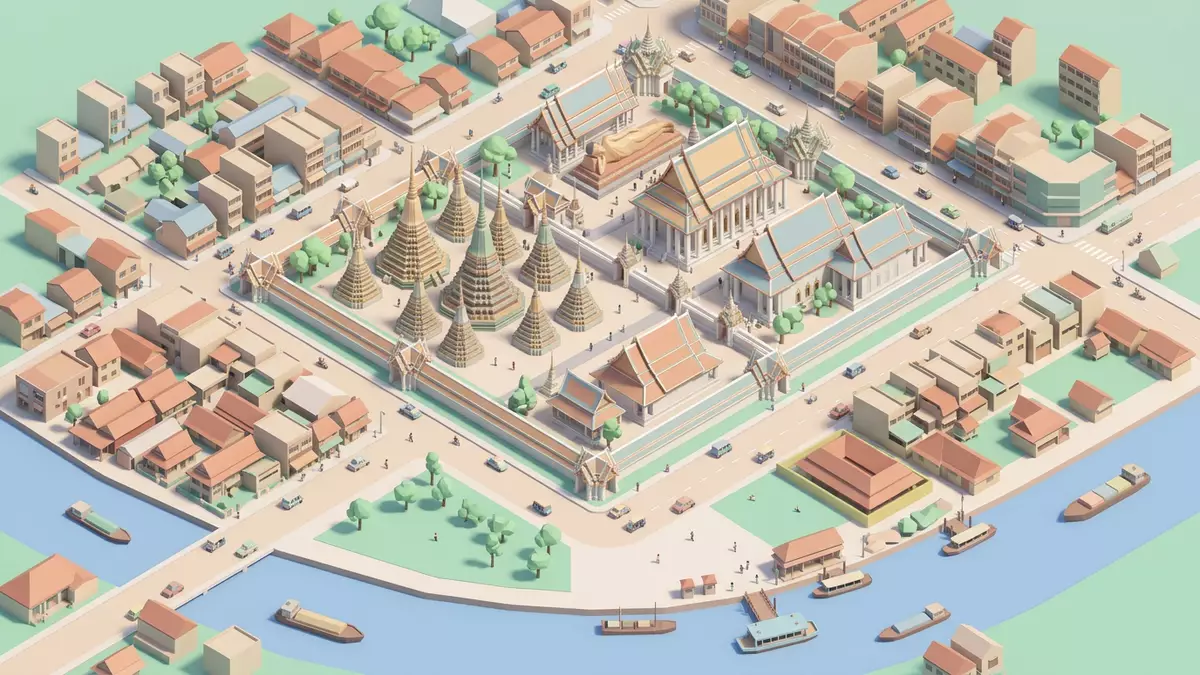
Wat Pho is a sprawling Buddhist temple complex in Bangkok, known worldwide for its monumental reclining Buddha and for its role as a centre of traditional Thai learning. Standing just south of the Grand Palace on Rattanakosin Island, it is one of the capital’s oldest monasteries, with roots in the Ayutthaya period and major restorations under King Rama I in the late eighteenth century.
Wat Pho’s royal temple complex
Wat Pho occupies a large plot in the Phra Nakhon district, on Sanam Chai Road close to the Chao Phraya River and the Grand Palace. Its full official name, Wat Phra Chetuphon Wimon Mangkhalaram Rajwaramahawihan, reflects its status as a first-grade royal monastery of the Chakri dynasty.first-grade royal monastery Within its walls stand halls, chapels and courtyards arranged in a formal compound, with gateways leading between distinct monastic and public areas.
The temple is traditionally linked to an older monastery known as Wat Photaram, dating back to the Ayutthaya Kingdom in the seventeenth century.Wat Photaram in the seventeenth century When Bangkok became the capital under King Rama I, the monarch ordered a major restoration and enlargement of this monastery, a project recorded as lasting several years before a celebration in 1801 and the renaming of the temple. Subsequent reigns, especially that of King Rama III, saw further large-scale building campaigns that extended key halls and added structures such as the library hall.
The reclining Buddha and sacred architecture
Inside Wat Pho, the reclining Buddha is the defining image. The figure is an early Bangkok-period Buddha image in brick and stucco, lacquered and gilded, measuring 46 m (151 ft) in length and 15 m (49 ft) in height from its base.46 m reclining Buddha It is housed in a hall within the monastic area in the north-western corner of the temple, its body occupying almost the entire interior. The Buddha is depicted in a resting posture associated with entry into nirvana, with the head supported on the right arm.
The soles of the Buddha’s feet are inlaid with mother-of-pearl panels that depict numerous auspicious signs of the Buddha.mother-of-pearl signs of the Buddha Around the image, the enclosing hall carries murals, columns and decorative details that reflect Bangkok-period craftsmanship. Beyond this famous image, Wat Pho contains pagodas, smaller Buddha images, pavilions and cloisters, creating a dense landscape of religious architecture in which gilded surfaces, tiled roofs and stone courtyards coexist.
Learning, massage and inscriptions
Wat Pho has long been associated with learning. During the reign of King Rama I, the monastery became a place where monks studied religious doctrine, and it developed into a centre for both secular and sacred knowledge, described in stone inscriptions and manuscripts preserved on site.centre of ancient medical knowledge These inscriptions record teachings on traditional medicine, literature and other subjects, earning Wat Pho recognition as Thailand’s first public university.
Traditional Thai massage is closely linked to the temple’s heritage. The grounds hold teaching halls where techniques of massage and medicine were codified and transmitted, and the complex remains associated with this practice through its role in preserving classical methods.teaching halls for traditional medicine For visitors, inscriptions, diagrams and statues illustrating pressure points and postures make the medical tradition a visible dimension of the temple, alongside its religious functions.
Visiting Wat Pho: what travellers from Western Europe should know
- Wat Pho stands in Bangkok’s Phra Nakhon district on Rattanakosin Island, immediately south of the Grand Palace and close to the Chao Phraya River.
- The temple complex includes paved courtyards, interior halls and stairways; exploring the grounds involves walking between buildings and spending time inside enclosed spaces.
- The official language is Thai and the currency is the baht.
- Entry requirements depend on your nationality; UK travellers can check the FCDO travel advice at gov.uk/foreign-travel-advice, Irish travellers the Department of Foreign Affairs at ireland.ie.
Searching for Wat Pho on social platforms
These links open searches for Wat Pho on each platform.
Frequently asked questions about Wat Pho
Where is Wat Pho located in Bangkok?
Wat Pho is in the Phra Nakhon district on Rattanakosin Island, immediately south of the Grand Palace and near the Chao Phraya River.
What should visitors expect when exploring Wat Pho?
Visitors encounter a large temple complex with courtyards, halls and chapels, including the vast reclining Buddha image and many other Buddha figures and pagodas.
What makes Wat Pho distinctive among Bangkok’s temples?
Wat Pho combines one of Thailand’s largest reclining Buddha images with a documented role as a centre of traditional learning and medicine, all within a royal monastery compound.


