
Wat Chalong, Phuket’s layered temple complex
Published on 09/07/2026 at 06:22 | Editorial responsibility: Rafael Müller, Editor-in-Chief AD HOC NEWS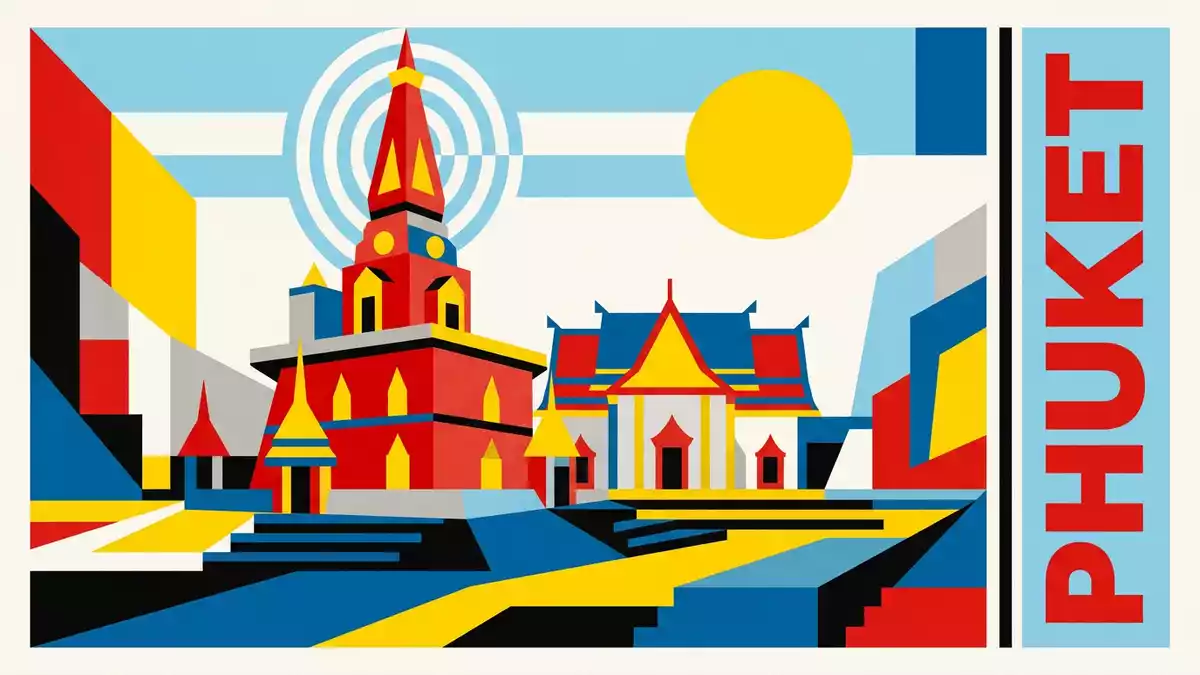
Wat Chalong in Phuket, officially known as Wat Chaiyathararam, is a Buddhist temple complex in the Chalong subdistrict that combines richly decorated architecture with an active centre of worship dating back to the nineteenth century.Wat Chaiyathararam is regarded as the most important of the island’s many temples and is closely associated with revered monks such as Luang Pho Cham, whose memory is preserved in statues and shrines around the grounds.Luang Pho Cham statues
Wat Chalong as Phuket’s principal Buddhist temple
The temple complex of Wat Chalong sits in the Mueang Phuket District, in the Chalong subdistrict south of Phuket Town, along the main Chao Fa West Road that links the town with the island’s southern beaches.Chao Fa West Road location Wat Chalong is counted among 29 Buddhist temples on Phuket and is generally described as the most important of them, reflecting its role in local religious life as well as tourism.29 Buddhist temples
The temple in its present form is associated with the early nineteenth century, with sources pointing to construction and relocation around 1837 during the Rattanakosin period.Built 1837 Wat Chalong is closely linked to Luang Pho Cham and Luang Pho Chuang, monks remembered for their role in healing and mediation during the Ang Yee rebellion of Chinese tin miners in 1876 under King Rama V Chulalongkorn.Ang Yee rebellion Their images appear in several halls, where visitors encounter gilded statues surrounded by offerings.
Chedis, prayer halls and relics within the complex
Architecturally, Wat Chalong is characterised by a cluster of buildings in bright colours, with multi-tiered roofs and richly ornamented gables that follow central Thai temple forms adapted to the island setting.Buddhist temple buildings The most striking structure is the Phra Mahathat Chedi, a tall stupa-like tower often described as around 60 m (197 ft) high, whose upper levels are ringed with balconies and whose exterior is covered in golden motifs and reliefs.60-metre chedi Inside the chedi, glass cases and shrines hold Buddhist images, and a relic identified as a fragment of the Buddha’s bone is enshrined near the top, adding a further spiritual focus for pilgrims.Buddha bone fragment
Beside the chedi stand several viharns, or prayer halls, each with its own set of statues and murals. One prominent hall contains gilded figures of Luang Pho Cham, Luang Pho Chuang and Luang Pho Gleum, all former abbots of the temple whose likenesses are covered with gold leaf by visiting Buddhists as an act of devotion.gilt-covered statues of monks Around these halls are smaller shrines, pavilions and a crematorium, set among paved courtyards and planted areas that form a spacious compound with clear sightlines towards the surrounding hills.
History, memory and everyday practice
Wat Chalong’s historical resonance is linked not only to its architecture but also to events remembered in Phuket’s local history. Accounts describe the temple as a refuge during the Ang Yee rebellion of 1876, when migrant Chinese tin miners rose against working conditions and fought battles across the island.Ang Yee rebellion Luang Pho Cham, abbot at Wat Chalong for decades in the nineteenth century, is credited with protecting residents, treating the wounded with herbal medicine and playing a mediating role that later drew royal recognition from King Rama V.herbal doctor monks
Alongside this history, Wat Chalong functions as an active religious site in contemporary Phuket. Monks reside within the compound, and local families visit to light incense, make offerings and pay respect at the various shrines. Ceremonies marking Buddhist holidays and personal milestones take place in the halls, while the chedi attracts those drawn by the Buddha relic and by the views from its upper terraces over the temple roofs and towards Chalong Bay.
Visiting Wat Chalong: what travellers from Western Europe should know
- Wat Chalong stands on Chao Fa West Road in the Chalong subdistrict, south of Phuket Town, and is reached by road vehicles such as local taxis and organised transfers.
- The temple compound consists of paved courtyards and internal staircases, including flights of steps inside the chedi leading to higher viewing levels.
- The official language is Thai and the currency is the baht.
- Entry requirements depend on your nationality; UK travellers can check the FCDO travel advice at gov.uk/foreign-travel-advice, Irish travellers the Department of Foreign Affairs at ireland.ie.
Searching for Wat Chalong on social platforms
These links open searches for Wat Chalong on each platform.
Frequently asked questions about Wat Chalong
Where is Wat Chalong located in Phuket?
Wat Chalong is in the Chalong subdistrict of Mueang Phuket District, along Chao Fa West Road south of Phuket Town, a main route towards the southern beaches.
What should visitors expect during a visit to Wat Chalong?
Visitors encounter a large temple compound with several prayer halls, a tall chedi containing a Buddha relic, monk statues, shrines and courtyards used for everyday religious activity.
What makes Wat Chalong distinctive among Phuket’s temples?
Wat Chalong combines its role as Phuket’s principal Buddhist temple with the prominent Phra Mahathat Chedi and strong historical associations with nineteenth-century monks linked to the Ang Yee rebellion.


