
Waitomo Glowworm Caves and their living night sky
Published on 09/18/2026 at 08:53 | Editorial responsibility: Rafael Müller, Editor-in-Chief AD HOC NEWS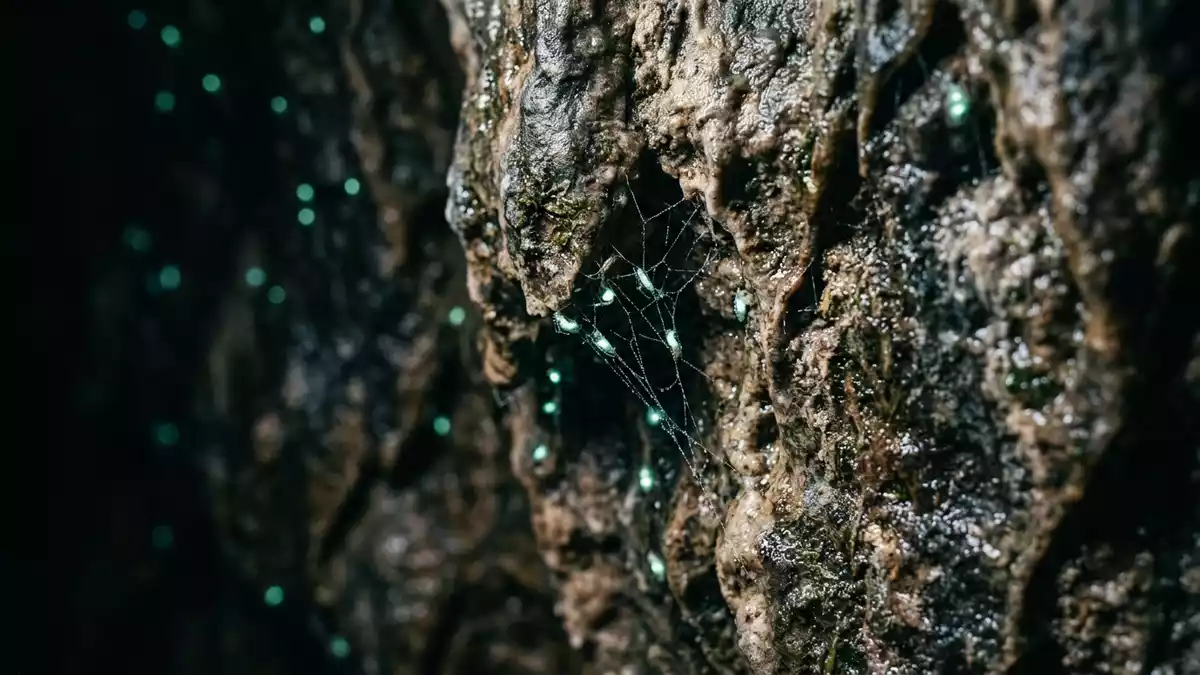
Under the farmland around Waitomo in New Zealand’s North Island, Waitomo Glowworm Caves open into a limestone underworld where living lights trace an inverted night sky on the ceiling. Formed in ancient marine limestone and explored for tourism since the late nineteenth century, the caves bring together geology, M?ori history and the distinctive glowworm Arachnocampa luminosa in one compact system.
Limestone carved by water and time
Waitomo Glowworm Caves lie in the northern King Country region of the North Island, in a karst landscape of soluble limestone cut by streams that disappear underground and re-emerge downslope.northern King Country region The bedrock here was laid down as limestone derived from marine organisms in a shallow sea tens of millions of years ago, then uplifted and exposed to rainwater and rivers that gradually opened fractures into passages and chambers.limestone derived from marine organisms
Within the cave system, visitors encounter chambers shaped by the Waitomo Stream and decorated with stalactites and stalagmites formed by dripping mineral-rich water. The stream enters the cave through an opening used as an early access point and then runs through passages before leaving at what is now a tour exit.Waitomo Stream enters the cave Overhead, limestone ceilings carry formations built grain by grain as droplets deposit calcite, while walls show scalloped surfaces where flowing water has eroded softer bands of rock.
Arachnocampa luminosa and the glowworm grotto
The defining experience at Waitomo Glowworm Caves is the glowworm grotto, where thousands of Arachnocampa luminosa larvae hang from the cave ceiling and emit bioluminescent light in the darkness.glowworm grotto Arachnocampa luminosa is a glowworm species endemic to New Zealand, and Waitomo holds one of the most accessible concentrations of such caves in the country.Arachnocampa luminosa endemic to New Zealand Each larva produces a steady bluish-green light and lowers fine sticky threads to catch insects drawn towards the apparent opening in the dark.
The glowworm grotto is reached on a guided tour that includes a boat journey along the underground stream, with the vessel gliding beneath the luminous canopy in near-complete darkness.boat ride on underground river In the silence, the glow suggests a dense field of stars, concentrated most intensely where moisture and airflow support larger colonies. Photography is generally restricted during this section to protect the glowworms, making the experience a moment that visitors carry away only in memory and description rather than images.photography not permitted in Glowworm Caves
From M?ori exploration to national attraction
Human engagement with Waitomo Glowworm Caves extends back through local M?ori knowledge and into the history of organised tourism. In 1884, the local M?ori chief Tane Tinorau showed surveyors the entrance where the Waitomo Stream enters the cave, drawing attention to a site that had long been known in the area.Tane Tinorau showed surveyors the entrance in 1884 Three years later, in 1887, Tinorau and English surveyor Fred Mace explored further into the cave by raft, travelling along the underground watercourse and encountering the glowworm-lit chambers that underpin its later fame.Tinorau and Fred Mace explored the cave in 1887
By 1889, Tane Tinorau and his wife Huti were leading visitors into the caves for a fee, marking the start of organised tourism to the site.Tinorau and Huti opened the cave to tourists in 1889 Railway expansion to nearby ?torohanga in the late nineteenth century, followed by road links, made access easier for travellers, and in 1909 the government built the Waitomo Caves Hotel to host growing numbers of visitors.Waitomo Caves Hotel built in 1909 Electric lighting was installed in the cave in 1926, replacing the candles and lamps used earlier and changing how formations and passages are revealed during tours.electric lighting installed in 1926
Visiting Waitomo Glowworm Caves: what travellers from Western Europe should know
- Waitomo Glowworm Caves sit near the settlement of Waitomo Caves in the Waikato region of New Zealand’s North Island, reached by road from centres such as Hamilton and ?torohanga along signposted routes.
- Access to the glowworm grotto and main chambers is by guided tour, with parts of the route on foot through cave passages and a section by boat along the underground stream, all within an enclosed limestone environment.
- The official language is English and the currency is the New Zealand dollar.
- Entry requirements depend on your nationality; UK travellers can check the FCDO travel advice at gov.uk/foreign-travel-advice, Irish travellers the Department of Foreign Affairs at ireland.ie.
Searching for Waitomo Glowworm Caves on social platforms
These links open searches for Waitomo Glowworm Caves on each platform.
Frequently asked questions about Waitomo Glowworm Caves
Where are Waitomo Glowworm Caves located?
Waitomo Glowworm Caves are in the Waitomo area of the Waikato region on New Zealand’s North Island, in a rural karst landscape north-west of Te K?iti.
What can visitors expect on a standard visit?
A standard visit generally combines walking through illuminated limestone chambers with a guided boat section on the underground stream beneath ceilings lit by glowworms.
What makes Waitomo Glowworm Caves distinctive among caves?
The caves combine accessible limestone formations with extensive colonies of Arachnocampa luminosa, producing a characteristic field of bioluminescent points over the water in the glowworm grotto.


