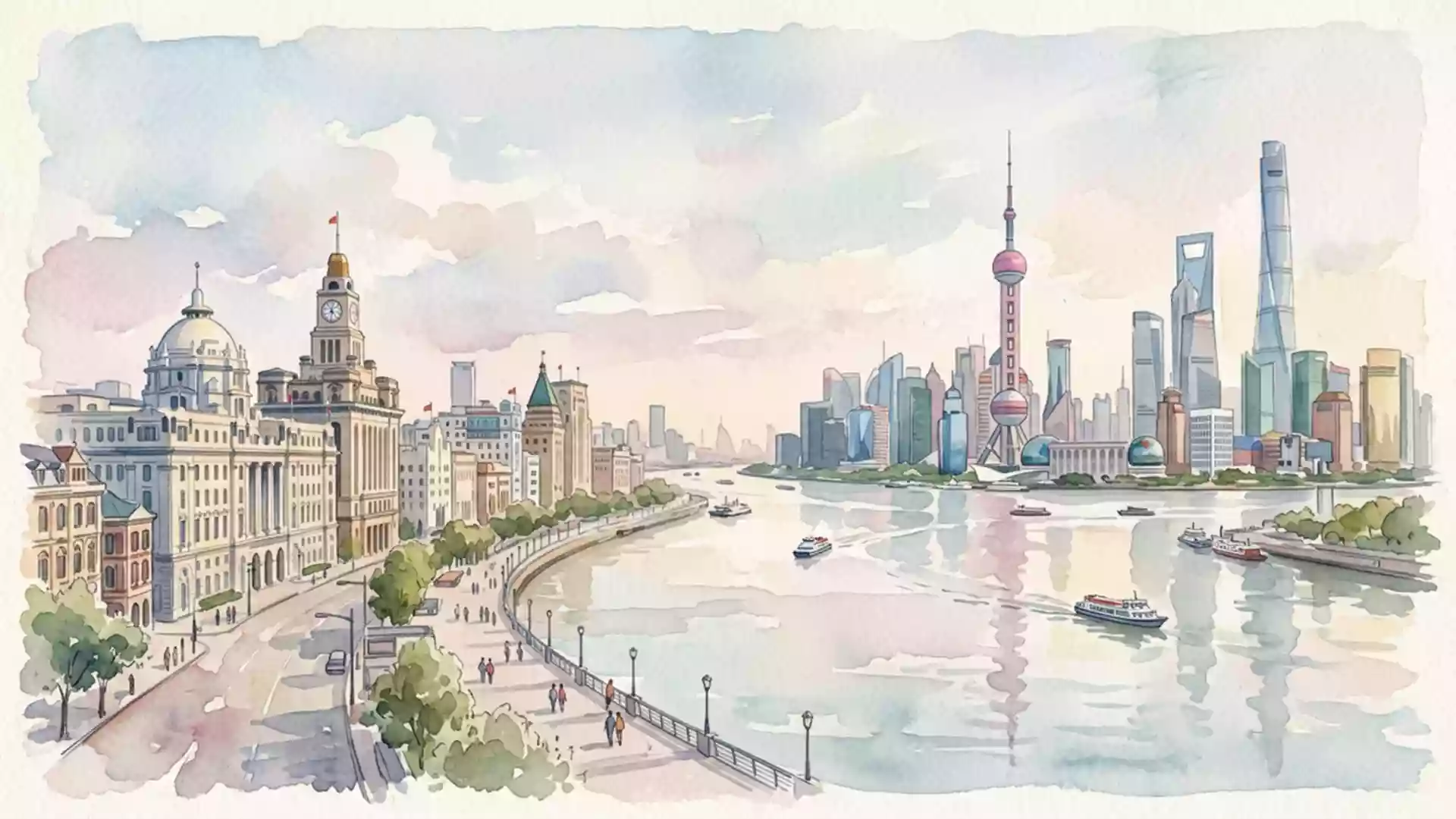
Waitan’s stone riverfront and Shanghai’s changing skyline
Published on 08/22/2026 at 09:39 | Editorial responsibility: Rafael Müller, Editor-in-Chief AD HOC NEWS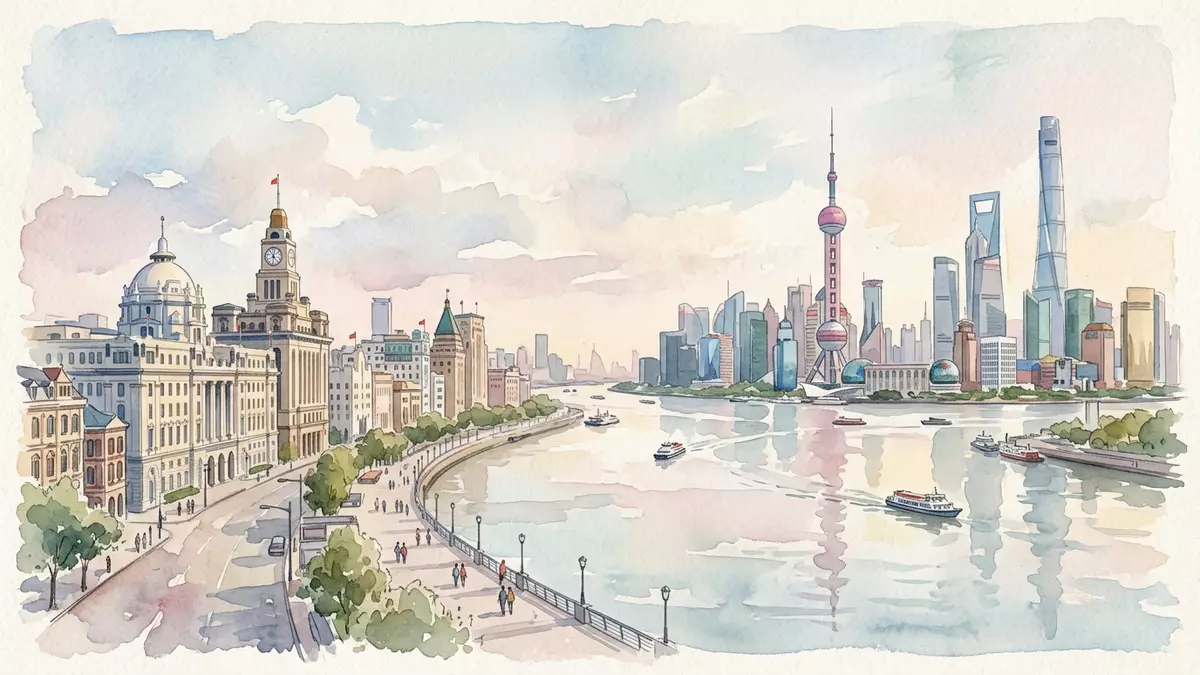
Waitan in Shanghai is the historic riverfront where a long band of early twentieth?century stone buildings faces the high?rise skyline across the Huangpu River. Along Zhongshan East 1st Road, this waterfront became one of the city’s best known ensembles of commercial architecture from the late nineteenth and early twentieth centuries, and it still reads as a continuous frontage of banks, trading houses, hotels and clubs.
Waitan along the Huangpu River
Waitan refers to a stretch of Zhongshan East 1st Road on the west bank of the Huangpu River in Shanghai’s Huangpu District, forming a broad riverside promenade with open views across the water.a waterfront area This riverside walk runs for roughly 1.5 km between the steel trusses of Waibaidu Bridge at the north end and the road junctions around Yan’an East Road toward the south.stretches about 1.5 kilometers
The promenade lies directly opposite the high?rise district of Lujiazui in Pudong, so from the riverfront the view east takes in towers such as the Oriental Pearl TV Tower, Shanghai World Financial Center and Shanghai Tower.facing the skyscrapers of Pudong The combination of stone riverfront and glass and steel across the water gives the place its most striking visual contrast, and it can be read simply by looking from one bank to the other.
Early twentieth?century architecture in stone and concrete
Behind the promenade, Waitan is lined with a row of historic buildings raised mainly between the 1860s and the 1930s, when Shanghai was an important financial centre for East Asia.buildings erected between the 1860s and 1930s Guides to the riverfront usually count around 22 major heritage buildings directly facing the river on the central strip of Zhongshan East 1st Road, with additional consular buildings and hotels nearby.22 historical buildings directly facing the river
One of the best known buildings is the former HSBC Building, completed in 1923 and designed by the practice Palmer & Turner, which stands on the riverfront with a prominent dome and a grand banking hall.HSBC Building (1923) designed by Palmer & Turner Beside it stands the Customs House from 1927, marked by a clock tower modelled in part on the proportions of London’s Big Ben, whose clock faces are one of the easiest ways to recognise the building from the promenade.Customs House (1927) with clock tower
From riverbank to historic district
The name Waitan, written ?? in Chinese and often translated as “outer shore” or “outer beach”, reflects the area’s origin as a riverbank outside the old walled city of Shanghai.Chinese name Waitan As foreign trading houses and banks established themselves along the river during the late nineteenth century, the street front evolved into a dense strip of commercial and institutional buildings that later formed a formally protected historic district within Huangpu District.protected historical district in central Shanghai
The architecture along Waitan mixes neoclassical, Beaux?Arts, Gothic and Art Deco influences in stone and reinforced concrete, reflecting the international firms and consulates that built along this stretch of riverfront.architectural wonders of the Bund Many buildings have been restored and now house hotels, banks, restaurants and galleries, while keeping their early twentieth?century façades and structural outlines visible from the promenade.
Visiting Waitan: what travellers from Western Europe should know
- Waitan runs along Zhongshan East 1st Road on the west bank of the Huangpu River in Shanghai’s Huangpu District, opposite the tower cluster of Lujiazui in Pudong.
- The riverside promenade is level and paved, with broad walkways and steps leading down from street crossings and viewing platforms to the waterside.
- The nearest metro interchange commonly used for the area is East Nanjing Road Station, from which streets lead eastward toward the riverfront.
- Nearby, Waibaidu Bridge crosses the Suzhou River at the north end of the promenade, and several of the historic buildings house hotels, restaurants and galleries with entrances on the Waitan side streets.
- The official language is Chinese and the currency is the renminbi (yuan). Entry requirements depend on your nationality; UK travellers can check the FCDO travel advice at gov.uk/foreign-travel-advice, Irish travellers the Department of Foreign Affairs at ireland.ie.
Searching for Waitan on social platforms
These links open searches for Waitan on each platform.
Frequently asked questions about Waitan
Where is Waitan in Shanghai?
Waitan is a riverside promenade along Zhongshan East 1st Road on the west bank of the Huangpu River in Shanghai’s central Huangpu District, opposite Pudong.
What should visitors expect on a walk along Waitan?
Visitors walk between the Huangpu River and a continuous row of early twentieth?century stone and concrete buildings, with clear views across to the modern towers of Lujiazui.
What makes Waitan distinctive among Shanghai’s riverfronts?
Waitan combines a formally protected historic street front of banks, clubs and consulates from the late nineteenth and early twentieth centuries with an uninterrupted view toward one of the city’s densest clusters of modern skyscrapers.