
Waitan and the riverfront face of Shanghai
Published on 09/12/2026 at 15:06 | Editorial responsibility: Rafael Müller, Editor-in-Chief AD HOC NEWS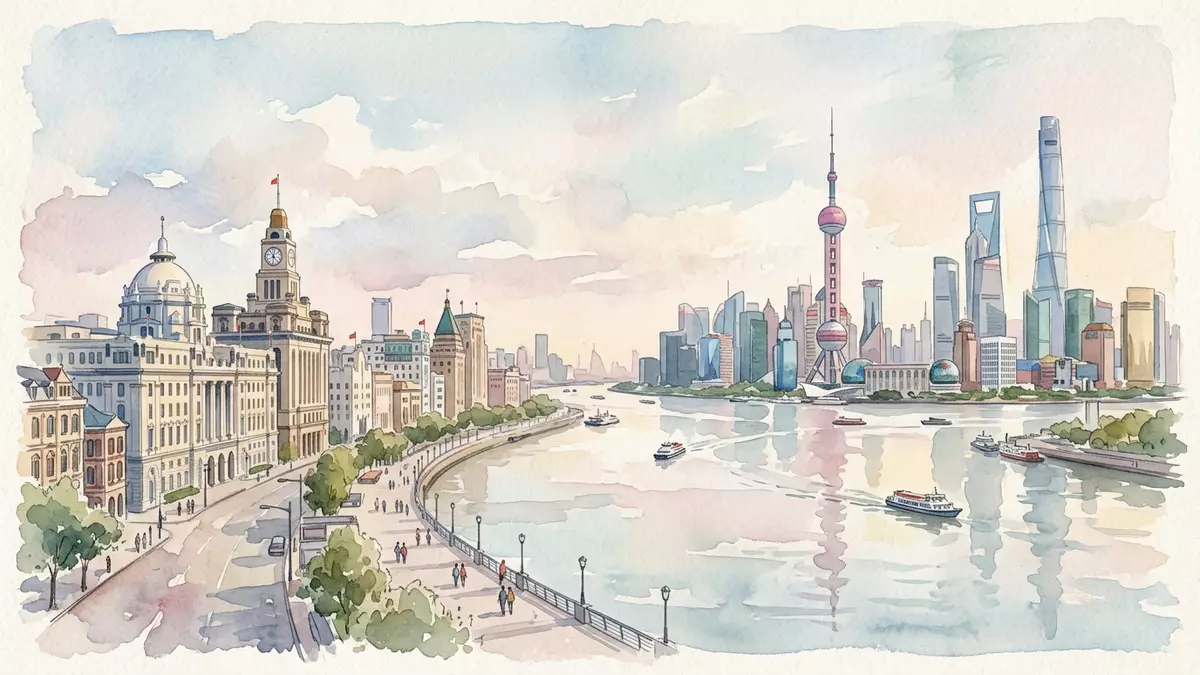
Waitan in Shanghai is the waterfront face of a former treaty port, lined with nineteenth- and early twentieth-century buildings beside the Huangpu River. The name is tied to the Shanghai Bund, the English label used for the same riverfront district.
Waitan’s treaty-port riverfront
The Bund developed after the Treaty of Nanking in 1842 opened Shanghai as a treaty port, and the riverfront became associated with foreign settlement and trade. By the late nineteenth century, it had become a broad promenade lined with imposing buildings and linked to the city’s commercial life.Treaty-port origins
The place is known in Mandarin as waitan, literally “outer beach”, and it runs along the western bank of the Huangpu opposite Pudong. The riverfront has long been read as a sequence of banks, trading houses, consulates and later hotels, all set against a different skyline across the water.western bank of the Huangpu
Architecture in stone, granite and Art Deco
Waitan is remarkable for the density of styles along one stretch of waterfront. Gothic, neoclassical, Renaissance Revival, Art Deco and early modernist buildings appear together in a row that includes banks, customs offices and commercial headquarters.
Several names anchor the architectural story: the HSBC Building, the Customs House and Sassoon House belong to the period when Shanghai’s financial power was concentrated here. The English-language label “the Bund” has become attached to this built ensemble, while the Chinese name Waitan remains in everyday use.HSBC Buildingarchitectural styles
From foreign settlement to civic promenade
Waitan’s later life is visible in the way the riverfront shifted from a working colonial edge to a public promenade. The elevated walkway, the embankment and the ordered river frontage give the place its present profile, while the buildings retain the scale and solidity of the treaty-port era.
The promenade’s northern and southern ends are tied to different landmarks, including Suzhou Creek and Yan’an East Road. Across the river, Pudong completes the scene with a skyline that turns the historic facades into a frame for Shanghai’s vertical city.Pudong skyline
Visiting Waitan: what travellers from Western Europe should know
- Waitan lies along the Huangpu River in central Shanghai. It is reached easily from East Nanjing Road Station on Metro Line 2 or Line 10, then on foot.
- The riverfront is a long promenade, so the main terrain underfoot is flat and paved. The buildings and embankment are the features that define the walk.
- The area is bordered by Suzhou Creek at one end and the stretch towards Yan’an East Road at the other. Waibaidu Bridge and the Astor House Hotel sit nearby to the north.
- The official language is Chinese and the currency is the renminbi.
Searching for Waitan on social platforms
These links open searches for Waitan on each platform.
Frequently asked questions about Waitan
Where is Waitan?
Waitan is the riverside district along the Huangpu in central Shanghai. It is the Chinese name for the Bund, the historic waterfront opposite Pudong.
What does a visit involve?
A visit means walking the promenade and reading the architectural frontage of the old treaty-port buildings. The river and skyline across from it are part of the setting.
What makes Waitan distinctive?
Its strongest feature is the concentration of Western-style commercial architecture beside one riverfront. The mix of banks, consulates and public promenade gives the place its character.


