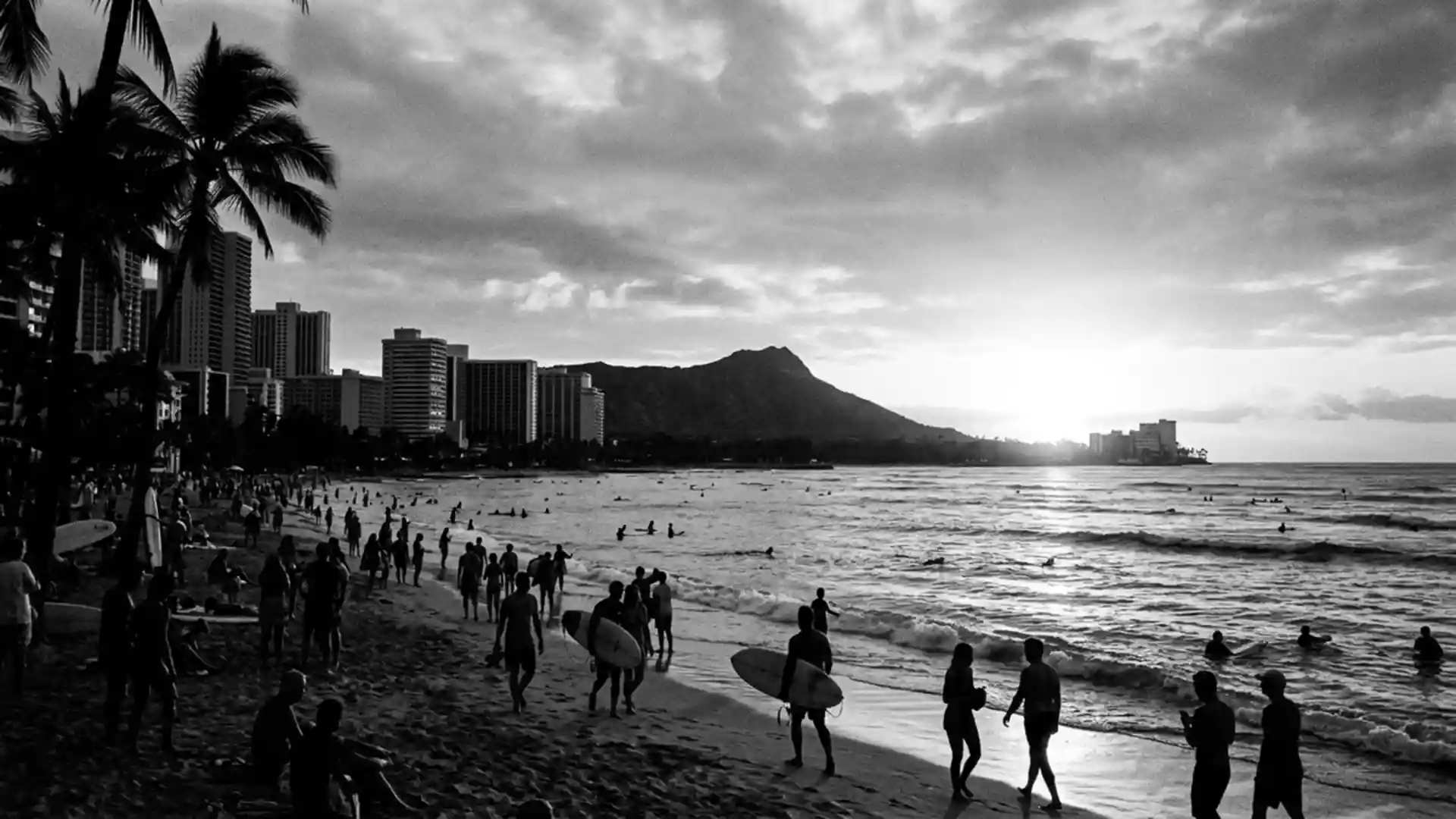
Waikiki’s layered shoreline in Honolulu
Published on 09/08/2026 at 22:39 | Editorial responsibility: Rafael Müller, Editor-in-Chief AD HOC NEWS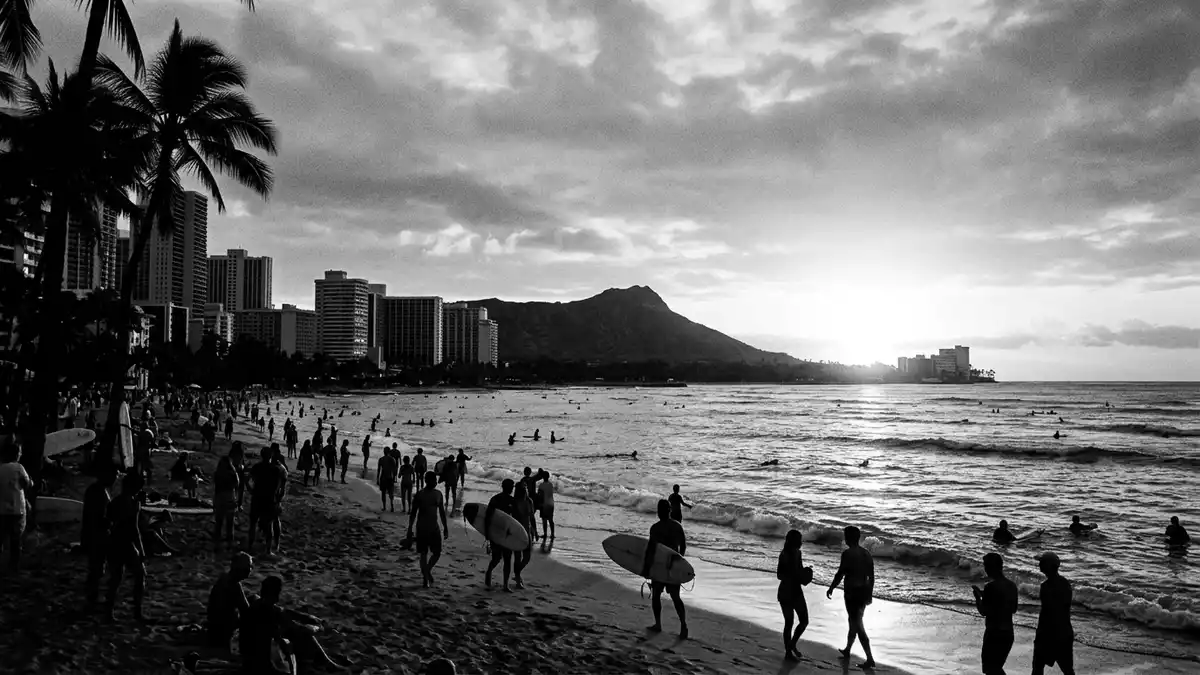
Waikiki in Honolulu is a coastal district where sand, surf and city blocks meet in a tight strip along the south shore of Oahu. Its name refers to flowing fresh water, and the place carries traces of Hawaiian rule, resort architecture and beach culture.
Royal Waikiki and the first capital years
Waikiki’s historical weight begins with the Kingdom of Hawaii. It served as the first capital from 1795 to 1796, and the area remained linked to Hawaiian royalty for generations.
The district was also part of the older social and political landscape of Oahu, where royal residence, fishing grounds and cultivated land sat close together. That layered past still frames Waikiki, even as hotels and streets define most of the present scene.
The shore, the surf and the city edge
The most visible feature is the long shoreline facing the Pacific. Waikiki is known for a broad beach backed by dense urban development, with Diamond Head rising to the east.
Waik?k? was the first capital and the district later became associated with the rise of surfing in Hawaii. Royal Hawaiian leisure and beach recreation became part of its identity long before the modern hotel skyline took shape.
The shoreline itself is not a fixed natural edge. The area was altered by drainage works and coastal development, and the beach today sits within an intensely managed urban coast.
From wetlands to resort district
Waikiki once contained wetlands, streams and fishponds fed by mountain water. The area’s transformation into an urban resort is one of the clearest examples of landscape change in Honolulu.
The Ala Wai Canal is the main physical reminder of that shift. It marks the engineering that redirected water and helped open space for the district that now fills the shoreline.
Freshwater springs and fishponds belonged to an earlier Waikiki, and their presence explains why the place appears so different from a typical beachfront strip. The district still contains that contrast between older Hawaiian geography and a heavily built seafront.
Visiting Waikiki: what travellers from Western Europe should know
- Waikiki lies in Honolulu on the south shore of Oahu. The district is reached by city roads, and Honolulu International Airport serves the wider area.
- The shore is flat, open and exposed, with a long beach and paved streets close together. The neighbourhood sits at sea level.
- Diamond Head stands at the eastern end of the district. Its volcanic cone forms a clear landmark beside the coastal strip.
- The official language is English and the currency is the United States dollar.
Searching for Waikiki on social platforms
These links open searches for Waikiki on each platform.
Frequently asked questions about Waikiki
Where is Waikiki?
Waikiki is a district of Honolulu on the south shore of Oahu in Hawaii. It faces the Pacific and lies beside Diamond Head.
What does a visit to Waikiki involve?
Expect a coastal district of beach, roads, hotels and public space rather than a separate town. The waterfront and the street grid sit close together.
What makes Waikiki distinctive?
Its identity comes from the combination of royal history, surf culture and a shoreline that was reshaped into an urban resort. The name itself points back to freshwater springs.