
Wahat Siwa and the sandstone oasis of Egypt
Published on 09/12/2026 at 17:09 | Editorial responsibility: Rafael Müller, Editor-in-Chief AD HOC NEWS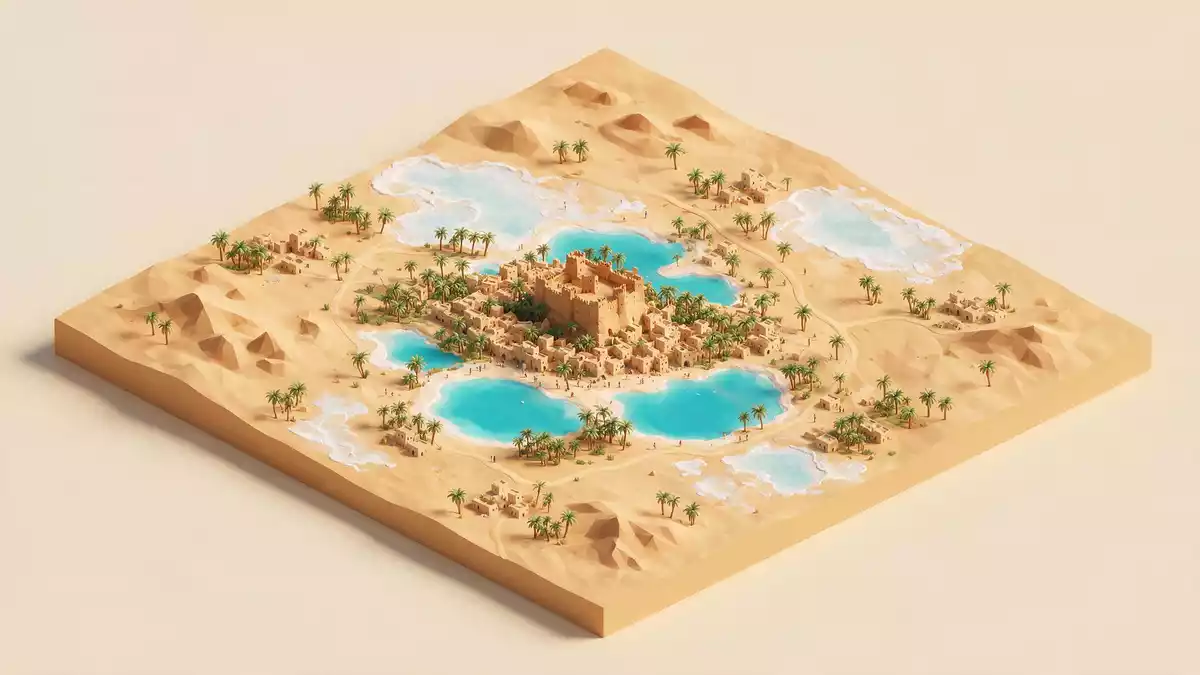
Wahat Siwa is an oasis in Egypt’s Western Desert, near the Libyan border, where springs, salt lakes and old fortified settlements shape the landscape. The name is closely tied to Siwa, and the place is also known in Arabic as W??at S?wah.
Siwa’s oasis landscape and ancient name
The oasis lies in a depression below sea level between the Qattara Depression and the Great Sand Sea. It has about 200 springs and supports date palms and olive trees, which remain central to its identity and economy. The ancient Egyptian name was Sekht-am, meaning “palm land”, and the area was long linked with the oracle of Amun at Agh?rm?ancient Egyptian name.
Siwa is also marked by a long sequence of human presence. It is settled since at least the 10th millennium BCE, and the oracle temple was already known in the Greek world in the time of Herodotus10th millennium BCE. Alexander the Great is part of its historical reputation, because the oracle at Siwa became linked with his journey across the desertAlexander the Great.
Shali and the salt architecture of the oasis
Shali is the strongest built landmark in Wahat Siwa. It is a Mamluk fortress town on a hill, and its walls were made with kershef, a local mixture of hardened salt rocks and mud, with palm trunks used for roofing and reinforcementShali fortress town.
The settlement rose in the thirteenth century and remains one of the clearest expressions of Siwan building practice. The older houses and wall surfaces use the same local material family, with salt, mud and palm wood giving the place its rough, pale texture. The ruins at Agh?rm? preserve the fragmentary temple remains, including inscriptions from the fourth century BCEthirteenth century.
Culture, settlement and the wider Siwa world
Wahat Siwa is home to Siwi Berber-speaking communities, with Arabic also in everyday use. The oasis has a distinctive cultural life expressed in craftwork, dress and local festivals, and its identity remains linked to the isolation of the desert settingSiwi Berber-speaking communities.
The settlement pattern spreads around former strongholds and across the oasis floor, with Shali and Agh?rm? among the best-known historic sites. The road network and later state links altered access, but the visible fabric of the place still centres on springs, groves, salt and stone-coloured ruinssprings and groves.
Visiting Wahat Siwa: what travellers from Western Europe should know
- Wahat Siwa lies in western Egypt, close to the Libyan border. It is reached by road from the Nile valley and from the Mediterranean coast through the Western Desert.
- The oasis sits below sea level, and the ground around the old settlements includes low hills, salt and rough stone. The remains at Shali include uneven surfaces and broken walls.
- The official language is Arabic and the currency is the Egyptian pound.
- Entry requirements depend on your nationality; UK travellers can check the FCDO travel advice at gov.uk/foreign-travel-advice, Irish travellers the Department of Foreign Affairs at ireland.ie.
Searching for Wahat Siwa on social platforms
These links open searches for Wahat Siwa on each platform.
Frequently asked questions about Wahat Siwa
Where is Wahat Siwa?
Wahat Siwa is in western Egypt, in the Western Desert near the Libyan border. It lies in an oasis depression between the Qattara Depression and the Great Sand Sea.
What does a visit involve?
The place is shaped by desert distance, spring-fed groves and the ruins of older settlements. Shali, Agh?rm? and the salt lakes are the main elements that define the landscape.
What makes Wahat Siwa distinctive?
The combination of oasis water, Berber cultural life and kershef-built ruins gives Wahat Siwa a very clear identity. Shali and the oracle area tie that identity to both the Mamluk and ancient Egyptian past.


