
Wadi Rum’s sandstone labyrinth in southern Jordan
Published on 09/07/2026 at 07:45 | Editorial responsibility: Rafael Müller, Editor-in-Chief AD HOC NEWS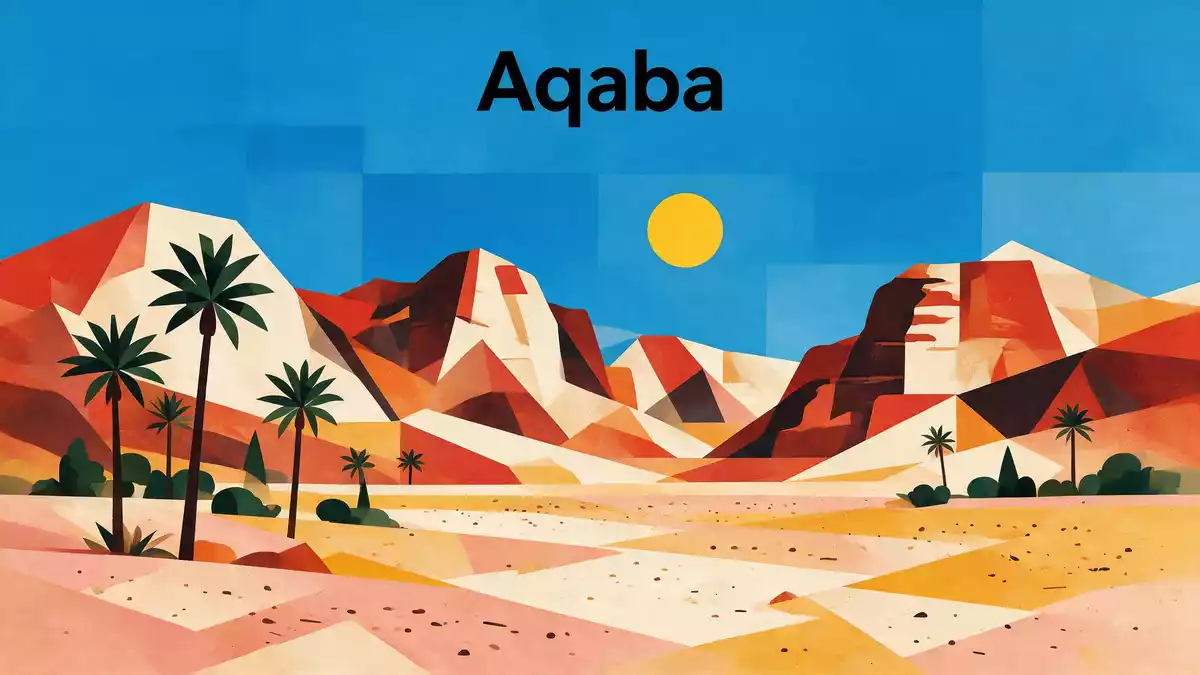
South of Aqaba in Jordan, Wadi Rum stretches across a high desert plateau where sheer sandstone cliffs rise out of broad sandy valleys. The protected area is known for its expansive red and ochre landscape and for the long continuity of Bedouin life that has left traces on the rock faces.
A protected desert of sandstone and granite
Wadi Rum lies in the south of Jordan, east of the Jordan Rift Valley and north of the border with Saudi Arabia, in the wider region that travellers reach through Aqaba on the Red Sea. The designated Wadi Rum Protected Area covers more than 740 square kilometres of desert terrain, a core zone of 74,200 hectares surrounded by a buffer zone that extends its protection across the Hisma desert.Wadi Rum Protected Area Sandstone massifs rise abruptly from sandy plains, their vertical faces cut by gullies and ledges that speak to long geological erosion.
The rocks in Wadi Rum are predominantly Precambrian granitoids overlain by sandstones of the early Palaeozoic, separated by a broad erosion surface that geologists describe as a peneplain.granitoids and sandstones At the base of several cliffs, darker and lighter granite outcrops mark the older basement, while above them thick beds of quartz-rich sandstone form the towering walls and domes that frame the valley floors.
World Heritage desert with ancient markings
In 2011 Wadi Rum was inscribed on the UNESCO World Heritage List as a mixed natural and cultural site under criteria (iii), (v) and (vii), recognising both its desert ecosystem and the depth of human history recorded in the rock carvings and inscriptions.UNESCO World Heritage inscription in 2011 The protected area includes valleys, narrow canyons and rock outcrops where petroglyphs and writings from different periods mark the surfaces, showing animals, symbols and human figures incised into the stone.
Nomadic life in Wadi Rum has continued for generations, and Bedouin families still use the desert for grazing and movement between seasonal encampments. The landscape’s combination of sweeping dunes, sandstone arches and high cliffs has brought Wadi Rum the widely used English nickname “Valley of the Moon”, a phrase that refers to the luminous quality of its red-rock wilderness.Valley of the Moon Visitors encounter both the physical traces of earlier cultures and the living traditions of desert travel and hospitality.
Approaching Wadi Rum from Aqaba
For travellers based in Western Europe, Wadi Rum is most often approached through Aqaba, the coastal city at Jordan’s short Red Sea shoreline. From Aqaba, a main road known as the Desert Highway runs north through the plateau, with a signed turn-off bringing traffic towards Wadi Rum Village at the edge of the protected area, where the paved road comes to an end.turnoff at Rashidiyah to Wadi Rum Village Beyond the village, movement into the desert follows established tracks in the sand and dry riverbeds.
The approach from Aqaba gradually reveals the change in terrain, from the built-up coastal outskirts to sparse roadside settlements and then to open desert where the first sandstone cliffs rise above the horizon. Within the protected area, the sandy ground, occasional rock steps and free-standing boulders demand steady footing, particularly where travellers explore narrow canyons or climb onto low ridges to view the surrounding massifs.location in the Aqaba governorate
Visiting Wadi Rum: what travellers from Western Europe should know
- Wadi Rum lies in southern Jordan, inland from Aqaba on the Desert Highway, with access through the turn-off to Wadi Rum Village where the main paved road ends.
- Within the protected area the terrain consists of soft sand, uneven rock and occasional narrow canyon passages, so any extended walk involves sections on yielding ground and short scrambles.
- The desert plateau sits at considerable altitude above sea level, and exposed sandstone slopes and valley floors mean that shade is limited away from cliff bases and overhangs.
- The official language is Arabic and the currency is the Jordanian dinar.
- Entry requirements depend on your nationality; UK travellers can check the FCDO travel advice at gov.uk/foreign-travel-advice, Irish travellers the Department of Foreign Affairs at ireland.ie.
Searching for Wadi Rum on social platforms
These links open searches for Wadi Rum on each platform.Frequently asked questions about Wadi Rum
Where is Wadi Rum in relation to Aqaba?
Wadi Rum lies north-east of Aqaba in southern Jordan, inland from the Red Sea coast along the Desert Highway and the turn-off towards Wadi Rum Village.
What kind of landscape should visitors expect?
Visitors encounter broad sandy valleys, high sandstone and granite cliffs, isolated rock formations and occasional arches, all within a protected desert area.
What makes Wadi Rum distinctive among desert regions?
The combination of complex sandstone geology, World Heritage protection, enduring Bedouin presence and extensive rock art gives Wadi Rum a character tied to both natural and cultural history.


