
Wadi-e Hunza: terraces, river and high Karakoram peaks
Published on 09/05/2026 at 09:25 | Editorial responsibility: Rafael Müller, Editor-in-Chief AD HOC NEWS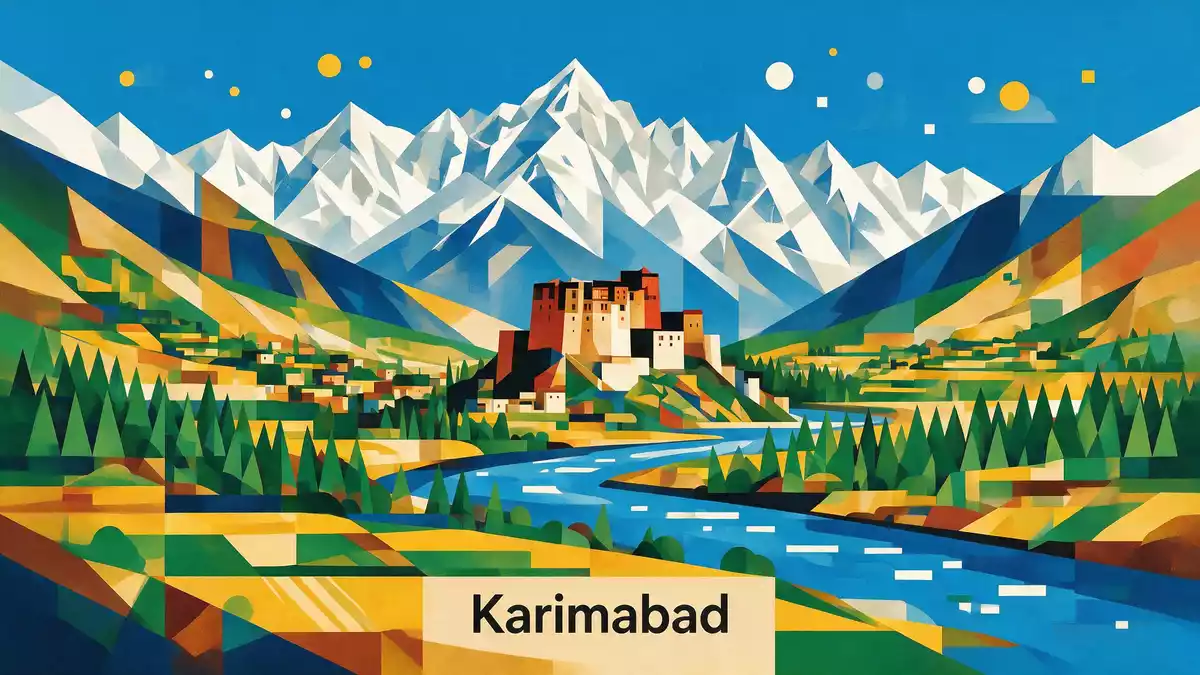
Wadi-e Hunza in northern Pakistan is a high mountain valley where the Hunza River cuts through steep Karakoram slopes and the terraced townscape of Karimabad climbs above its western bank. The wider Hunza Valley forms part of Gilgit?Baltistan, with Karimabad, formerly known as Baltit, serving as the main town and capital of Hunza District in this stretch of the Karakoram range.
Wadi-e Hunza as a river valley in the Karakoram
Wadi-e Hunza is a mountainous river valley traversed by the Hunza River in Gilgit?Baltistan, a region of northern Pakistan where high peaks and narrow gorges shape much of the terrain.mountainous river valley The valley runs roughly north from the regional centre of Gilgit, following the river through a landscape framed by the Karakoram range, with settlements gathered on slopes and alluvial fans above the river course.north of Gilgit
Karimabad lies on the western side of Wadi-e Hunza above the river, opposite the Nagar Valley on the eastern bank, where the slope rises in sharp walls and ridges.western bank of the Hunza River Around this central section the valley widens slightly, creating space for terraces, orchards and clusters of stone houses, while higher up the flanks return quickly to rock, scree and glaciers that feed tributary streams into the Hunza River.
Karimabad: terraced town and former Baltit
Karimabad, historically known as Baltit, stands as the capital of Hunza District and the principal settlement of Wadi-e Hunza, built on hillside terraces above the river at an elevation of around 2,438 m (7,999 ft).capital of Hunza District The town’s dense core consists of narrow lanes, stone and mud houses and stepped paths that link residential areas with small fields and fruit trees on the terraces.
Historically Karimabad served as the seat of a local princely state centred on Baltit, a role still evident in the presence of old fort structures on vantage points above the town.state capital Baltit From the main terraces, views reach across the Hunza River towards the opposite slopes and up-valley towards the higher sections of Hunza, where further villages form a chain along the river and the Karakoram Highway.
Peaks, forts and terraces in the wider Hunza Valley
Wadi-e Hunza sits within the broader Hunza Valley, a mountain basin at an elevation around 2,438 m where the river and its side valleys open a corridor through the Karakoram.Hunza Valley elevation Above Karimabad, named summits such as Rakaposhi and Ultar Sar rise in steep faces and ridges, creating a marked contrast between cultivated terraces and near?vertical ice and rock high above.Rakaposhi and Ultar Sar backdrop
The settlements in Hunza are commonly distinguished into lower, central and upper sections along the valley, with Karimabad forming part of Central Hunza together with nearby villages such as Altit.Central Hunza around Karimabad Old forts on rocky spurs, traditional houses on stacked terraces and paths climbing towards viewpoints together give Wadi-e Hunza a layered character, where built structures, small fields and orchards occupy limited gentler ground between the river and the surrounding peaks.
Visiting Wadi-e Hunza: what travellers from Western Europe should know
- Wadi-e Hunza lies in Gilgit?Baltistan in northern Pakistan, with Karimabad as the main town; the valley is reached by road connections that follow the Hunza River from Gilgit along the Karakoram Highway.
- The terrain combines riverbanks, steep slopes and hillside terraces; within Karimabad many routes between houses and viewpoints follow stepped paths and narrow lanes rather than wide level streets.
- The wider Hunza Valley rises well above sea level, and viewpoints around Karimabad stand at elevations of more than 2,000 m, so approaches on foot involve gradients and stairs on uneven mountain ground.
- The official language of Pakistan is Urdu and the currency is the Pakistani rupee.
- Entry requirements depend on your nationality; UK travellers can check the FCDO travel advice at gov.uk/foreign-travel-advice, Irish travellers the Department of Foreign Affairs at ireland.ie.
Searching for Wadi-e Hunza on social platforms
These links open searches for Wadi-e Hunza on each platform.
Frequently asked questions about Wadi-e Hunza
Where is Wadi-e Hunza?
Wadi-e Hunza is the valley of the Hunza River in Gilgit?Baltistan in northern Pakistan, north of Gilgit and centred on the town of Karimabad.
What should travellers expect on a visit?
A visit to Wadi-e Hunza centres on mountain scenery, terraced settlements and old fort structures around Karimabad, with steep paths and high?altitude viewpoints above the Hunza River.
What makes Wadi-e Hunza distinctive?
The combination of a terraced hillside town at around 2,438 m, a river valley and named Karakoram peaks such as Rakaposhi and Ultar Sar gives Wadi-e Hunza an especially pronounced contrast between cultivated slopes and high surrounding mountains.


