
Wadi al-Muluk, the rock-cut royal valley of Luxor
Published on 09/10/2026 at 17:06 | Editorial responsibility: Rafael Müller, Editor-in-Chief AD HOC NEWS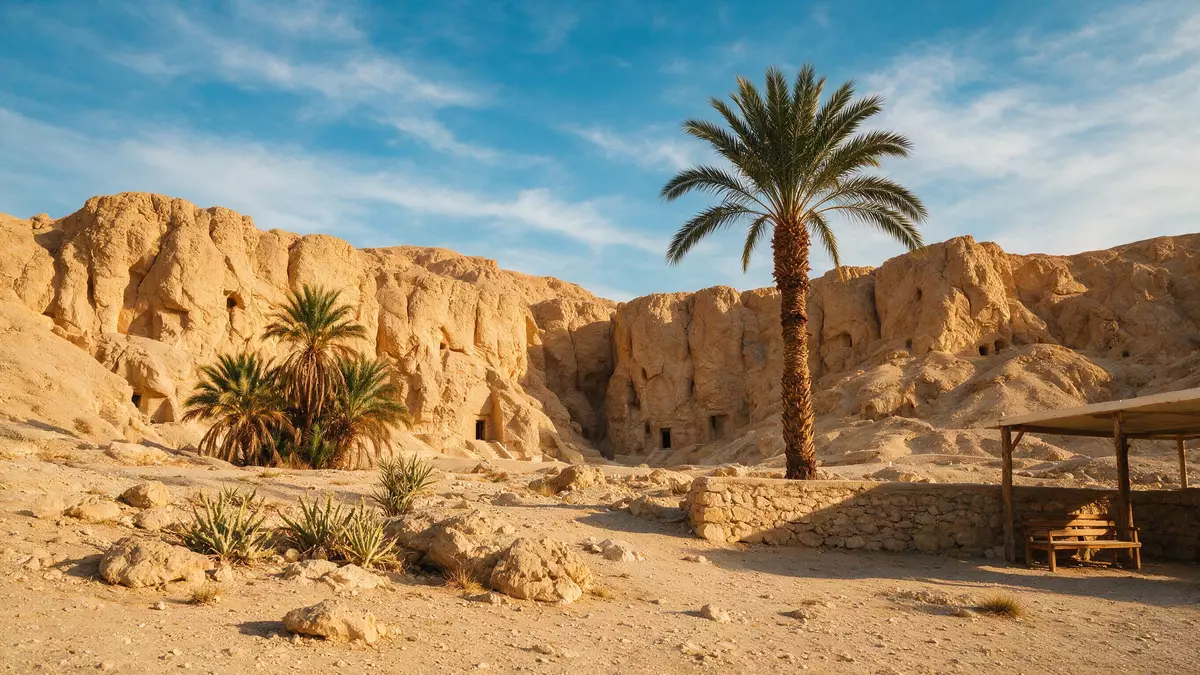
Wadi al-Muluk, known in English as the Valley of the Kings, is a dry desert valley west of Luxor where royal tombs are cut deep into the limestone hills. It formed part of the burial landscape of ancient Thebes during Egypt’s New Kingdom in the second millennium BC, and the wider area was inscribed as a World Heritage site in 1979.
A royal necropolis in the Theban hills
Wadi al-Muluk lies on the west bank of the Nile opposite Luxor, in the hills that once framed the ancient city of Thebes. The valley is part of the Theban Necropolis, the extensive burial zone that includes royal and non-royal tombs spread through several desert wadis.west bank of the Nile opposite Luxor Here, for a period of nearly 500 years during the Eighteenth to Twentieth Dynasties, tombs were excavated for pharaohs and powerful nobles of the New Kingdom.Eighteenth to Twentieth Dynasties
The valley itself is a narrow wadi cut into light-coloured limestone, with paths and low ridges leading between tomb entrances in the rock faces. Rather than freestanding pyramids or large above-ground structures, Wadi al-Muluk is defined by openings in the cliffs that lead into underground tomb complexes. Many tombs follow a characteristic plan of a descending corridor passing through a sequence of halls towards a burial chamber carved further inside the hill.long inclined rock-cut corridor
New Kingdom rulers and their rock-cut tombs
From around the sixteenth century BC, rulers of the Eighteenth Dynasty began to abandon pyramid building and instead chose Wadi al-Muluk as the main cemetery for royal burials.from the 16th to 11th centuries BC The sequence of burials runs broadly from Thutmose I in the eighteenth dynasty through pharaohs of the nineteenth and twentieth dynasties, including rulers such as Ramesses II and his successors.Thutmose I to Ramses X Over this span, the valley became the main royal necropolis for Egypt’s New Kingdom, concentrating a line of pharaohs in one desert landscape rather than scattering them across different regions.
The tombs in Wadi al-Muluk vary greatly in size and complexity. Some consist of a few chambers cut off a short passage, while others extend through a considerable sequence of corridors, stairways and halls leading to a large burial room. Plans evolved over the centuries, with earlier tombs often following simple axes and later ones adopting more elaborate layouts and deeper descents into the bedrock. What they share is a commitment to carving space out of the hill rather than stacking stone above it, turning the valley itself into an architecture of hollowed-out rock.
Decoration, World Heritage status and the wider landscape
Within the carved interiors, walls and ceilings were painted and carved with scenes from funerary texts and images linked to the journey of the sun and the afterlife. Many tombs carry representations of deities, stars and hieroglyphic inscriptions that track the passage of the deceased ruler through regions of the underworld. In several chambers, the decoration follows structured compositions that mirror episodes from funerary compositions used during the New Kingdom.
Beyond the individual tombs, Wadi al-Muluk forms part of a broader cultural landscape on Luxor’s west bank. The valley lies within the World Heritage site of ancient Thebes, an inscription that covers the temples of Luxor and Karnak, other royal cemeteries such as the Valley of the Queens, and associated necropolis areas along the desert edge.World Heritage site of ancient Thebes The surrounding hills rise from the western floodplain and frame the Nile corridor, linking the monumental temple architecture beside the river with the quieter landscape of tomb openings and desert paths.
Visiting Wadi al-Muluk: what travellers from Western Europe should know
- Wadi al-Muluk lies on the west bank of the Nile opposite Luxor, reached by crossing the river or using the bridge and continuing into the desert hills of the Theban Necropolis by road.
- The approach from the settled areas of Luxor leads into an arid valley with hard ground underfoot and modest gradients, where most movement takes place along prepared paths between tomb entrances.
- The surrounding landscape includes other parts of the Theban burial zone, and from sections of the access road there are views back across the Nile towards Luxor’s riverside temples.
- The official language is Arabic and the currency is the Egyptian pound.
- Entry requirements depend on your nationality; UK travellers can check the FCDO travel advice at gov.uk/foreign-travel-advice, Irish travellers the Department of Foreign Affairs at ireland.ie.
Searching for Wadi al-Muluk on social platforms
These links open searches for Wadi al-Muluk on each platform.
Frequently asked questions about Wadi al-Muluk
Where is Wadi al-Muluk in relation to Luxor?
Wadi al-Muluk is on the west bank of the Nile opposite Luxor, in the desert hills that form part of the Theban Necropolis.
What can visitors expect when entering the valley?
Visitors encounter an arid limestone valley with prepared paths leading between tomb entrances in the cliffs and facilities concentrated near the main access area.
What makes Wadi al-Muluk distinctive among Egyptian sites?
Wadi al-Muluk is distinctive for its concentration of New Kingdom royal tombs cut into the rock, forming a royal cemetery of underground chambers rather than freestanding pyramids.


