
Wadi al-Muluk and the carved tombs of Luxor
Published on 09/05/2026 at 08:14 | Editorial responsibility: Rafael Müller, Editor-in-Chief AD HOC NEWS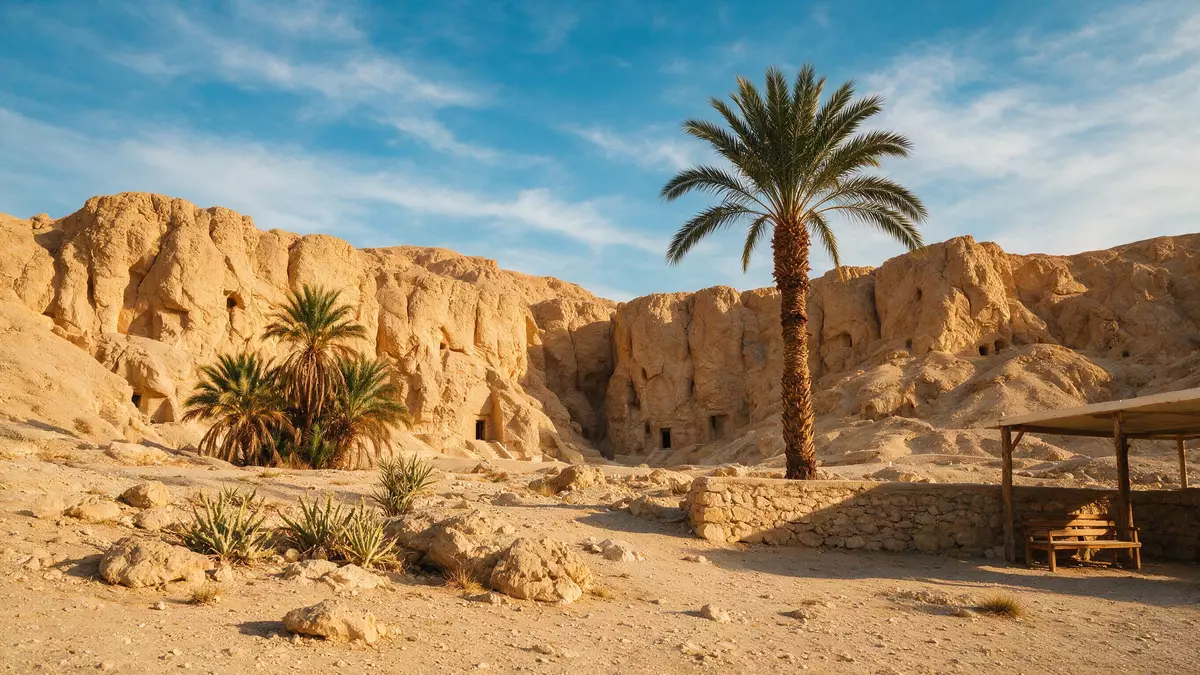
Wadi al-Muluk in Luxor is a narrow desert valley on the west bank of the Nile, best known for its rock-cut royal tombs. New Kingdom burials and the name of Tutankhamun make it one of the clearest windows onto ancient Egypt’s royal funerary landscape.
Rock-cut tombs in a limestone valley
The valley sits among the Theban hills, where pale limestone cliffs rise above the cultivated plain. Its tombs are cut directly into the rock, and the valley floor and surrounding slopes form the setting for the East Valley and the smaller West Valley.
That arrangement gives Wadi al-Muluk a stark physical character: empty desert walls outside, decorated chambers within. The site belongs to the funerary landscape of ancient Thebes, now Luxor, and it links burial practice with the wider necropolis on the west bank. Ancient Thebes with its Necropolis carries the World Heritage designation that includes the valley, while the tombs themselves belong to the period of the Egyptian New Kingdom.
Pharaohs, dynasties and royal burial
The royal burials associated with Wadi al-Muluk are linked above all to the Eighteenth, Nineteenth and Twentieth Dynasties. Thutmose I, Ramesses II and Ramesses III belong to the sequence of rulers most strongly associated with the valley, and the site’s long use runs through the New Kingdom.
The tombs vary in size, plan and decoration, from simpler shafts and corridors to more elaborate underground complexes. Some chambers carry religious texts and painted scenes, while others preserve only the cut rock and the traces of ancient work. The physical contrast between the bare valley and the decorated interiors is central to the place’s character. limestone cliffs and rock-cut tombs define the site more clearly than any single monument.
The modern view of an ancient necropolis
Wadi al-Muluk is known in English as the Valley of the Kings, and the two names point to the same place. The valley’s importance lies in its concentration of royal tombs and in the way the landscape itself forms part of the historical experience.
Visitors encounter a dry wadi rather than a built monument, then move into carved chambers beneath the hills. The site is part of Luxor’s wider western necropolis, which includes temples, cliffs and burial grounds spread across the desert edge. The result is a place where geology and kingship remain visibly linked.
Visiting Wadi al-Muluk: what travellers from Western Europe should know
- The valley lies on Luxor’s west bank in Egypt, within the Theban necropolis. It is reached from Luxor by road and is tied to the West Bank burial landscape.
- The approach is across desert ground and into a rocky valley with exposed slopes. The tombs themselves are cut below the surface, so steps and uneven passages are part of the setting.
- The official language is Arabic and the currency is the Egyptian pound.
- Entry requirements depend on your nationality; UK travellers can check the FCDO travel advice at gov.uk/foreign-travel-advice, Irish travellers the Department of Foreign Affairs at ireland.ie.
Searching for Wadi al-Muluk on social platforms
These links open searches for Wadi al-Muluk on each platform.
Frequently asked questions about Wadi al-Muluk
Where is Wadi al-Muluk?
It lies on the west bank of the Nile near Luxor, inside the Theban necropolis in Egypt. The valley belongs to the burial landscape of ancient Thebes.
What does a visit involve?
The site means walking in desert terrain and entering tombs cut into the cliffs. The visible contrast between the open wadi and the underground chambers is the clearest part of the experience.
What makes Wadi al-Muluk distinctive?
Its identity comes from the combination of royal tombs, limestone cliffs and its place in the New Kingdom burial tradition. The names of Thutmose I, Ramesses II and Tutankhamun keep it anchored in dynastic history.


