
Wadi Al-Hitan and the whales beneath Egypt’s desert
Published on 09/23/2026 at 14:17 | Editorial responsibility: Rafael Müller, Editor-in-Chief AD HOC NEWS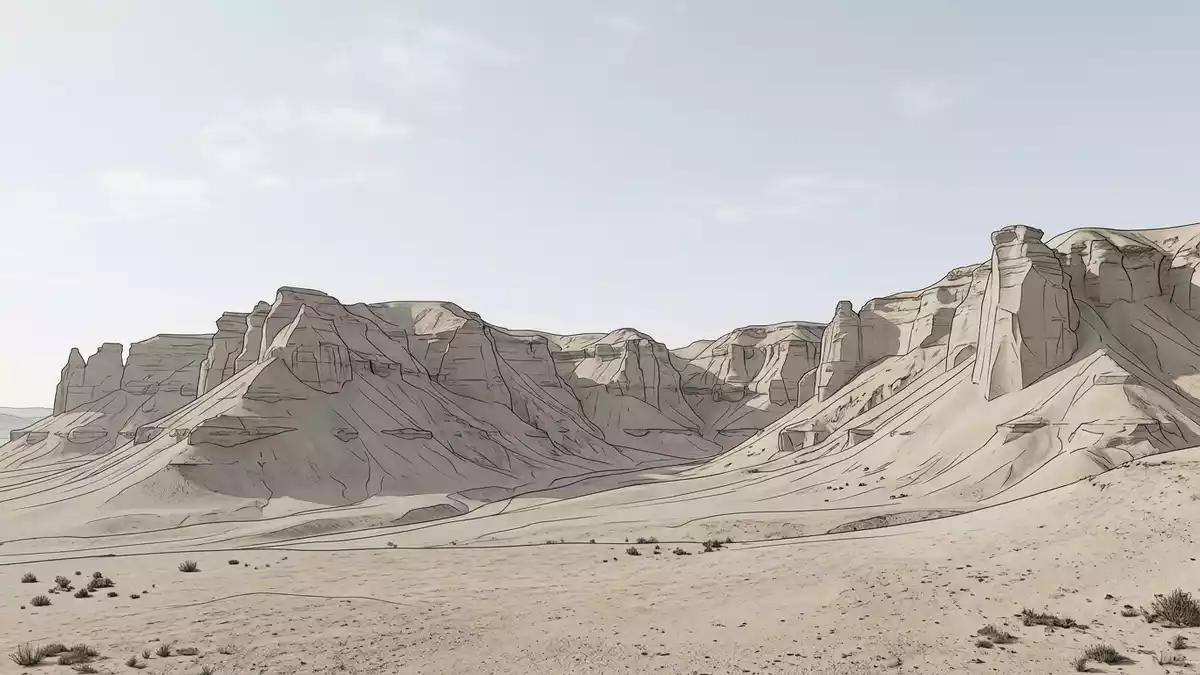
Wadi Al-Hitan, the Valley of the Whales, is a desert landscape in Egypt’s Western Desert where fossil whales lie within exposed rock. The site preserves a visible record of marine mammals changing from land animals into ocean-going whales.
Wadi Al-Hitan: a seabed in the Western Desert
Wadi Al-Hitan lies in the Fayyum region, within the wider Wadi El-Rayan Protected Area. Its ridges, sandy flats and pale sedimentary rocks form part of a landscape that was a shallow marine environment during the late Eocene period.
The exposed geology contains limestone, clay and sandstone deposited in coastal and near-shore settings. Fossils of whales occur alongside shark teeth, shells, sea cows, turtles, crocodilians and other marine remains. The rocks therefore preserve more than isolated skeletons: they record an ancient ecological setting. UNESCO World Heritage status recognises the site’s geological and palaeontological importance.
Fossil whales with traces of their land ancestry
The principal fossils belong to Archaeoceti, an extinct suborder of early whales. Their skeletons show the changing anatomy of animals that had ancestral connections with life on land while becoming adapted to marine movement.
At Wadi Al-Hitan, the youngest archaeocetes retain small hind limbs while displaying elongated bodies and powerful tails. The fossils include Basilosaurus and Dorudon, two names associated with the whale remains found in the valley. Their bones lie in the same broad setting as sedimentary layers and other marine fossils, connecting anatomy with environment.
The age of the fossil-bearing rocks reaches roughly 40 million years. This places the valley within the Eocene, a geological period that ended long before the appearance of modern humans. Eocene sedimentary formations preserve the remains in rocks formed near an ancient sea.
An open geological museum among desert formations
Wadi Al-Hitan is arranged as a landscape of fossil localities rather than a single enclosed building. Skeletons and fragments appear among rock outcrops, sandy ground and low desert formations. The setting keeps the relationship between fossils and geology visible.
The valley entered the World Heritage List in 2005. Its protected status covers the fossil evidence and the surrounding landscape within Wadi El-Rayan. Egyptian nature-protection law also safeguards the geological features of the reserve.
The name Wadi Al-Hitan means Valley of the Whales, a direct description of the site’s defining remains. The valley’s importance rests on the concentration, quality and accessibility of early-whale fossils, together with evidence of the environment in which they lived. the fossil reserve in Fayyum also contains remains of sharks, shells and other marine animals.
Visiting Wadi Al-Hitan: what travellers from Western Europe should know
- Wadi Al-Hitan lies in the Western Desert of Egypt, west of Fayyum and within the Wadi El-Rayan Protected Area. Access is by road across the desert landscape.
- The site is an outdoor fossil landscape. Walking takes place across sand, exposed rock and uneven ground between fossil localities.
- There is no sea at Wadi Al-Hitan. The marine fossils occur in sedimentary rocks that formed when this part of Egypt lay beside an ancient shallow sea.
- The official language is Arabic and the currency is the Egyptian pound.
- Entry requirements depend on your nationality; UK travellers can check the FCDO travel advice at gov.uk/foreign-travel-advice, Irish travellers the Department of Foreign Affairs at ireland.ie.
Searching for Wadi Al-Hitan on social platforms
These links open searches for Wadi Al-Hitan on each platform.
Frequently asked questions about Wadi Al-Hitan
Where is Wadi Al-Hitan?
Wadi Al-Hitan is in Egypt’s Western Desert, in the Fayyum region and within the Wadi El-Rayan Protected Area. It lies west of Fayyum in a desert setting shaped by sedimentary rocks.
What can visitors expect at the site?
Visitors encounter an outdoor fossil landscape with whale skeletons, rock outcrops, sandy ground and remains of other marine animals. Walking takes place between exposed fossil localities.
What makes Wadi Al-Hitan distinctive?
The valley preserves early-whale fossils from the Eocene, including remains that retain small hind limbs. Its rocks connect the fossils with the ancient marine environment in which the animals lived.


