
Wadi Al-Hitan and the fossil beds of Whale Valley
Published on 09/18/2026 at 15:41 | Editorial responsibility: Rafael Müller, Editor-in-Chief AD HOC NEWS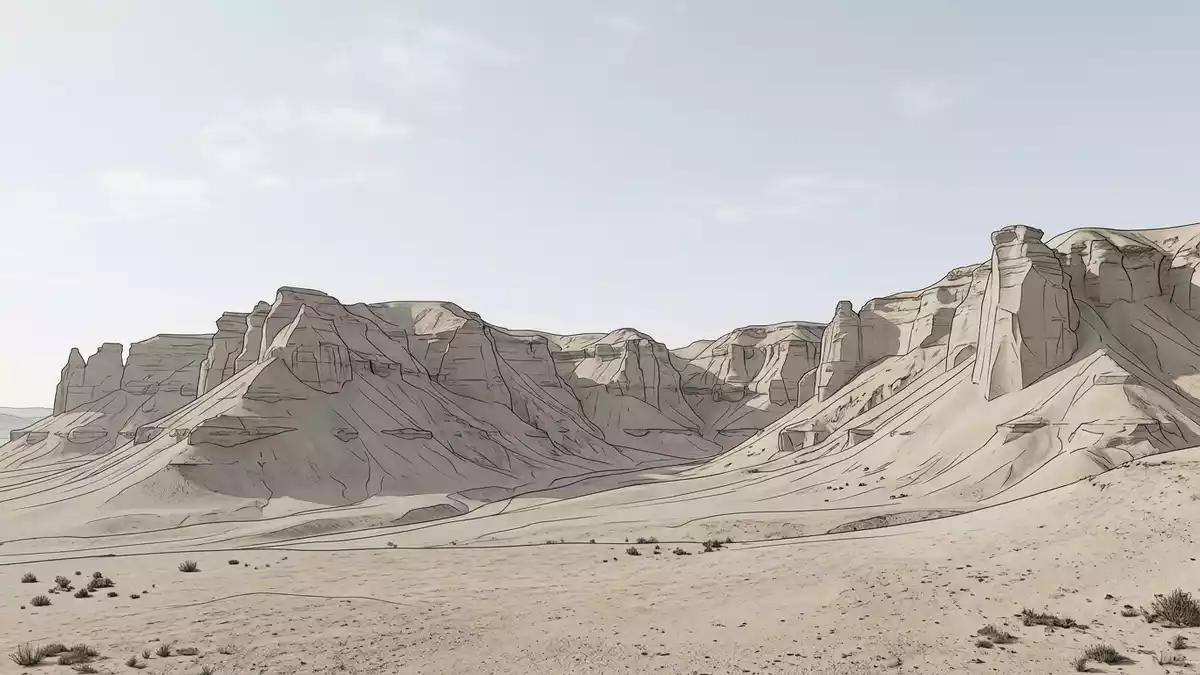
Wadi Al-Hitan in Fayyum is a paleontological landscape in Egypt’s Western Desert, best known for the fossil remains of early whales. It entered the UNESCO World Heritage List in 2005, and that status matches the site’s clear geological identity. [https://whc.unesco.org/en/list/1186/](https://whc.unesco.org/en/list/1186/)
Whale fossils in an open desert basin
The place is sometimes called Whale Valley, and that alternative name captures its strongest feature: large fossil bones lying in a dry desert setting. The site is associated with early whales, including archaeocetes, the extinct group that records the shift from land to sea.
The landscape itself is part of the experience. Low ridges, exposed sediments and scattered fossil material make the basin feel stripped back to essentials, with little visual separation between geology and the remains it protects. Its setting in the Western Desert gives Wadi Al-Hitan a stark, open character that suits a place defined by buried life made visible.
From Eocene seas to fossil beds
The fossils at Wadi Al-Hitan belong to the Eocene, when the region formed part of a marine environment. That period matters because the bones preserve whales in an early stage of their evolution, alongside other marine remains that turn the valley into a long archive of ancient seabeds.
Among the best-known finds are Basilosaurus and Dorudon, names that recur in the scientific literature on the site. Their presence gives the valley more than headline value: it is a place where the outline of whale evolution can be read in the rocks and bones themselves. [https://www.lyellcollection.org/doi/full/10.1144/SP543-2022-203](https://www.lyellcollection.org/doi/full/10.1144/SP543-2022-203)
UNESCO status and the wider Fayoum landscape
Wadi Al-Hitan sits within the wider Wadi El-Rayan protected area, in Egypt’s Fayoum Governorate. Its World Heritage inscription in 2005 reflects the density and quality of the fossil remains, and the name of the site has become linked with that formal recognition. [https://whc.unesco.org/en/list/1186/](https://whc.unesco.org/en/list/1186/)
The area is a protected desert landscape rather than a built monument, and that changes how it reads on the ground. The interest lies in surface exposure, sediment layers and bones visible in place, not in façades or rooms. The setting around Fayyum also places the valley within a broader region known for desert margins, oases and long geological time. [https://www.iugs-geoheritage.org/geoheritage_sites/whale-valley-cetacea-and-sirenia-eocene-fossils-of-wadi-al-hitan/](https://www.iugs-geoheritage.org/geoheritage_sites/whale-valley-cetacea-and-sirenia-eocene-fossils-of-wadi-al-hitan/)
Visiting Wadi Al-Hitan: what travellers from Western Europe should know
- The site lies in Fayyum Governorate, in the Western Desert of Egypt. It is reached by road from the Fayoum area rather than by rail or urban transit.
- The terrain is open desert with exposed ground and fossil-bearing surfaces. Expect a landscape shaped by sand, rock and distance between points of interest.
- Wadi Al-Hitan is part of a protected area with archaeological and natural value. Fossils are part of the place itself, not separate display objects.
- The official language is Arabic and the currency is the Egyptian pound.
- Entry requirements depend on your nationality; UK travellers can check the FCDO travel advice at gov.uk/foreign-travel-advice, Irish travellers the Department of Foreign Affairs at ireland.ie.
Searching for Wadi Al-Hitan on social platforms
These links open searches for Wadi Al-Hitan on each platform.
Frequently asked questions about Wadi Al-Hitan
Where is Wadi Al-Hitan?
Wadi Al-Hitan is in Fayyum Governorate, in the Western Desert of Egypt. It lies within the broader Wadi El-Rayan protected area.
What does a visit involve?
The place is an open desert fossil landscape with exposed ground and ancient bones in situ. The terrain is part of the visit, rather than a separate exhibit.
What makes Wadi Al-Hitan distinctive?
Its fossil record captures early whales in an Eocene setting. UNESCO inscribed it in 2005 because of the site’s scientific value and the clarity of what remains visible there.


