
Volcan de Santa Ana and the highlands of western El Salvador
Published on 08/28/2026 at 14:55 | Editorial responsibility: Rafael Müller, Editor-in-Chief AD HOC NEWS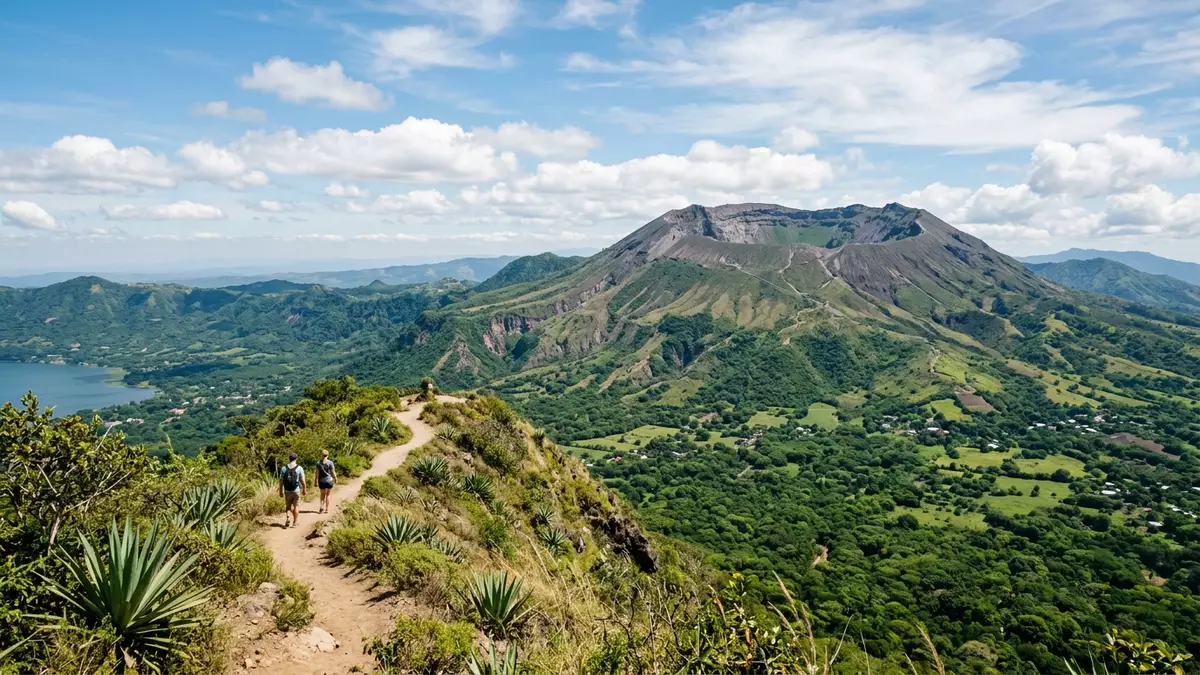
Volcan de Santa Ana, also known as Ilamatepec, is a high stratovolcano overlooking the city of Santa Ana in western El Salvador. Rising to about 2,381 m (7,812 ft), it is recognised as the country’s highest volcano and stands within a broader chain of peaks that frames forest and coffee land in this part of Central America.
A high volcano above Santa Ana
Volcan de Santa Ana stands in the department of Santa Ana in western El Salvador, in a landscape where volcanic cones and ridges are a dominant feature. The volcano is a large stratovolcano, built up by successive layers of lava and ash and reaching an elevation of 2,381 m (7,812 ft) above sea level.At 2,381 m it forms the highest volcano in El Salvador, giving its upper slopes and summit a cool, highland character compared with the lowlands around the coastal plain.
The volcano rises immediately west of the Coatepeque caldera, a large volcanic depression with a lake at its base that marks the eastern foot of the massif.Santa Ana stands west of Coatepeque and its flanks descend towards a region long associated with coffee cultivation. From many viewpoints the cone appears as a broad, high dome, with lower ridges linking it visually to surrounding peaks.
The Los Volcanes complex and Apaneca range
Volcan de Santa Ana forms part of a wider cluster of volcanoes known as the Los Volcanes complex in the Apaneca-Ilamatepec mountain range of western El Salvador.Los Volcanes National Park brings together Santa Ana, Izalco and Cerro Verde as three “young” volcanoes in a protected natural area where forest and volcanic geology meet. The grouping is visible in the way several peaks sit close together above valleys filled with trees and farmland.
Within this cluster, Volcan de Santa Ana is the largest volcano and a dominant landmark. Its summit forms one of the higher points on the Apaneca-Ilamatepec range, giving long views across neighbouring ridges and towards the Pacific lowlands on clear days.Ilamatepec is part of the Los Volcanes complex and its position within a tropical cloud forest zone means that mist and cloud can wrap the upper slopes, while coffee plantations cover many of the lower flanks.
Crater lake and volcanic activity
The summit of Volcan de Santa Ana is marked by a series of nested craters, cut into the top of the cone and forming a distinctive, stepped landscape at high altitude.The innermost crater holds a vivid turquoise lake whose colour comes from dissolved minerals and the acidic nature of the water. Standing at the rim, visitors look down into this crater lake, with bands of different coloured rock lining the inner walls.
Volcan de Santa Ana is an active volcano with a recorded history of eruptions stretching back several centuries. Documented eruptions in the twentieth and twenty-first centuries include events in 1904, 1920 and 2005, reflecting its continuing activity within the Central America volcanic arc.Recorded eruptions in 1904, 1920 and 2005 show that the volcano has a pattern of long quiet intervals punctuated by more energetic phases. Fumaroles and gas emissions at the summit crater underline that the system beneath the cone remains active even in years without major eruptions.
Visiting Volcan de Santa Ana: what travellers from Western Europe should know
- Volcan de Santa Ana rises above the city of Santa Ana in western El Salvador, within the Los Volcanes area of the Apaneca-Ilamatepec range, and is reached via roads that climb towards Cerro Verde and the surrounding highlands.
- The ascent towards the summit involves a sustained climb on foot over volcanic terrain, with sections of uneven ground and extended slopes at altitude that demand steady walking and appropriate footwear.
- The surrounding area includes forest, cafetales and views towards Coatepeque Lake, so a visit to the volcano can be combined with time in this wider highland landscape.
- The official language is Spanish and the currency is the United States dollar (USD).
- Entry requirements depend on your nationality; UK travellers can check the FCDO travel advice at gov.uk/foreign-travel-advice, Irish travellers the Department of Foreign Affairs at ireland.ie.
Searching for Volcan de Santa Ana on social platforms
These links open searches for Volcan de Santa Ana on each platform.
Frequently asked questions about Volcan de Santa Ana
Where is Volcan de Santa Ana located?
Volcan de Santa Ana stands in the department of Santa Ana in western El Salvador, immediately west of the Coatepeque caldera and its lake.
What can visitors expect on a visit to Volcan de Santa Ana?
Visitors encounter highland volcanic terrain with a broad summit area cut by several craters, including an inner crater holding a vivid turquoise lake, and extensive views over nearby peaks.
What makes Volcan de Santa Ana distinctive among El Salvador’s volcanoes?
Its height of about 2,381 m (7,812 ft), position within the Los Volcanes complex and summit crater lake together make Volcan de Santa Ana a particularly striking high volcano in western El Salvador.


