
Volcán Barú joins Panama jaguar census in 2027
Published on 09/27/2026 at 09:07 | Editorial responsibility: Rafael Müller, Editor-in-Chief AD HOC NEWS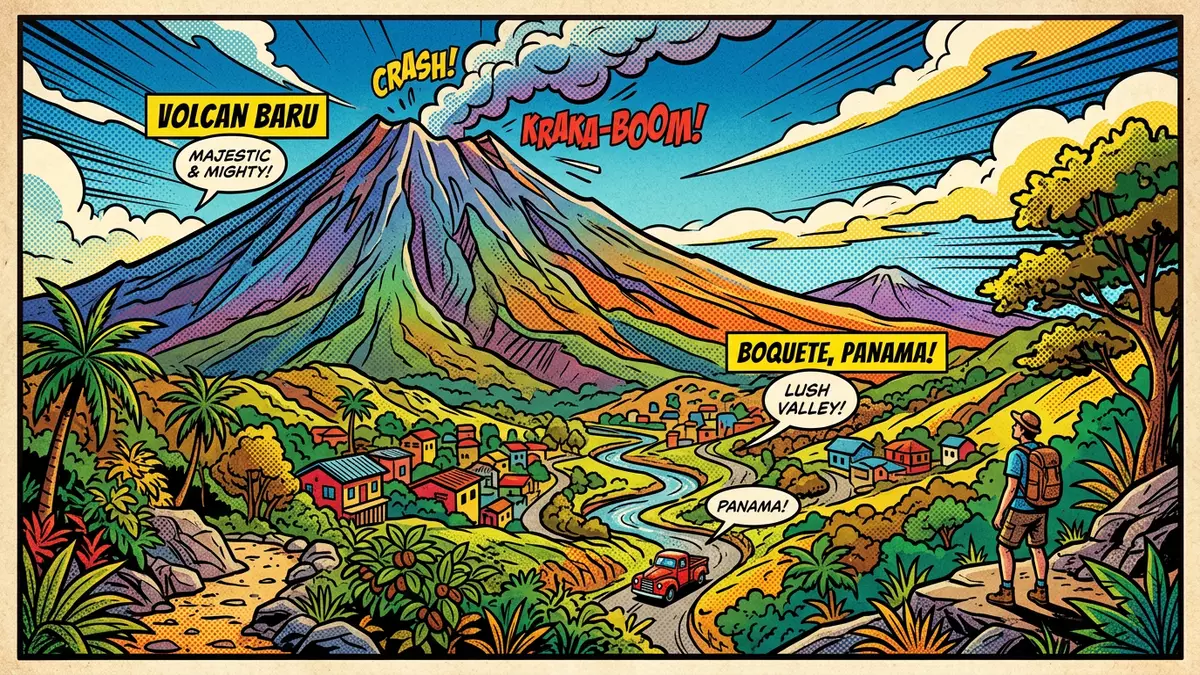
Volcán Barú and the national park around it will be included in Panama’s second national jaguar census in 2027, an announcement made on 26 September 2026. The mountain, known locally as Volcán Barú, lies in Chiriquí and is reached by many visitors from Boquete.
Jaguar census will reach Volcán Barú in 2027
The new monitoring phase will extend the Censo Nacional del Jaguar y Mamíferos Terrestres into western Panama. It will include sectors of the Parque Nacional Volcán Barú and the Parque Internacional La Amistad, according to TVN’s report on the 2027 census.
The project is the second phase of GEF-7 Jaguares Panamá. Its stated aims are to improve knowledge of where jaguars live, identify the biological corridors they use and locate areas where wildlife comes into greater contact with human activity. Camera traps will also record jaguars, pumas and other species moving through the landscape.
The announcement does not set out a public festival, exhibition or special opening at the mountain. For travellers, its immediate significance is that conservation work planned for 2027 now names the national park as part of the study area.
Why the national park matters to the research
The park protects more than 141 square kilometres in Chiriquí and is described by Panama’s tourism authority as an internationally important biological corridor. Its habitats range from tropical forest and cloud forest to páramo, natural savannah and volcanic terrain, creating varied conditions for wildlife monitoring.
The same landscape also explains the connection between the census and Boquete. The tourism authority identifies Boquete as the main starting point for walks and excursions, while the park has routes from both Boquete and Los Llanos. A park guide published by Panama’s tourism authority places the summit at 3,474 metres above sea level and describes the mountain as the country’s highest point.
The census also has a practical conservation dimension. A report published on 26 September 2026 said that discussions involving producers, specialists and community representatives identified habitat fragmentation as a major risk. Areas near Fortuna, Gualaca and the road towards Boquete were cited in connection with wildlife crossing roads.
Research adds a new layer to the Boquete route
For visitors, the planned survey changes the context rather than the basic nature of a trip. The mountain remains a national park with steep and demanding terrain, while the 2027 monitoring programme will examine the wider ecosystem that surrounds the routes used by hikers and authorised vehicles.
The first national survey estimated about 270 jaguars across the 38% of Panama assessed in its initial phase. That earlier work covered approximately 2.87 million hectares, used 794 camera traps and analysed 87,644 wildlife records. The western expansion is intended to add information from areas not included in that first stage.
Visiting Volcán Barú: what travellers from Western Europe should know
- The jaguar census announcement was made on 26 September 2026, and the second phase is planned for 2027 at locations including Parque Nacional Volcán Barú.
- No special visitor access or closure is stated in the announcement; the research concerns future monitoring rather than a public event at the summit.
- Boquete is the principal approach for many walks and excursions. The tourism authority also identifies Los Llanos, near Volcán, as another route to the summit.
- The mountain reaches 3,474 metres and includes forest, cloud forest, páramo and volcanic terrain. The Los Llanos route is described as difficult, while the Boquete route is also used by specially modified 4x4 vehicles.
- Panama’s official language is Spanish and its national currency is the balboa, alongside the US dollar in everyday circulation.
- Entry requirements depend on your nationality; UK travellers can check the FCDO travel advice at gov.uk/foreign-travel-advice, Irish travellers the Department of Foreign Affairs at ireland.ie.
Searching for Volcán Barú on social platforms
These links open searches for Volcán Barú on each platform.
Frequently asked questions about Volcán Barú
When does the jaguar census take place at Volcán Barú?
The second phase is planned for 2027, with sectors of the national park included in the monitoring area.
What is Volcán Barú?
It is Panama’s highest mountain, rising to 3,474 metres within a national park in Chiriquí.
Where is Volcán Barú and how do you get there?
The mountain is in western Panama’s Chiriquí province. Boquete is a main starting point for walks and excursions, while another route begins at Los Llanos near Volcán.


