
Vinicunca’s mineral colours above Cusco’s high plateau
Published on 09/15/2026 at 09:00 | Editorial responsibility: Rafael Müller, Editor-in-Chief AD HOC NEWS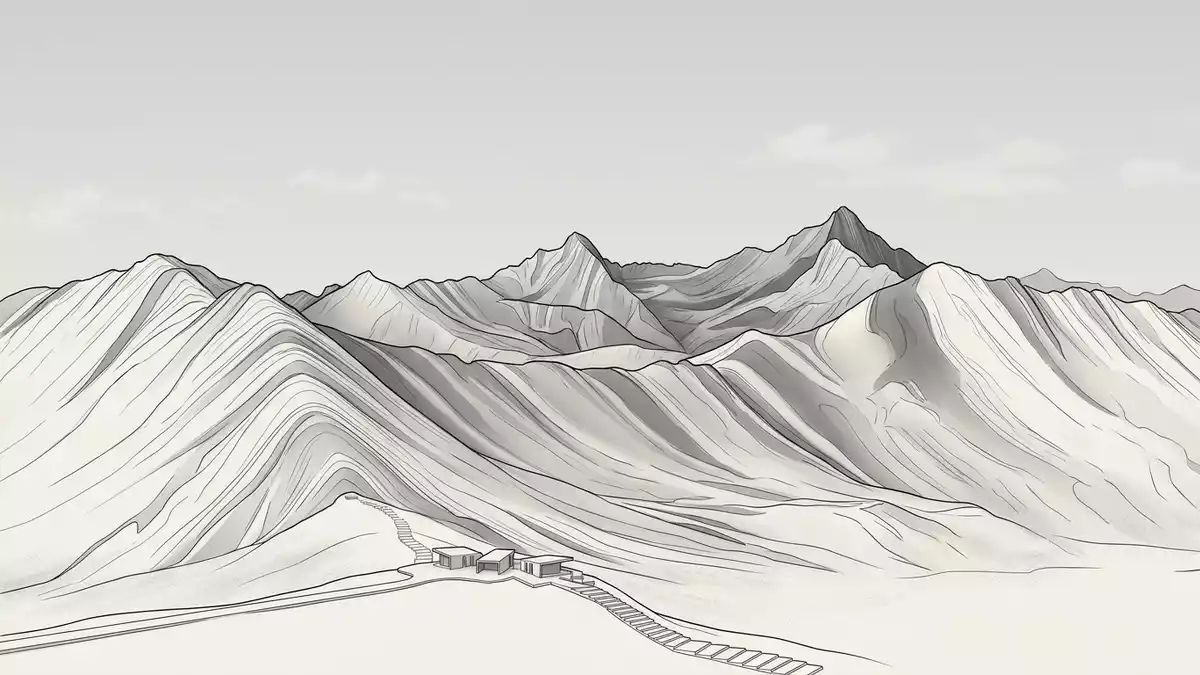
Vinicunca, known in English as Rainbow Mountain and in Spanish as Montaña de Siete Colores, rises in the Andes south-east of Cusco as a ridge painted in bands of mineral colour. At an elevation a little above 5,000 m (around 16,500 ft), it forms a viewpoint over the high plateau and glaciated peaks of the Vilcanota range in southern Peru, where the mountain’s striped slopes stand out against broad valleys and snow-covered summits.
A striped Andean ridge shaped by minerals
Vinicunca is a mountain in the Cusco region of Peru, on routes that lead towards the Ausangate massif in the Vilcanota range of the Andes.a mountain in the Andes of Peru The ridge lies between districts of the Quispicanchi and Canchis provinces, in a landscape where high passes link grazing ground for llamas and alpacas with villages further down the valleys.between Cusipata and Pitumarca districts The summit area reaches around 5,036 m (16,522 ft) above sea level, making it a high-altitude destination by any measure in the Peruvian Andes.altitude of 5,036 metres
The slopes that give Vinicunca its name are banded in reds, yellows, greens and blues, forming parallel stripes across the ridge that recall a geological cross-section exposed to open air rather than on a textbook page.parallel bands of fuchsia, turquoise and gold These colours come from different mineral layers within sedimentary rock, including iron oxides that form red belts and other compounds that leave greenish and yellow tones on the weathered surface.vibrant stripes caused by mineral deposits Seen from the main viewpoint, one side of the ridge drops into a valley while the striped face tilts gently away, so the coloured bands run diagonally across the field of view under Andean skies.
Names, routes and the wider Vilcanota landscape
Vinicunca is also known as Winikunka in Quechua and carries several Spanish names, among them Montaña de Siete Colores, Montaña de Colores and Montaña Arcoíris, all highlighting the coloured slopes.also called Montaña de Siete Colores The mountain stands in the Cordillera Vilcanota, a section of the Andes where peaks such as Ausangate rise above glaciers and high valleys used for herding.located within the Vilcanota mountain range Approaches to the viewpoint run through open puna grassland, with long views towards snow-covered crests that frame the coloured ridge in a wider high-mountain setting.
For travellers based in Cusco, Vinicunca lies to the south-east of the city in the direction of Pitumarca and other settlements in Canchis Province.südöstlich von Cusco in der Provinz Quispicanchi Access tracks reach trailheads at elevations around 4,600 m (15,090 ft), where walking routes climb steadily towards the main viewpoint on the ridge.base of the hike at approx. 4,600 m The path rises across grazing ground and gradually unveils more of the striped slope as the angle of view changes, with peaks of the Vilcanota range and the Ausangate area visible beyond.
Experiencing high altitude and colour at Vinicunca
Reaching the viewpoint on Vinicunca means spending time above 4,500 m (14,764 ft), a height where the air is thin and the horizon opens over multiple Andean chains.trailhead altitude 4,600 m From the upper vantage points, visitors see the coloured ridge running below their feet and the surrounding valleys cut deep into the plateau, with other peaks of the Vilcanota range forming a ring of summits around the site.sweeping views that display the Peruvian Andes The altitude figure of around 5,036 m is comparable to higher accessible passes elsewhere in the Andes, making Vinicunca one of the more elevated viewpoints reachable on a day trip from Cusco.
The coloured bands themselves appear different depending on light, cloud and the direction from which the ridge is seen, but the underlying mineral layers keep their structure as long horizontal stripes across the slope. On some parts of the mountain, red layers dominate; on others, greenish tones and pale yellows form a broader mix, and in places muted purples appear where intermediate strata reach the surface.slopes painted with shades of red, yellow, green, purple and turquoise The ridge line above these colours gives a clear sense of the structure of the mountain, with its crest forming a boundary between the coloured face and rock of more conventional hues on other aspects.
Visiting Vinicunca: what travellers from Western Europe should know
- Vinicunca lies south-east of Cusco in the Vilcanota range of the Peruvian Andes, and is reached from roads that lead towards Pitumarca and other districts in Canchis Province.
- The approach to Vinicunca involves walking at high altitude, with paths starting around 4,600 m (15,090 ft) above sea level and climbing steadily towards the coloured ridge.
- The terrain on the final section includes slopes that can be steep in places and ground underfoot that ranges from compacted earth to loose stones, so sturdy footwear is advisable.
- The official language is Spanish and the currency is the Peruvian sol.
- Entry requirements depend on your nationality; UK travellers can check the FCDO travel advice at gov.uk/foreign-travel-advice, Irish travellers the Department of Foreign Affairs at ireland.ie.
Searching for Vinicunca on social platforms
These links open searches for Vinicunca on each platform.
Frequently asked questions about Vinicunca
Where is Vinicunca located in relation to Cusco?
Vinicunca stands in the Vilcanota section of the Andes south-east of Cusco, between districts of the Quispicanchi and Canchis provinces in the Cusco region of Peru.
What should travellers expect on a visit to Vinicunca?
A visit to Vinicunca involves high-altitude walking from trailheads above 4,500 m (14,764 ft), with paths climbing towards a ridge whose slopes are banded in mineral colours and whose viewpoints give wide views over the surrounding Andes.
What makes Vinicunca distinctive among mountains near Cusco?
Vinicunca is distinctive for the mineral stripes that run across its slopes in reds, yellows, greens and blues, forming a coloured ridge at over 5,000 m (around 16,500 ft) above sea level within the wider glaciated landscape of the Vilcanota range.


