
Vinh Ha Long’s limestone towers and emerald waters
Published on 08/27/2026 at 13:39 | Editorial responsibility: Rafael Müller, Editor-in-Chief AD HOC NEWS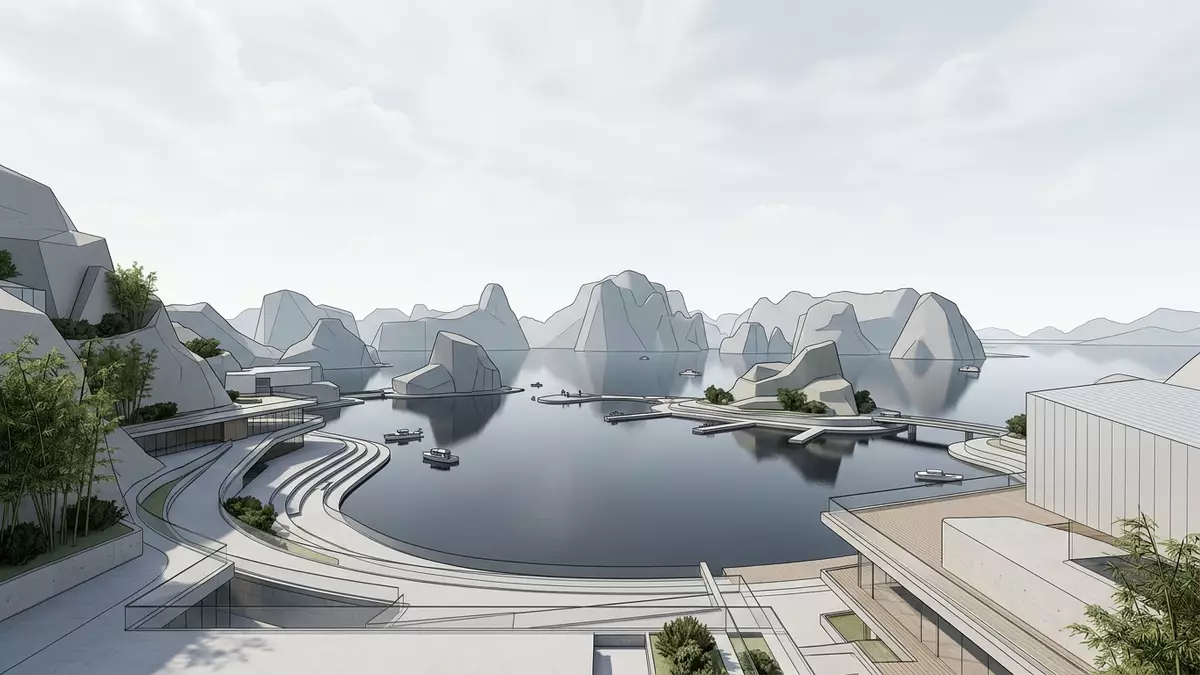
Vinh Ha Long is the Vietnamese name for Ha Long Bay, the flooded karst landscape of limestone islands and towers off the coast of Ha Long in north?eastern Vietnam. The bay lies in the Gulf of Tonkin within Quang Ninh Province, where hundreds of steep islands rise from green water to form one of Southeast Asia’s best known coastal panoramas.Ha Long Bay, located in the Gulf of Tonkin
Limestone pillars in a drowned karst seascape
The defining feature of Vinh Ha Long is its concentration of limestone islands and pillars, many of them near?vertical and densely vegetated. Geologists describe the bay as a drowned karst landscape, a terrain where soluble rocks such as limestone have been sculpted into peaks and hollows and later invaded by the sea.The geomorphology of Ha Long Bay is known as a drowned karst landscape Within this landscape, towers stand beside clusters of conical hills, a combination known as fenglin and fengcong karst that gives the bay its distinctive skyline.The limestones of Ha Long Bay have been eroded into a mature landscape of fengcong and fenglin karst
Ha Long Bay extends across an area of about 1,500 km² (579 sq mi) along Vietnam’s north?eastern coast and holds more than 1,600 islands.H? Long Bay covers about 1,500 square kilometers and holds more than 1,600 islands Many of these islands rise steeply several hundred metres above the sea surface, while their bases are indented by notches and caves created where waves meet rock.Almost these islands are individual towers in a classic fenglin landscape Seen from the deck of a boat, the result is a corridor of limestone walls and forested slopes, with isolated pinnacles forming focal points across the water.
Geological time written in stone and water
Below the surface character of Vinh Ha Long lies a geological story that spans hundreds of millions of years. The limestones that form the bay’s islands were laid down in shallow tropical seas between the late Devonian and Permian periods, as successive layers of shell fragments and carbonate mud accumulated on the sea floor.The islands of Ha Long Bay are cut in a folded sequence of Carboniferous and Permian limestones Over geological time, uplift exposed these limestones to warm, humid conditions that favoured chemical weathering, allowing water to open joints and dissolve bedrock into hollows, sinkholes and caves.
The patterns seen in the bay today reflect repeated advances and retreats of the sea, which flooded valleys and depressions to create a seascape of isolated towers and enclosed basins.The geomorphology of Ha Long Bay is known as a drowned karst landscape due to the exceptional combination of its limestone karst features which have been subject to repeated regression and transgression of the sea Intra?mountain depressions now hold “closed lakes” surrounded by cliffs, while fault?controlled valleys have become channels navigable by small boats.Clusters of inter-connected cones and isolated towers become islands and islets, intra-mountain depressions become “closed lakes” and fault-controlled valleys become “channels” The combination of towers, channels and interior basins makes Vinh Ha Long a clear illustration of mature tropical karst adapted to a marine setting.
World Heritage status and cultural meaning
Vinh Ha Long carries formal recognition that reflects both its scenic qualities and its scientific value. In 1994, the core area of Ha Long Bay was inscribed on the UNESCO World Heritage List as a natural site for its outstanding aesthetic importance.1994: Inscribed on the World Heritage List under Natural Criterion vii The inscription was expanded in 2000 to recognise the bay’s geological and geomorphological values, underlining its role as a model example of marine?invaded tower karst.In 2000, UNESCO's World Heritage Committee inscribed H? Long Bay in the World Heritage List according to its outstanding examples representing major stages of the Earth's history
In Vietnamese, “Vinh Ha Long” is commonly glossed as “Bay of the Descending Dragon”, a name that links the landscape to legend and emphasises the impression of stone forms rising from the sea.Ha Long Bay — Vinh Ha Long in Vietnamese, meaning "Bay of the Descending Dragon" The broader Ha Long Bay–Cat Ba Archipelago area is recognised as geoheritage for its cone and tower karst and has been acknowledged as a World Natural Heritage site encompassing aesthetic, geological and biodiversity values.The central part, ca. 650km2, of Ha Long Bay-Cat Ba Archipelago became a UNESCO World Natural Heritage three times thanks to its aesthetic, geologic-geomorphologic and biodiversity values For travellers, these designations frame the bay not only as a scenic destination but as a place where global geological processes can be read in the contours of the islands.
Visiting Vinh Ha Long: what travellers from Western Europe should know
- Vinh Ha Long lies in Quang Ninh Province on Vietnam’s north?eastern coast, in the western part of the Gulf of Tonkin, seaward from the city of Ha Long.Ha Long Bay is located in Quang Ninh Province of northeastern Vietnam, in the western portion of the Gulf of Tonkin
- Access to the bay is typically arranged from Ha Long and nearby harbours, with vessels navigating between limestone islands and through narrow channels where cliffs rise directly from the water.The mountainous limestone islands tower up to 400 meters above the water
- The terrain within Vinh Ha Long consists of steep island slopes, rocky shorelines and occasionally enclosed lakes within island interiors, so time on the water and movement by boat or small craft form a central part of any visit.Intra-mountain depressions become “closed lakes” and fault-controlled valleys become “channels”
- The official language is Vietnamese and the currency is the Vietnamese ??ng.
- Entry requirements depend on your nationality; UK travellers can check the FCDO travel advice at gov.uk/foreign-travel-advice, Irish travellers the Department of Foreign Affairs at ireland.ie.
Searching for Vinh Ha Long on social platforms
These links open searches for Vinh Ha Long on each platform.
Frequently asked questions about Vinh Ha Long
Where is Vinh Ha Long and how is it defined?
Vinh Ha Long refers to Ha Long Bay, a limestone karst seascape in Quang Ninh Province on Vietnam’s north?eastern coast, within the Gulf of Tonkin.
What should travellers expect when visiting Vinh Ha Long?
Travellers encounter steep limestone islands, channels between cliffs and occasional enclosed lakes, with movement largely by boat among towers rising from the sea.
What makes Vinh Ha Long distinctive among coastal landscapes?
Vinh Ha Long combines mature tropical karst forms such as towers and conical peaks with marine flooding, creating a World Heritage seascape where geological processes are clearly visible.


