
Vinh Ha Long and its limestone islands rising from the sea
Published on 09/23/2026 at 14:12 | Editorial responsibility: Rafael Müller, Editor-in-Chief AD HOC NEWS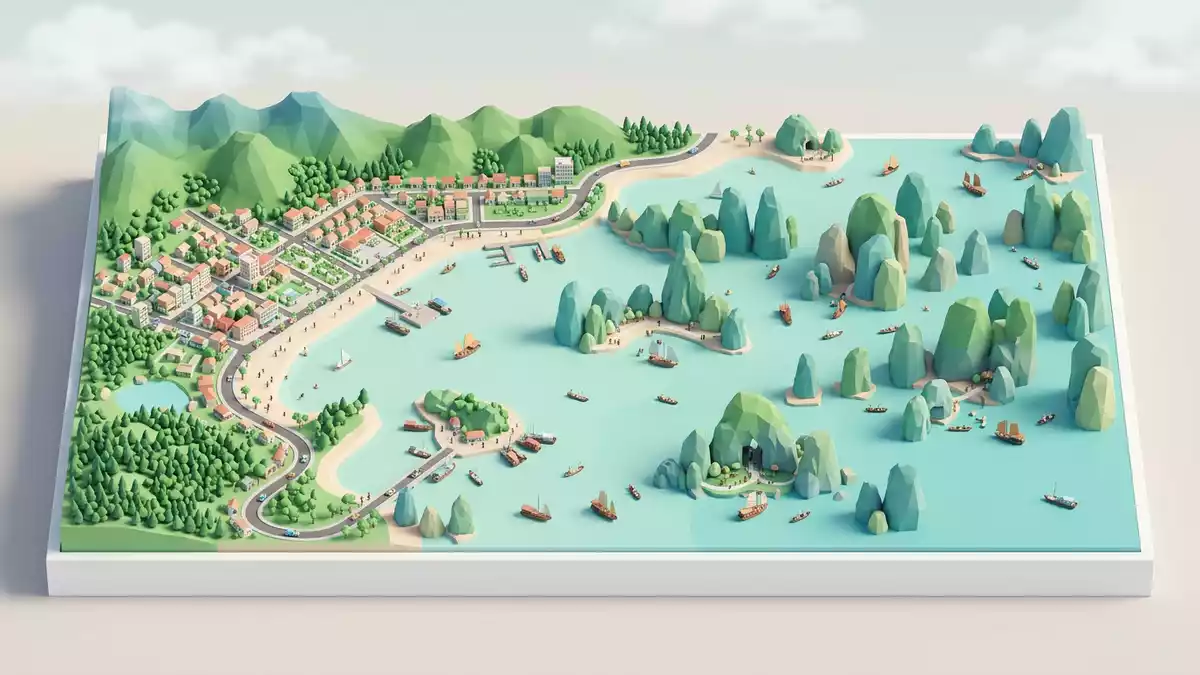
Vinh Ha Long is a coastal seascape in north-eastern Vietnam, where limestone islands rise from the waters of the Gulf of Tonkin. Forested towers, cliffs, caves and sheltered channels form a landscape shaped by geological change and given meaning through the legend of a descending dragon.
Vinh Ha Long: limestone towers above the Gulf of Tonkin
Ha Long Bay lies within Quang Ninh Province, close to the city of Ha Long. Its islands are made chiefly of limestone, with vegetation covering many of the higher surfaces and bare rock visible along cliffs, shorelines and cave entrances.
The bay belongs to a wider karst landscape. UNESCO’s Ha Long Bay record identifies the area as a major example of marine-invaded tower karst, including conical clusters and isolated limestone formations.
Geological time written into the islands
The limestone began as marine deposits formed hundreds of millions of years ago. Shells and carbonate sediments accumulated on an ancient seabed before geological uplift and erosion produced the steep islands seen above the water.
The landscape contains the visible marks of changing seas, sinking land, uplift and dissolution. Rainwater and seawater have worked through the limestone, leaving caves, notches, enclosed hollows and irregular rock faces among the islands.
The recognised heritage area includes Ha Long Bay and the Cat Ba Archipelago. Its World Heritage history began with inscription in 1994, followed by an extension in 2000 and a further boundary expansion in 2023. The heritage landscape’s dimensions are recorded across the bay and its neighbouring archipelago.
Legend, names and life around Ha Long
Vinh Ha Long means “Bay of the Descending Dragon”. Vietnamese legend tells of a mother dragon and her offspring defending the coast, with islands linked to the jewels and fire associated with their arrival.
The names of individual islands and caves preserve this connection between landscape and imagination. Rock formations have been associated with animals, objects and scenes, while the bay’s channels, coves and sheltered waters form a setting for boats and coastal communities.
Many islands remain uninhabited, and their vegetation contrasts with the exposed limestone walls. Caves provide another layer of the landscape, changing from open water to dark passages, chambers and rock surfaces shaped by the surrounding karst.
The bay’s cultural identity is also connected with floating communities and maritime life. Fishing, aquaculture and boat travel have long formed part of the human geography around the islands, alongside the city and port of Ha Long on the mainland.
Visiting Vinh Ha Long: what travellers from Western Europe should know
- Vinh Ha Long lies in Quang Ninh Province on Vietnam’s north-eastern coast, beside the city of Ha Long and the Gulf of Tonkin.
- Boat travel is central to the landscape. Routes pass between limestone islands, cliffs, caves and sheltered channels rather than crossing a conventional mainland park.
- The terrain combines open water with steep rock faces, cave passages and uneven surfaces. Shore excursions may involve steps and changes in level.
- The official language is Vietnamese and the currency is the Vietnamese dong.
- Entry requirements depend on your nationality; UK travellers can check the FCDO travel advice at gov.uk/foreign-travel-advice, Irish travellers the Department of Foreign Affairs at ireland.ie.
Searching for Vinh Ha Long on social platforms
These links open searches for Vinh Ha Long on each platform.
Frequently asked questions about Vinh Ha Long
Where is Vinh Ha Long?
Vinh Ha Long is in Quang Ninh Province in north-eastern Vietnam, beside the city of Ha Long and the Gulf of Tonkin.
What does a visit involve?
A visit centres on the water, with boat routes passing limestone islands, caves, cliffs and sheltered channels.
What makes Vinh Ha Long distinctive?
Its distinctive character comes from forested limestone towers rising directly from the sea, combined with a geological history extending across hundreds of millions of years.


