
Villa Adriana in Tivoli, Hadrian’s sprawling ideal city
Published on 09/16/2026 at 16:28 | Editorial responsibility: Rafael Müller, Editor-in-Chief AD HOC NEWS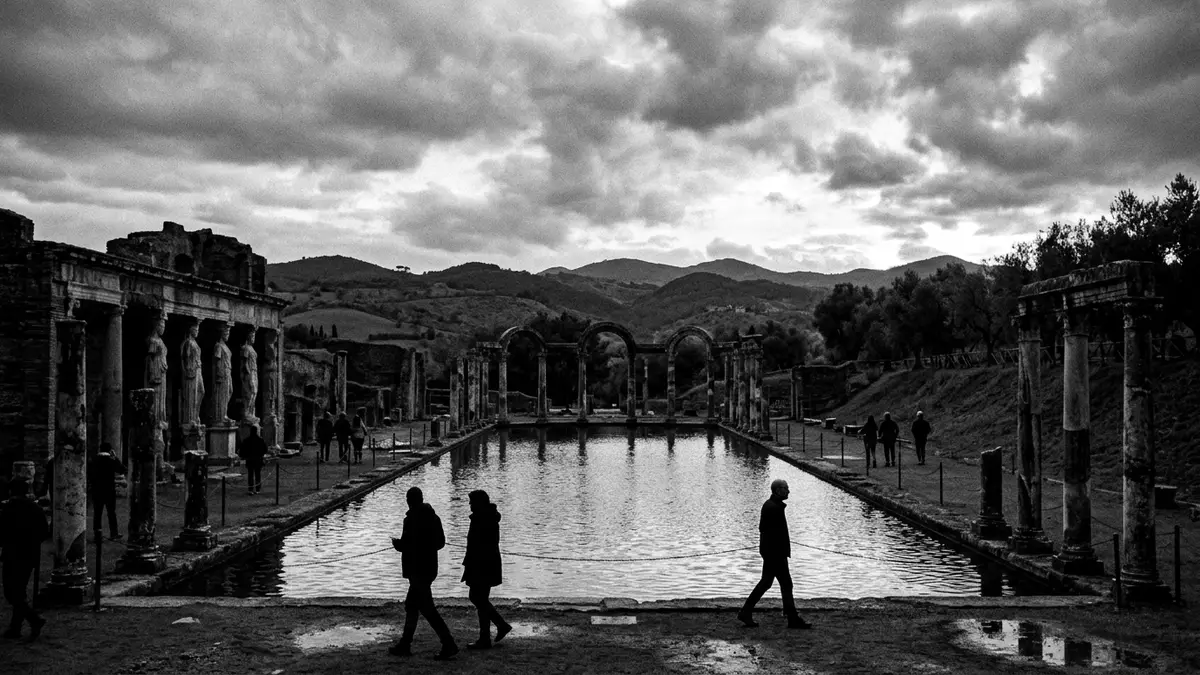
Villa Adriana in Tivoli is a sprawling Roman villa complex where Emperor Hadrian turned a countryside retreat into something closer to an ideal city, laid out across the slopes east of Rome in the second century AD.
Hadrian’s countryside experiment in scale
Villa Adriana was commissioned by the Roman emperor Hadrian, who ruled from AD 117 to 138 and spent long periods away from the capital.Emperor Hadrian The complex is traditionally dated to construction in the early decades of his reign, with major work around AD 120 and activity continuing into the later 120s.2nd century AD complex Rather than a compact palace, the villa spreads over a wide plateau near Tivoli, with building groups separated by gardens, water and open ground, so that moving through the site today feels more like passing between quarters of a low?density city than rooms in a single residence.
The archaeological area covers many hectares in the Tiburtine Hills near the ancient town of Tibur, using a shallow terrace between branches of the Aniene river.plateau near Tibur The spread of structures made Villa Adriana larger than many provincial towns of the period, and the emperor’s retreat combined residential quarters, representation spaces, baths, water features and service buildings. It reads as both villa and miniature model of the Mediterranean world of Hadrian’s time, mirrored in stone, brick and water.
Architecture as a map of Hadrian’s world
The built fabric of Villa Adriana mixes familiar Roman construction techniques with motifs drawn from Greece and Egypt, reflecting Hadrian’s interest in those cultures.architectural traditions of Egypt, Greece and Rome Visitors walk through remains of colonnaded courts, vaulted halls and garden pavilions where concrete cores were faced in brick and stone, then finished with marble revetment. Distinct ensembles such as the so?called Maritime Theatre, the Canopus and the large bath complexes each form self?contained scenes, separated by planted spaces and linked by paths and corridors.
Many elements reproduce or allude to places Hadrian knew from travels, including structures inspired by sanctuaries in Greece and landscapes along the Nile.ideal city of the Mediterranean Water is a constant presence: long basins lined with columns, pools beside banqueting halls, and channels feeding ornamental features. These were integrated with terraces, stairways and framed views over the countryside, so that architecture and landscape formed continuous sequences rather than isolated monuments. Even in ruin, the alternation of enclosed rooms, open courts and water surfaces remains legible.
From imperial villa to World Heritage landscape
After Hadrian’s death, successive emperors used Villa Adriana, but over centuries much of its decoration was stripped and many structures collapsed or were buried.later history of the villa From the Renaissance onwards, architects and artists studied its ruins, and measured drawings of features such as halls, garden layouts and ornamental details fed directly into European design vocabulary. The site influenced palace and garden projects in Italy and beyond, as designers looked to Hadrian’s villa for models of classical composition.
Villa Adriana was recognised as a cultural World Heritage Site by UNESCO in 1999 for the way it brings together high expressions of material culture from Egypt, Greece and Rome within one planned complex.UNESCO inscription in 1999 The protected area encompasses archaeological remains of dozens of buildings, including residential quarters, baths, theatres and ornamental gardens, as well as parts of the surrounding landscape. Walking through the site today, visitors encounter long stretches of brick and stone walls, surviving vaults, fragments of marble and views that still link the ruins with the wider Tiburtine countryside.
Visiting Villa Adriana: what travellers from Western Europe should know
- Villa Adriana lies outside Tivoli in the Lazio region of Italy, east of Rome; the archaeological area is reached by road from Tivoli and by regional transport from Rome.
- The site covers an extensive hillside plateau, and visiting involves walking on uneven ground, gravel paths and slopes, with staircases linking different terrace levels.
- In summer the open areas are exposed to sun, while winter visits can bring cooler conditions and wet ground, so clothing and footwear need to suit outdoor exploration.
- Villa Adriana sits in Italy, where the official language is Italian and the currency is the euro.
Searching for Villa Adriana on social platforms
These links open searches for Villa Adriana on each platform.
Frequently asked questions about Villa Adriana
Where is Villa Adriana and what kind of place is it?
Villa Adriana is a Roman imperial villa complex on a plateau near Tivoli in Lazio, Italy, combining palace, garden and bath architecture in one extensive archaeological site.
What should visitors expect on a visit to Villa Adriana?
A visit involves walking through widespread ruins of brick and stone structures, garden areas and water features, with long outdoor routes linking distinct building groups.
What makes Villa Adriana distinctive among ancient sites?
Villa Adriana stands out for its scale, its combination of Greek, Egyptian and Roman motifs within one planned complex, and its documented influence on later European architecture and garden design.


