

Villa Adriana and Hadrian’s imperial landscape in Tivoli
Published on 08/28/2026 at 06:42 | Editorial responsibility: Rafael Müller, Editor-in-Chief AD HOC NEWS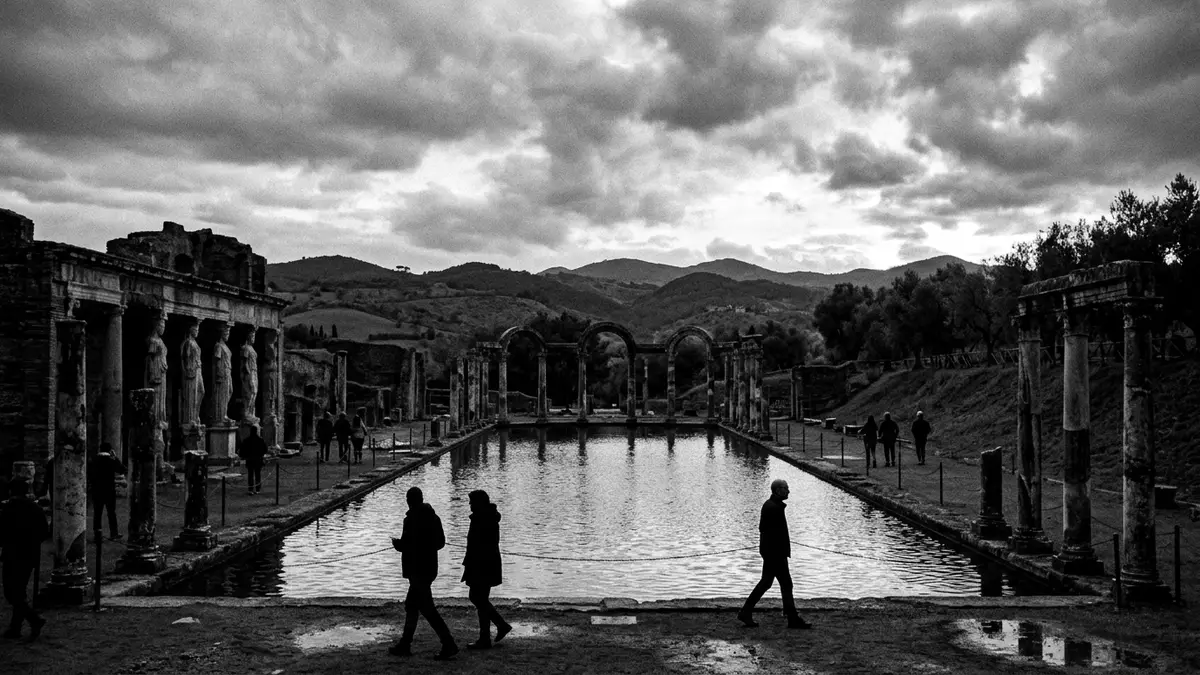
Villa Adriana in Tivoli spreads across a broad archaeological landscape associated with the Roman emperor Hadrian. Its remains preserve a complex of classical buildings from the second century AD, set within the Tiburtine Hills and recognised as a UNESCO World Heritage Site.
Hadrian’s villa in the Tivoli hills
The site is linked to Hadrian, who ruled the Roman Empire from 117 to 138 AD. The villa was built between 117 and 138 AD and combines architectural traditions from Egypt, Greece and Rome into an elaborate imperial estate.
Villa Adriana is also known as Hadrian’s Villa, a name that reflects its association with the emperor rather than a later owner or occupant. The surviving remains extend across a large area of ruins, gardens and water features that once formed part of the wider villa complex.
Classical fragments across a large estate
What survives is not a single building but a series of monuments, walls, pools and fragments distributed across the site. The UNESCO record describes some 30 buildings, which gives a sense of how varied the estate was in plan and use.
The architecture is striking for the way Roman work sits beside forms associated with the Greek and Egyptian worlds. That combination appears in the surviving structures as a deliberate blend of traditions, visible in the site’s surviving monuments rather than in any single façade.
A World Heritage site shaped by Roman power
Villa Adriana was inscribed on the World Heritage List in 1999. The designation identifies the site as an exceptional architectural legacy of Hadrian and as a monument of outstanding cultural value within the Roman world.
The archaeological landscape also matters for its setting at Tivoli, east of Rome, where the remains occupy the Tiburtine countryside. The place links imperial architecture with open land, and that scale remains one of its most immediate qualities.
Visiting Villa Adriana: what travellers from Western Europe should know
- Villa Adriana lies in Tivoli, east of Rome, in the Lazio region. It is reached by road from the city and by public transport serving Tivoli and the wider Rome area.
- The site covers a large archaeological landscape with uneven ground and long walks between major remains. Visitors move between ruins, open areas and stretches of masonry rather than through a compact museum plan.
- The remains include classical buildings, walls and water elements spread over the estate. The setting is open, with little shelter from the surroundings.
- English is not the official language in Italy, and the currency is the euro.
Searching for Villa Adriana on social platforms
These links open searches for Villa Adriana on each platform.
Frequently asked questions about Villa Adriana
Where is Villa Adriana?
Villa Adriana is in Tivoli, in Lazio, east of Rome. It lies in the landscape of the Tiburtine Hills.
What does a visit involve?
The visit involves walking through extensive ruins, open ground and scattered architectural remains. The site is large enough to feel like an archaeological landscape rather than a single monument.
What makes Villa Adriana distinctive?
Its distinctiveness lies in the Roman imperial setting and the mixture of classical traditions visible in the remains. Hadrian’s name, the second century AD date and the World Heritage status define its historical weight.


