
Vieux-Port de Marseille and the harbour at Marseille’s historic core
Published on 09/12/2026 at 17:52 | Editorial responsibility: Rafael Müller, Editor-in-Chief AD HOC NEWS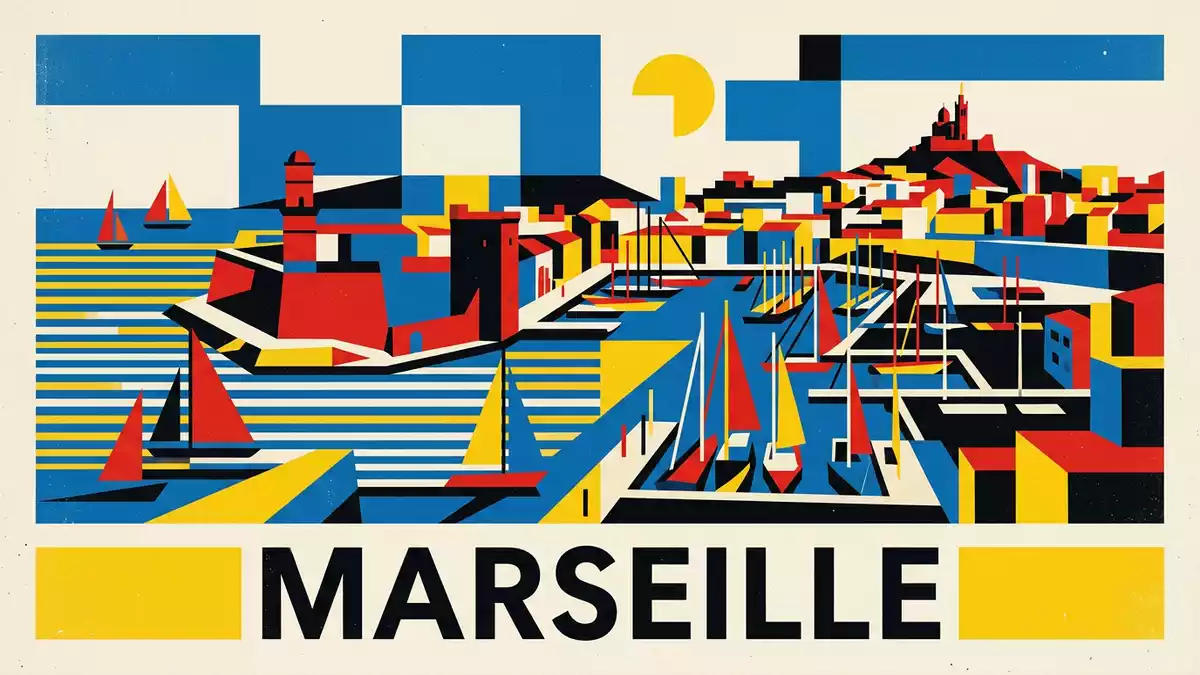
Vieux-Port de Marseille, the Old Port of Marseille, is the historic harbour basin that anchors the city’s centre and traces its origins back to Greek antiquity. Greek settlers from Phocaea founded the trading settlement of Massalia around this inlet in the sixth century BC, choosing the rocky Mediterranean cove known as Lacydon as their harbour.
A harbour that gave Marseille its beginning
The story of Vieux-Port de Marseille begins in the sixth century BC, when seafarers from the Greek city of Phocaea landed in the sheltered bay the Greeks called Lacydon and established Massalia on its northern shore.Greek settlers from Phocaea The settlement developed into the Roman city of Massilia, yet the same harbour remained the focus of maritime activity, with ships anchoring close to land and streets adjusting around the water’s edge.Massalia later became Roman Massilia
Over centuries the port basin acted as the historic core of Marseille, with the city growing around its harbour and the waterfront serving as a meeting point between maritime trade and urban life.The Old Port is described as the historic cradle of Marseille Medieval Marsiho, the city’s name in that period, continued to rely on Vieux-Port de Marseille as a centre for shipping, shipyards and related crafts, linking the harbour directly to the everyday economy of the streets rising from its quays.Old Port also served as the focal point for medieval Marsiho
Quays, fortifications and the shape of the basin
The physical form of Vieux-Port de Marseille reinforces its role as a historic harbour: an elongated basin opening towards the Mediterranean and framed by slopes that give ships a sheltered anchorage within sight of the city.The basin provided a naturally sheltered harbour Between the fifteenth and seventeenth centuries stone quays were constructed along the edges of the basin, creating built waterfronts where shipyards, warehouses and rope-making workshops could cluster beside the water.The quays were built between the 15th and 17th centuries
From the seventeenth century onwards, the entrance to the harbour was guarded by Fort Saint-Nicolas on one side and Fort Saint-Jean on the other, two fortifications that still stand as stone landmarks marking the transition between open sea and enclosed port.Fort Saint-Nicolas and Fort Saint-Jean protect the harbour entrance Within the basin, the main thoroughfare of Marseille, La Canebière, rises from the inner end of the harbour, its name recalling the hemp cultivation that once supplied rope for the ships anchored below.The name of the Canebière comes from hemp cultivated near the harbour
From commercial port to waterfront focus
Until the nineteenth century Vieux-Port de Marseille functioned as the principal commercial harbour of Marseille, with shipbuilding, cargo handling and fishing concentrated within its basin and quays receiving vessels trading across the Mediterranean.Until the nineteenth century the Old Port remained the centre of maritime activity As ships increased in size in the nineteenth century, heavy maritime commerce shifted towards larger docks along the coast, notably La Joliette and what later developed into the Grand Port Maritime de Marseille, while Vieux-Port de Marseille moved towards lighter maritime use and public waterfront space.New docks were constructed in nearby La Joliette
The harbour district experienced extensive destruction during the twentieth century, after which reconstruction campaigns reshaped the surrounding streets and created a rebuilt urban quarter around the historic basin.The Old Port was completely destroyed during World War II In its present form Vieux-Port de Marseille combines marina functions with promenades, quayside spaces and open views across the water towards Fort Saint-Jean, Fort Saint-Nicolas and the limestone hills beyond, making the harbour both a functional basin and a central urban landscape.
Visiting Vieux-Port de Marseille: what travellers from Western Europe should know
- Vieux-Port de Marseille lies at the centre of Marseille on the Mediterranean coast of France, with the harbour basin forming a broad inlet connected to the city’s central streets.
- The waterfront around the harbour includes quays and promenades that run along the basin, with level stretches interspersed with steps linking the quays to adjoining streets and terraces.
- Fort Saint-Jean stands on one side of the harbour entrance and Fort Saint-Nicolas on the opposite shore, providing named landmarks that help visitors orient themselves around the mouth of the basin.
- The official language is French and the currency is the euro.
Searching for Vieux-Port de Marseille on social platforms
These links open searches for Vieux-Port de Marseille on each platform.
Frequently asked questions about Vieux-Port de Marseille
Where is Vieux-Port de Marseille located?
Vieux-Port de Marseille is the historic harbour basin at the centre of Marseille on the Mediterranean coast of France, connected directly to central streets such as La Canebière.
What should visitors expect when they arrive at the harbour?
Visitors encounter a broad water basin lined with quays, promenades and surrounding buildings, with Fort Saint-Jean and Fort Saint-Nicolas marking the harbour entrance and streets rising from the inner end.
What makes Vieux-Port de Marseille distinctive among harbour districts?
The harbour combines a sixth-century BC origin as the site of Massalia with later quays, fortifications and reconstructed streets, creating a basin where ancient foundation, maritime history and present-day city life meet visibly around the water.


