
Vieille Ville de Luxembourg and its fortified height
Published on 09/08/2026 at 16:44 | Editorial responsibility: Rafael Müller, Editor-in-Chief AD HOC NEWS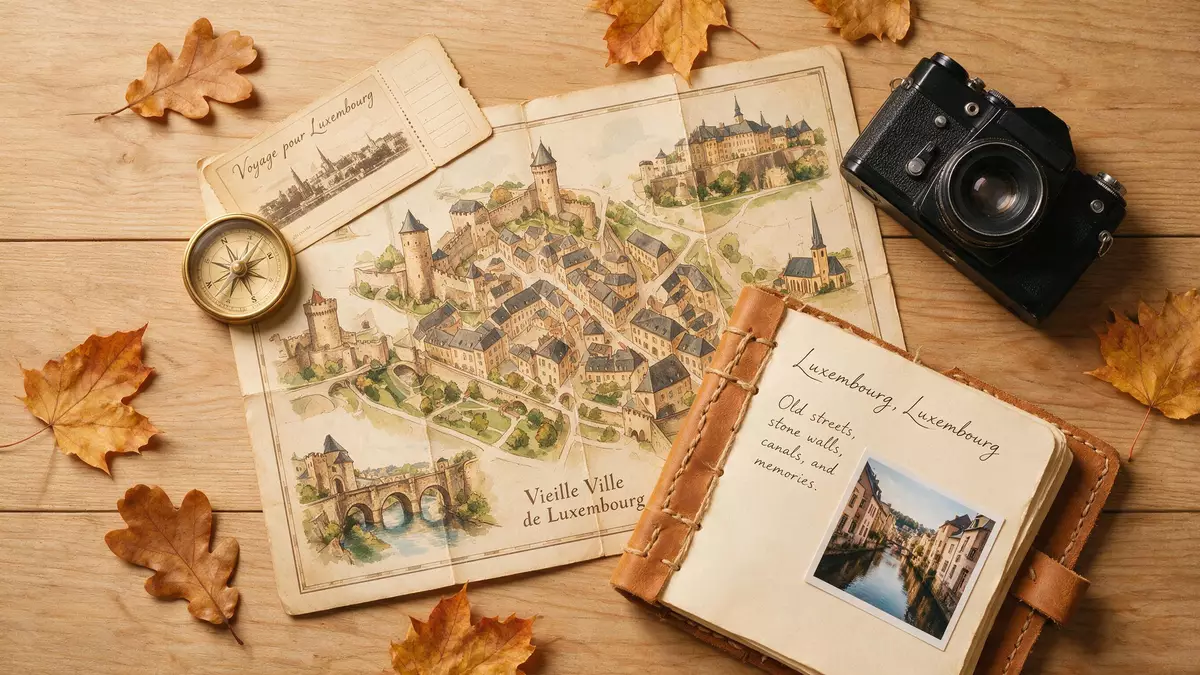
Vieille Ville de Luxembourg sits on a steep rocky outcrop at the meeting point of the Alzette and Pétrusse rivers. Its old quarters and fortifications form a UNESCO World Heritage site, and the city’s profile is shaped by stone, ravines and surviving military works.
A city settled on rock and river
The old city stands on a dramatic spur above the valleys below, with the upper and lower parts of the historic town reading as two layers of the same place. That vertical layout is part of its identity, and it remains easy to read in the streets, walls and drop-offs around the centre.steep rocky outcrop
Luxembourg’s fortified core was inscribed on the World Heritage List in 1994 under criterion (iv). The inscription covers the old quarters together with the defensive remains that give the city its distinctive silhouette.World Heritage Sites
From Lucilinburhuc to the old quarters
The place’s historical depth begins with the early castle of Siegfried, Count of the Ardennes, on the Bock promontory in 963. From that nucleus grew a fortified settlement that came to be associated with the wider history of the Grand Duchy of Luxembourg.vieux quartiers et fortifications
The surviving ensemble reflects successive periods of rule and rebuilding, including Habsburg, Spanish, French and Prussian phases. That long sequence left bastions, casemates, ramparts and civic buildings in close proximity, instead of a single architectural layer.Siegfried, Count of the Ardennes
Historic landmarks inside the old town
The Grand Ducal Palace sits in the centre of the old town, and its history dates back to the early 1570s. It gives the historic core a strong civic presence, alongside churches and fortified ground.early 1570s
Notre-Dame Cathedral began as a Jesuit church, with the foundation stone laid in 1613 and completion in 1621. The building adds a later religious layer to a district better known for walls, gates and military stonework.foundation stone was laid
Visiting Vieille Ville de Luxembourg: what travellers from Western Europe should know
- The old town lies in Luxembourg City, in Luxemburg, and the main historic areas are reached on foot through the centre. The Bock area and the lower valleys are linked by streets, bridges and paths through the historic core.
- The terrain is steep, with changes in level that are part of the place itself. Stone steps, slopes and narrow passages are common in the historic streets.
- The official language is Luxembourgish, French and German, and the currency is the euro.
- Entry requirements depend on your nationality; UK travellers can check the FCDO travel advice at gov.uk/foreign-travel-advice, Irish travellers the Department of Foreign Affairs at ireland.ie.
Searching for Vieille Ville de Luxembourg on social platforms
These links open searches for Vieille Ville de Luxembourg on each platform.
Frequently asked questions about Vieille Ville de Luxembourg
Where is Vieille Ville de Luxembourg?
It is the historic old city of Luxembourg City in Luxemburg, on a rocky spur above the Alzette and Pétrusse valleys. The World Heritage area covers the old quarters and fortifications.
What does a visit involve?
The historic centre is a place of slopes, bridges, walls and civic buildings rather than a single monument. Walking through it brings the topography and the fortifications into one route.
What makes it distinctive?
The combination of a steep setting, preserved fortifications and major landmarks such as the Grand Ducal Palace and Notre-Dame Cathedral gives the old town its character. The city’s layered history remains visible in stone and street pattern.


