
Vieille Ville de Luxembourg and its cliff-top fortifications
Published on 09/16/2026 at 07:51 | Editorial responsibility: Rafael Müller, Editor-in-Chief AD HOC NEWS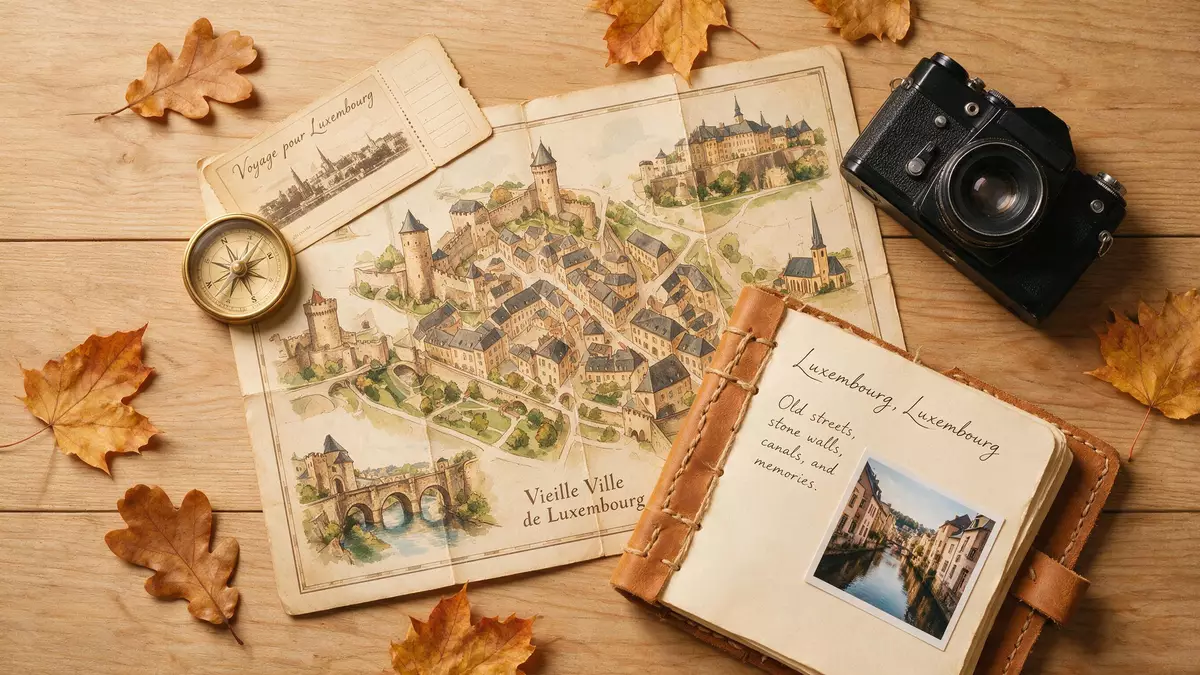
Vieille Ville de Luxembourg is the historic core of Luxembourg City, set on steep rocky ground above the Alzette and Pétrusse rivers and enclosed by layers of fortifications. The old quarters and their surviving walls form a continuous urban landscape where medieval origins, early modern power and a compact contemporary city share the same stone plateaus.
Cliffs, rivers and a fortress city
The old town occupies a rocky promontory at the confluence of the Alzette and Pétrusse, a terrain that helped to turn Luxembourg into a major fortress in western Europe from the sixteenth century until the dismantling of much of its military system in 1867. The site is described in UNESCO records as a steep outcrop whose natural defences were completed by fortifications on the less protected side, producing a layered ensemble of ramparts, bastions and urban streets.steep rocky outcrop
The early settlement was attached to the Bock, a rocky spur above the Alzette where a fortified stronghold was established in the tenth century and enclosed by a defensive wall towards the end of the twelfth century. Over time, the town grew westwards across the plateau, forming the upper quarter known as Ville Haute and reaching down into the lower quarters along the river banks.cradle of the City of Luxembourg
A UNESCO ensemble of old quarters and fortifications
Luxembourg City’s old quarters and fortifications were added to the World Heritage List in 1994 under the title “City of Luxembourg: its Old Quarters and Fortifications”, recognised for their value as an outstanding example of a fortified European town.World Heritage Site in 1994 The protected area covers just over 138 ha, a small fraction of the wider city, but it concentrates the historic plateaus, escarpments and surviving military structures that shaped the capital.total protected area covers 138 hectares
The ensemble brings together several distinct areas, from the Rocher du Bock and Chemin de la Corniche along the escarpment to the plateau around Place Guillaume II and the streets that frame Notre-Dame Cathedral and the Grand Ducal Palace. Bridges such as Adolphe Bridge and Pont du Château connect these levels across deep gorges, while remnants of casemates and bastions add visible military layers to the urban scene.highlights are Grand Ducal Palace, Notre-Dame Cathedral, Adolphe Bridge
Upper plateaus and lower river quarters
Vieille Ville de Luxembourg is structured around a contrast between high plateaus and low river quarters, a division that remains visible in the way streets and viewpoints relate to the surrounding valleys.upper and lower towns Ville Haute, the upper town, gathers civic buildings, major churches and squares on the plateau, while areas such as the Grund run closer to the Alzette, with streets, bridges and houses set against the rock.
Marked circuits invite visitors to trace these changes in level on foot, including a UNESCO-themed promenade that passes remnants of the fortress through the Pétrusse park between the upper and lower quarters and ends in the old town.Promenade UNESCO guided tour Along the way, viewpoints such as the Chemin de la Corniche open towards the gorges, and stairways and streets descend to river-side quarters where the scale of the fortifications is felt differently among residential buildings and quieter lanes.
Visiting Vieille Ville de Luxembourg: what travellers from Western Europe should know
- The old town lies within Luxembourg City in Luxemburg, above the Alzette and Pétrusse valleys, and is reached by the city’s streets, bridges and public transport connections from other quarters.
- The terrain combines plateaus, steep streets, stairways and paths that cross and descend the escarpments, so visiting on foot involves gradients and level changes between upper and lower districts.
- The UNESCO ensemble of old quarters and fortifications sits close to places such as Place Guillaume II and the Grand Ducal Palace, making it easy to link views over the gorges with visits to civic squares and religious buildings.
- Luxembourg’s official language regime recognises Luxembourgish, French and German, and the national currency is the euro.
Searching for Vieille Ville de Luxembourg on social platforms
These links open searches for Vieille Ville de Luxembourg on each platform.
Frequently asked questions about Vieille Ville de Luxembourg
Where is Vieille Ville de Luxembourg located?
Vieille Ville de Luxembourg forms the historic centre of Luxembourg City in Luxemburg, set on rocky ground above the Alzette and Pétrusse rivers.
What can visitors expect on a visit?
Visitors encounter plateaus, gorges, streets and remaining fortifications, along with civic squares, churches, bridges and marked walking routes linking upper and lower quarters.
What makes Vieille Ville de Luxembourg distinctive?
The combination of steep natural terrain, centuries of military architecture and recognition as a UNESCO World Heritage ensemble gives the old town a compact but layered character.


