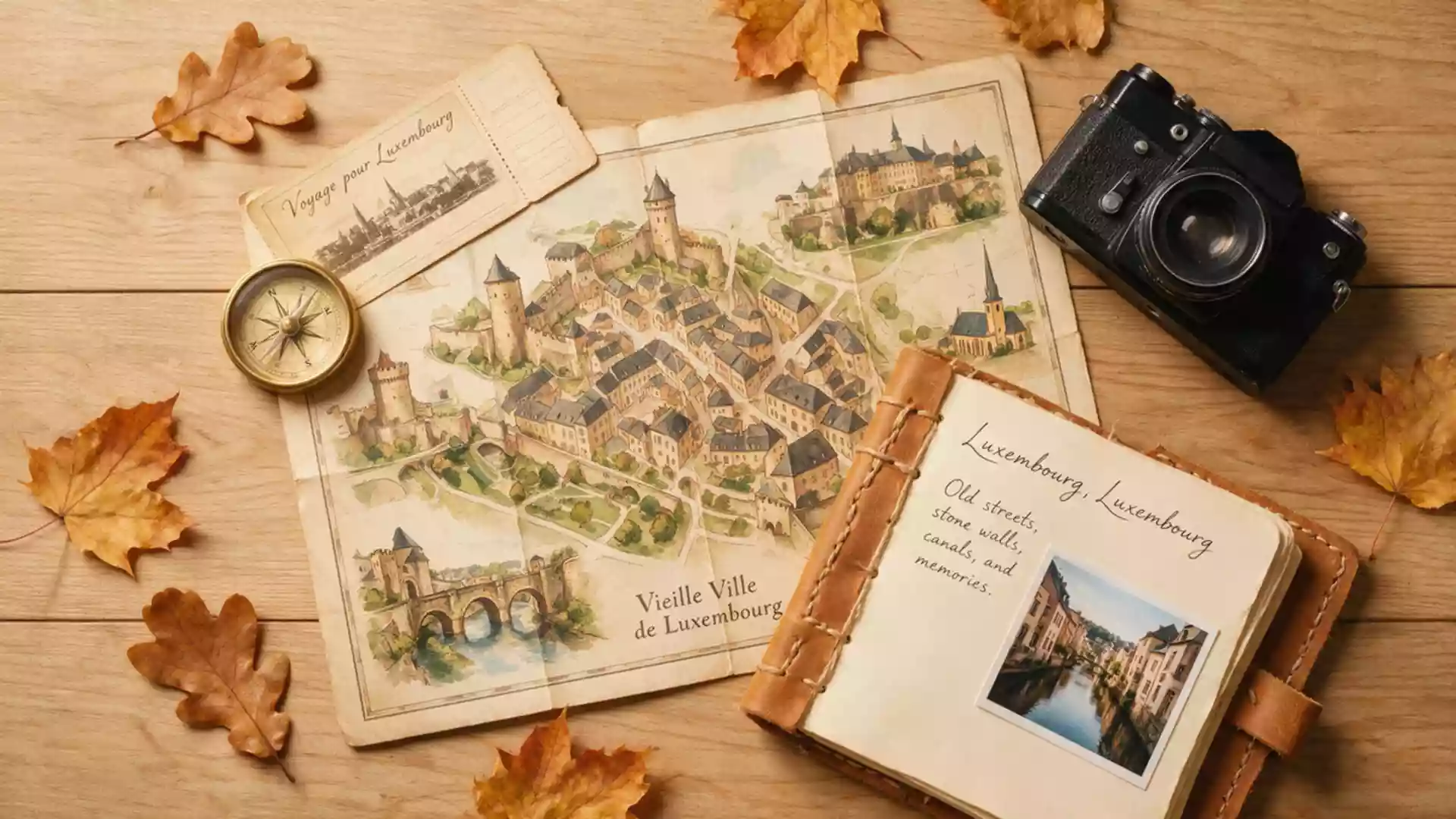
Vieille Ville de Luxembourg and its cliff-top fortifications
Published on 09/11/2026 at 18:35 | Editorial responsibility: Rafael Müller, Editor-in-Chief AD HOC NEWS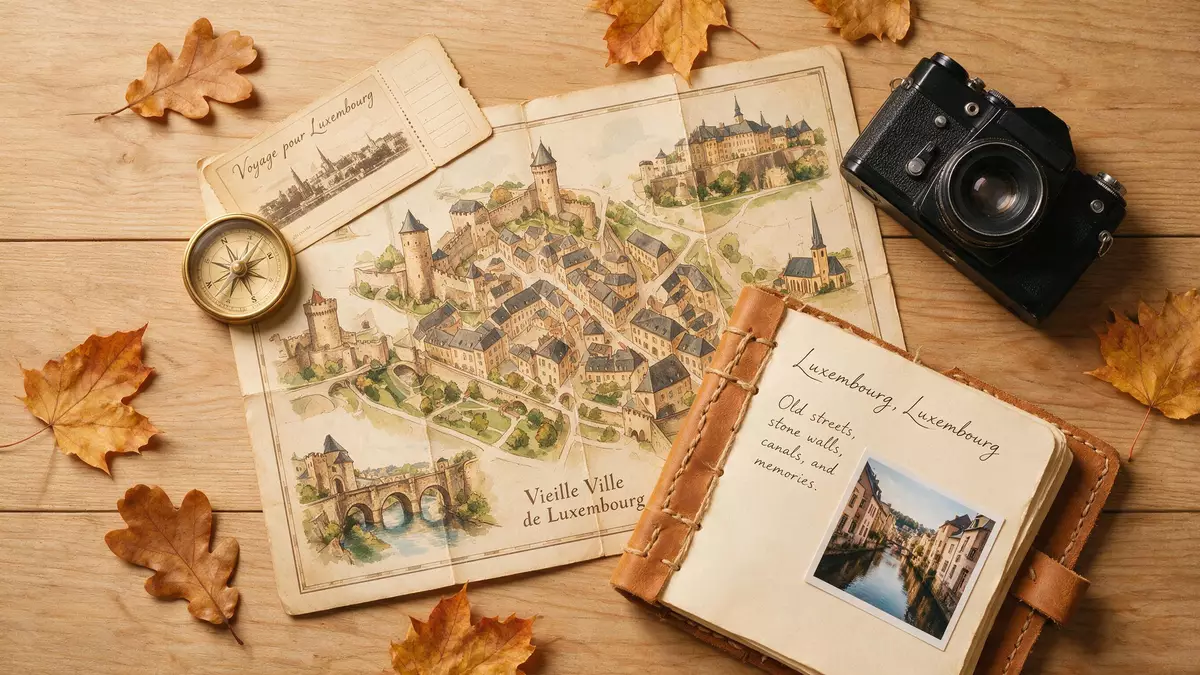
Vieille Ville de Luxembourg, the old quarters of Luxembourg City, cling to a rocky plateau above two river valleys and preserve centuries of fortifications within a compact urban fabric. The ensemble “City of Luxembourg: its Old Quarters and Fortifications” has been on the UNESCO World Heritage List since 1994, recognised as an outstanding example of a fortified European city in an exceptional natural setting.World Heritage inscription in 1994
A fortress city shaped by rivers and rock
The historic core of Luxembourg City occupies a narrow rocky outcrop at the confluence of the Alzette and Pétrusse rivers, where sheer slopes fall away from the plateau in several directions.Location between the Alzette and Pétrusse The Upper Town spreads across the top of this spur, while older quarters such as the Grund and Pfaffenthal sit lower down along the valley floors, connected by streets, bridges and lifts.
The fortified character of Vieille Ville de Luxembourg dates back to the Middle Ages, when the settlement grew around a castle on the rocky spur known as the Bock.Origins on the Bock promontory Over subsequent centuries, successive rulers expanded the defences into a dense system of walls, bastions and underground tunnels, giving the city the reputation of the “Gibraltar of the North” as its fortifications became among the strongest in Europe.Fortress known as Gibraltar of the North
Layers of fortifications: ramparts, casemates and corniches
Even after large-scale demolition of the fortress in the nineteenth century, major elements of the defensive system remain visible around Vieille Ville de Luxembourg, integrated into streets and green slopes.Extent of the UNESCO protected area Visitors encounter stone ramparts, outworks and surviving towers along the edge of the plateau, where the fortifications once enclosed the entire town within a continuous ring.
Below the surface, casemates carved into the rock form long galleries that once housed guns, troops and supply routes; sections of these tunnels are accessible today at sites such as the Bock and other former forts, illustrating the scale of the underground defences described in historical records.Underground tunnels and casemates Along the plateau edge, the Chemin de la Corniche follows the line of the former ramparts above the Alzette valley, providing views across the lower quarters and the steep slopes that once formed part of the city’s defences.Chemin de la Corniche and Bock casemates
Urban fabric between palace, cathedral and valley quarters
Within the Upper Town, Vieille Ville de Luxembourg combines civic buildings, religious architecture and narrow streets that reflect several periods of the city’s development. Landmarks in this area include the Grand Ducal Palace, which serves as the official residence of Luxembourg’s head of state, and Notre-Dame Cathedral, whose towers rise above the central streets.Grand Ducal Palace and Notre-Dame Cathedral Bridges such as Adolphe Bridge, built in the early twentieth century, span the Pétrusse valley and link the historic quarters with newer districts on the opposite plateaux.
The UNESCO-listed property incorporates the Grund, Clausen and Pfaffenthal quarters along the valley floors, as well as the Upper Town and parts of the Bourbon plateau, creating a continuous ensemble of historic streets and defensive works.Extent of the old quarters ensemble Across the site, the juxtaposition of cliff-top promenades, riverside neighbourhoods and remnants of bastions and tunnels illustrates how the city evolved as both an urban centre and a major European fortress from the medieval period through the nineteenth century.Criterion (iv) fortified European city
Visiting Vieille Ville de Luxembourg: what travellers from Western Europe should know
- Vieille Ville de Luxembourg forms the historic core of Luxembourg City in Luxembourg, sitting on a rocky plateau above the Alzette and Pétrusse valleys; mainline trains and regional buses arrive at Luxembourg railway station south of the old quarters.
- The terrain combines level streets in the Upper Town with steep slopes, staircases and lifts linking the plateau to lower quarters such as the Grund and Pfaffenthal, so routes between levels involve noticeable gradients and changes in elevation.
- The Alzette and Pétrusse rivers run through deep gorges below the plateau, and several bridges cross these valleys, meaning that moving between districts can include bridge crossings high above the valley floors.
- Luxembourg lies within the European Union, and the official language of the country is Luxembourgish alongside French and German, while the currency is the euro.
Searching for Vieille Ville de Luxembourg on social platforms
These links open searches for Vieille Ville de Luxembourg on each platform.
Frequently asked questions about Vieille Ville de Luxembourg
Where is Vieille Ville de Luxembourg located?
Vieille Ville de Luxembourg is the historic old quarters of Luxembourg City in Luxembourg, set on and around a rocky plateau above the Alzette and Pétrusse river valleys.
What can visitors expect when exploring the old quarters?
Visitors encounter layered fortifications, casemates and ramparts integrated into streets and green slopes, alongside civic landmarks, religious buildings and lower valley neighbourhoods linked by bridges, lifts and stairways.
What makes Vieille Ville de Luxembourg distinctive among European historic centres?
The combination of steep river gorges, extensive surviving fortifications and a compact urban core led to its inscription as a UNESCO World Heritage site in 1994 as an outstanding fortified European city.