
Victoria Falls and the basalt gorge of the Zambezi
Published on 08/30/2026 at 11:34 | Editorial responsibility: Rafael Müller, Editor-in-Chief AD HOC NEWS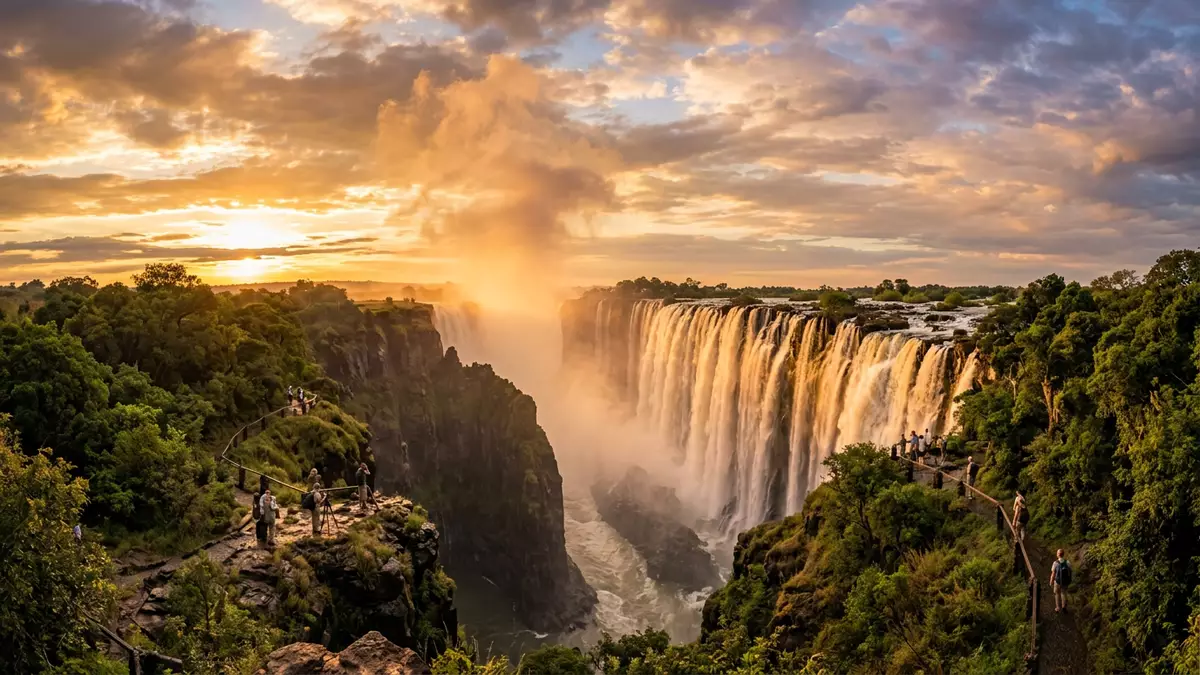
Victoria Falls is the waterfall on the Zambezi River between Zambia and Zimbabwe, where water drops over a basalt edge into a long gorge. The site was inscribed as a UNESCO World Heritage property in 1989, and the official name combines Mosi-oa-Tunya with Victoria FallsWorld Heritage property.
Basalt, spray and a river on the border
The falls span a wide section of the river and create a continuous curtain of water rather than a single drop. The surrounding landscape belongs to a transboundary natural setting, with parkland on both sides of the frontiertransboundary natural setting.
The gorge and the basalt bedrock are part of the place’s identity, and the water moves into a sequence of rocky chasms below the lip. David Livingstone gave the falls their English name in 1855, and the local name Mosi-oa-Tunya remains attached to the siteDavid Livingstone.
A name shared between local and colonial histories
The name Mosi-oa-Tunya carries the sound and spray of the falls in local speech, while Victoria Falls reflects the British naming of the nineteenth century. Both names are tied to the same place, and both remain part of how it is identifiedsame place.
That dual naming gives the site an unusual historical register without changing its physical character. The river, the cliff line and the gorge system remain the main features a visitor sees first, before any historical label takes overgorge system.
The falls in World Heritage context
The UNESCO listing places Victoria Falls among the world’s major natural sites on account of its geological and geomorphological features. The inscription also covers the parklands that frame the river on the Zambian and Zimbabwean sidesUNESCO listing.
Victoria Falls is not a museum piece in stone; it is a living river landscape shaped by erosion, flood, mist and rock. That combination gives the place a broad visual range, from the cliff edge to the deep channels beneath itliving river landscape.
Visiting Victoria Falls: what travellers from Western Europe should know
- The falls lie on the border between Zambia and Zimbabwe, beside the Zambezi River. Access is by road and by the local transport network serving Victoria Falls on the Zimbabwean side and Livingstone on the Zambian side.
- The ground near the gorge edge is broken by spray, rock and changing levels. Paths and viewpoints follow the top of the escarpment, and the river country opens into the wider basin beyond.
- English is widely used around the site, and the currencies in use are the Zimbabwean dollar and the Zambian kwacha.
- Entry requirements depend on your nationality; UK travellers can check the FCDO travel advice at gov.uk/foreign-travel-advice, Irish travellers the Department of Foreign Affairs at ireland.ie.
Searching for Victoria Falls on social platforms
These links open searches for Victoria Falls on each platform.
Frequently asked questions about Victoria Falls
Where is Victoria Falls?
Victoria Falls lies on the Zambezi River between Zambia and Zimbabwe. The town of Victoria Falls stands on the Zimbabwean side, and Livingstone serves the Zambian side.
What does a visit involve?
The place is a riverside landscape of spray, basalt cliffs and gorge walls. A visit centres on the edge of the falls and the viewpoints set above the chasm.
What makes Victoria Falls distinctive?
The waterfall’s breadth, the basalt setting and the long gorge below the lip define it. Its paired names, Mosi-oa-Tunya and Victoria Falls, add a historical layer to the landscape.


