Victoria & Alfred Waterfront, where Cape Town’s harbour history lives on
Published on 08/14/2026 at 14:26 | Editorial responsibility: Rafael Müller, Editor-in-Chief AD HOC NEWS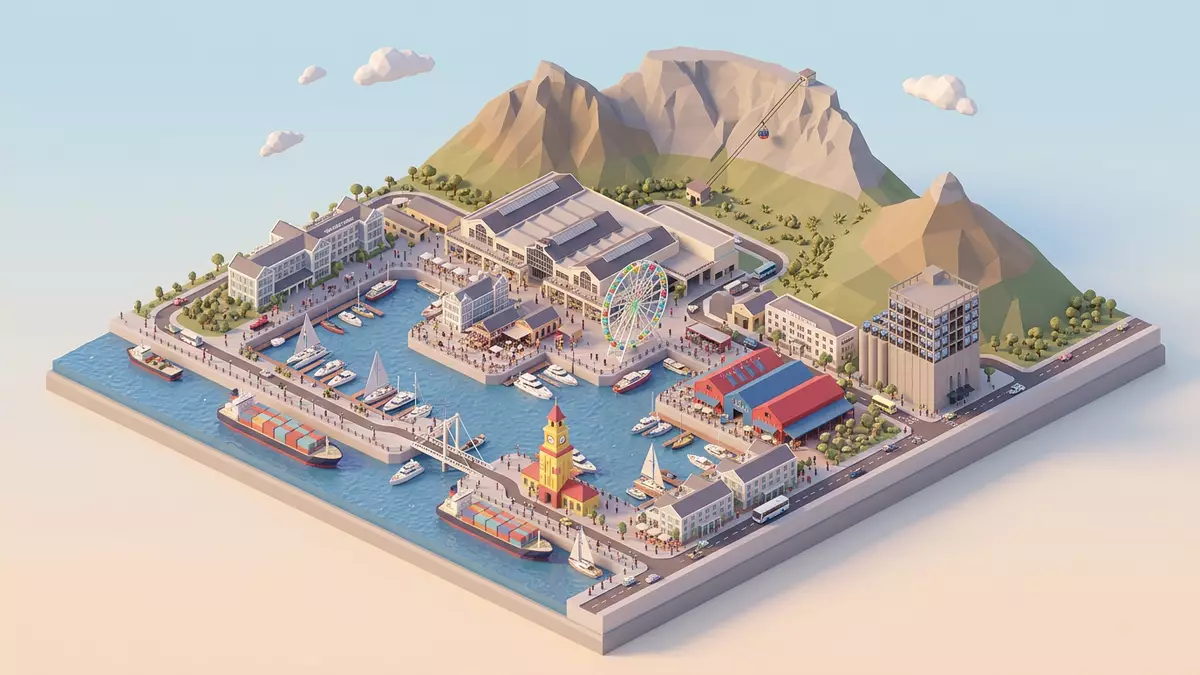
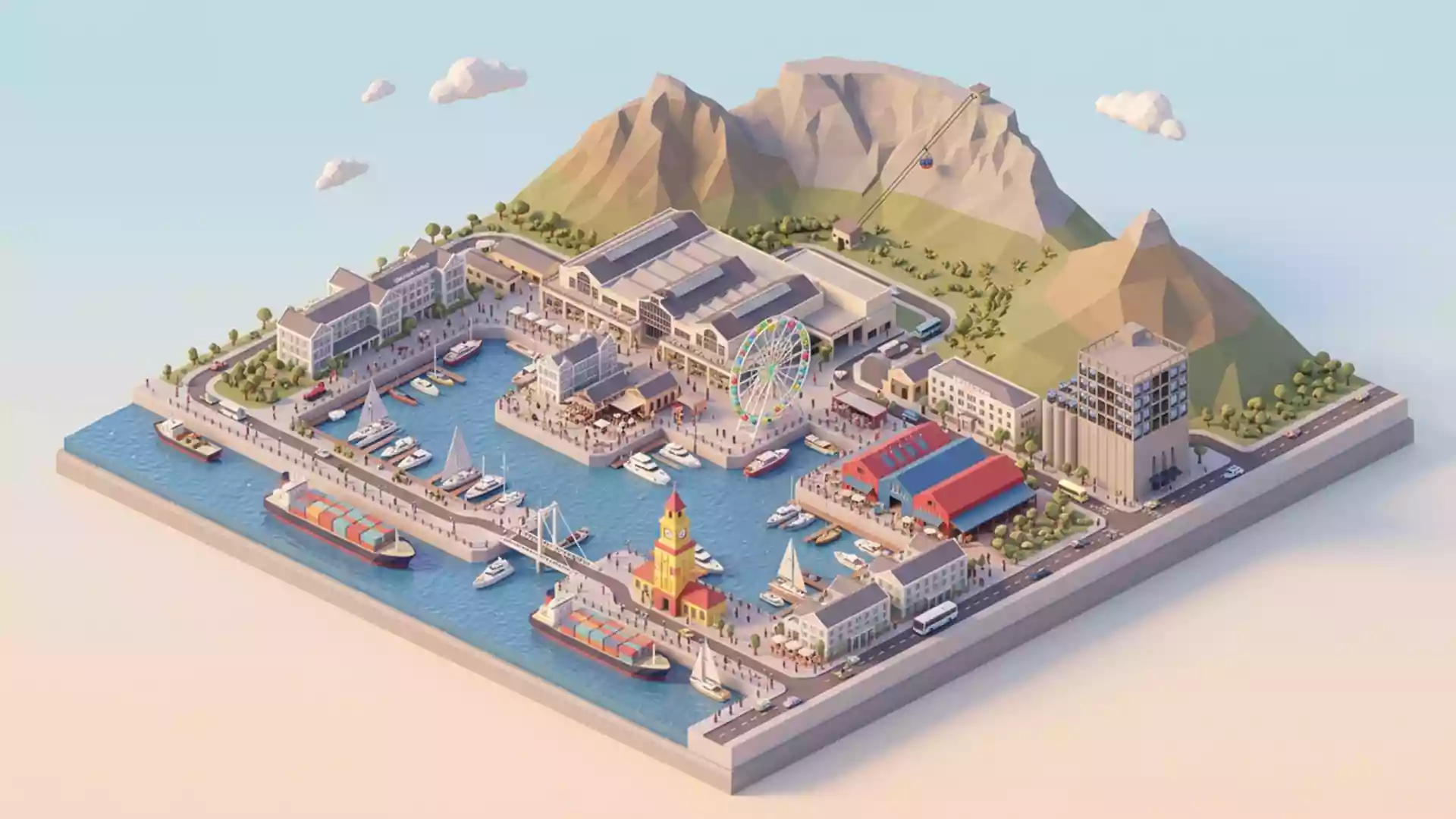
Victoria & Alfred Waterfront in Kapstadt is a waterfront district built around historic harbour basins, where maritime infrastructure, Victorian warehouses and contemporary urban life share the same quays. It sits on Table Bay beneath Table Mountain, combining the Alfred Basin and Victoria Basin with dockside streets, piers and converted industrial buildings that carry more than a century of harbour history into a modern mixed-use quarter.
Harbour basins named for Victoria and Alfred
The story of Victoria & Alfred Waterfront centres on the creation of new harbour basins along Table Bay in the nineteenth century, when Cape Town’s anchorage was reshaped into a sheltered port. In September 1860, Prince Alfred, the second son of Queen Victoria, tipped the first load of stone into the bay to mark the start of a breakwater that would protect shipping from winter storms, a gesture that anchored his name to the harbour works.Prince Alfred’s 1860 breakwater The first enclosed harbour basin, later known as the Alfred Basin, followed in the decades after that ceremonial tipping and gave the emerging port a sheltered inner dock reached from Table Bay.the Alfred Basin was constructed from 1860
As maritime traffic increased and steam-powered vessels demanded more capacity, a second enclosed harbour basin was added and named the Victoria Basin in honour of Queen Victoria, extending the sheltered waters on the city side of Table Bay.the Victoria Basin was commissioned in 1905 Together, these basins gave the district its name and created a complex of quays, wharves and engineering structures that still shape movement through Victoria & Alfred Waterfront, with the open water framed by stone edges, bollards and mooring points designed for ships of the age of sail and early steam.
From dockyards to a mixed-use waterfront
For much of the twentieth century, the basins around Victoria & Alfred Waterfront functioned as Cape Town’s working harbour, lined with coal stores, customs warehouses, cranes and dry docks serving ocean-going vessels. Heritage structures such as the Clock Tower and the Time Ball Tower were part of this industrial landscape, standing beside functional buildings and slipways that linked the basins to the wider dockyard precinct.coal stores and cranes once lined the quays As ship sizes and port technology changed, some of the older quays and jetties became less suited to commercial shipping, and the inner docklands began to lose their central role in freight handling.
A redevelopment company, Victoria and Alfred Waterfront (Pty) Ltd, was established in November 1988 to transform the historic docklands around the Alfred and Victoria basins into a mixed-use district while retaining a working harbour function.the company was formed in November 1988 Since that redevelopment began, warehouses have been converted into hotels and arcades, new buildings have risen around existing dock structures, and public promenades have been laid out along the quays, bringing shops, eateries and cultural venues into direct contact with the basins, ships and maritime equipment.
What visitors see around the basins today
Walking through Victoria & Alfred Waterfront today means moving between distinct districts that cluster around the historic harbour, each with its own relationship to the basins and Table Bay. The Quays District wraps around parts of the Alfred Basin with promenades, moored vessels and views across the water to working harbour infrastructure, while the Silo District stands nearby with former grain silos adapted into contemporary spaces beside new structures.Quays District and Silo District form key areas The Victoria Wharf area adds a concentration of retail galleries and covered walkways, giving visitors enclosed passages as a contrast to the open quays.
Cultural and maritime attractions lie within the same waterfront fabric, linked by paths and bridges that cross water and rail lines. The Nelson Mandela Gateway to Robben Island occupies a position on the waterfront as the departure point for ferries to the island prison site, tying the basins directly to a wider historical landscape on Table Bay.Nelson Mandela Gateway to Robben Island stands in the harbour Nearby, the Two Oceans Aquarium presents marine life from the Atlantic and Indian oceans in a purpose-built structure beside the water, while converted warehouses accommodate hotels and chambers overlooking the basins, giving many interior spaces outward views of dock walls, boats and Table Mountain’s skyline.Victoria Wharf and the Two Oceans Aquarium front the harbour
Visiting Victoria & Alfred Waterfront: what travellers from Western Europe should know
- Victoria & Alfred Waterfront lies on Table Bay on the northern edge of central Kapstadt, with the Alfred Basin and Victoria Basin forming its core and city streets leading directly to the quays.
- Much of the district is level harbour terrain with paved promenades, though older structures include staircases, quayside kerbs and converted industrial interiors where steps connect different floor levels.
- English is widely used alongside South Africa’s other official languages, and the national currency is the South African rand.
- Entry requirements depend on your nationality; UK travellers can check the FCDO travel advice at gov.uk/foreign-travel-advice, Irish travellers the Department of Foreign Affairs at ireland.ie.
Searching for Victoria & Alfred Waterfront on social platforms
These links open searches for Victoria & Alfred Waterfront on each platform.
Frequently asked questions about Victoria & Alfred Waterfront
Where is Victoria & Alfred Waterfront in relation to Cape Town?
Victoria & Alfred Waterfront occupies a harbour district on Table Bay directly adjoining central Kapstadt, with the city’s streets leading to its basins and quays.
What can visitors expect on a visit to Victoria & Alfred Waterfront?
Visitors encounter dockside promenades lined with shops, eateries and hotels, heritage harbour structures, maritime attractions and views across the Alfred and Victoria basins towards Table Mountain.
What makes Victoria & Alfred Waterfront distinctive among harbour districts?
Its character lies in the way nineteenth-century basins, cranes and warehouses remain integrated into a functioning harbour that also serves as an urban waterfront with cultural and leisure spaces.