
Victoria & Alfred Waterfront and Cape Town’s working harbour
Published on 09/23/2026 at 11:41 | Editorial responsibility: Rafael Müller, Editor-in-Chief AD HOC NEWS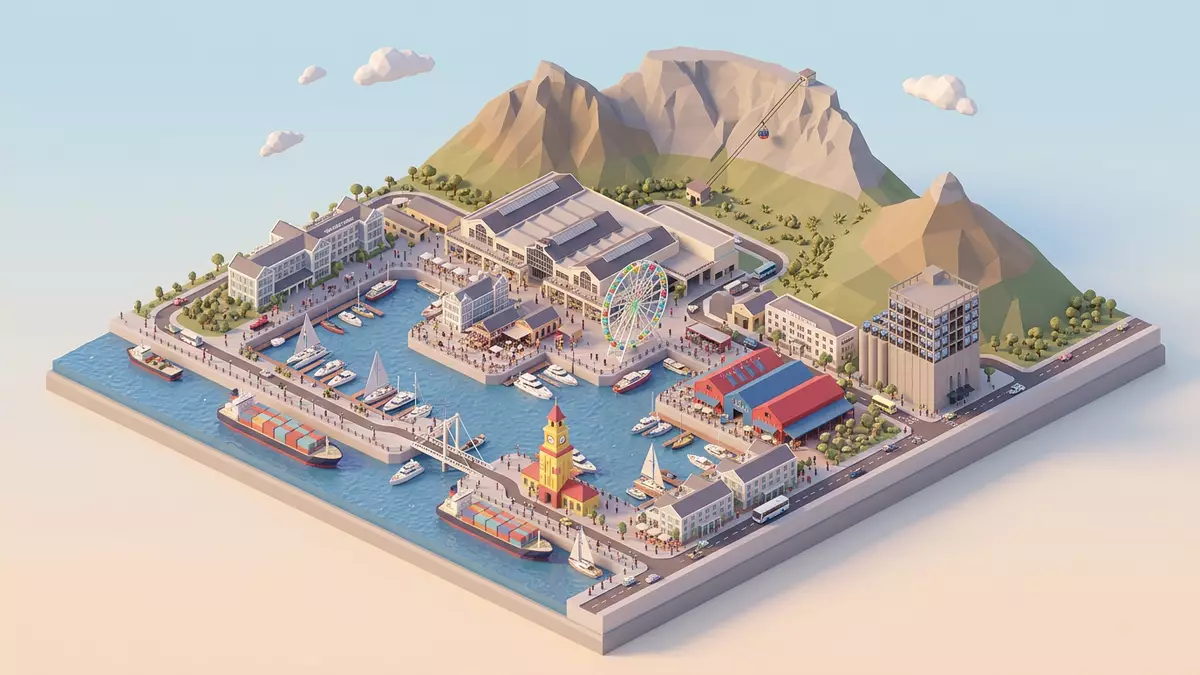
Victoria & Alfred Waterfront occupies historic harbour basins on Table Bay beside Cape Town’s central districts. Victorian warehouses, working quays, restaurants, museums and public squares share the waterfront with views towards Table Mountain.
The district’s defining feature is this mixture of preserved maritime infrastructure and contemporary urban life. The basins remain legible as harbour spaces, while the surrounding buildings carry the names, materials and proportions of nineteenth-century Cape Town.
Victoria & Alfred Waterfront grew from Cape Town’s harbour
Cape Town’s harbour development began in 1860, when Prince Alfred, the second son of Queen Victoria, ceremonially started work on the breakwater. The harbour basins and related structures developed through the nineteenth and early twentieth centuries.
The names Victoria and Alfred refer to the two historic basins. The Alfred Basin and Victoria Basin preserve a direct connection between the royal names and the maritime geography of the district. The Waterfront’s history places the area within Cape Town’s long relationship with Table Bay.
Victorian industrial buildings beside active quays
Red brick, painted façades, stonework, metal fittings and large warehouse forms define much of the historic fabric. The Clock Tower, positioned at the entrance to the Alfred Basin, is a prominent Victorian landmark with a history reaching back to 1882.
Harbour equipment, repaired vessels and working quays remain part of the setting. The Victoria Basin is associated with tugs, fishing boats and other vessels, while the Alfred Basin includes maritime repair activity. These details keep the waterfront connected with port life rather than presenting it as a purely commercial promenade.
The red Clock Tower gives the Alfred Basin a clear architectural marker. The red Clock Tower has stood at the basin entrance since 1882.
Markets, museums and public spaces around the water
Victoria & Alfred Waterfront functions as a mixed-use neighbourhood, with shops, restaurants, hotels, cultural venues and public areas arranged around the older docklands. The Zeitz Museum of Contemporary Art Africa occupies a converted grain silo complex near the harbour.
The Cape Wheel adds a large moving structure to the waterfront skyline, while the Two Oceans Aquarium presents marine life from the Atlantic and Indian Ocean environments around the Cape. The Watershed focuses on design, craft and locally produced objects.
These destinations sit among quays, bridges, promenades and historic façades. The result is a place where harbour history is encountered through buildings and vessels, while food, art, retail and public life occupy the same waterside quarter.
The area’s redevelopment began in 1988, when a company was established to reshape the historic docklands as a mixed-use district with a working harbour. Historic dockland redevelopment remains central to the character of Victoria & Alfred Waterfront.
Visiting Victoria & Alfred Waterfront: what travellers from Western Europe should know
- Victoria & Alfred Waterfront lies on Cape Town’s Atlantic seaboard, north of the central business district and beside Table Bay. It connects with the city by road, bus and local taxi services.
- The district is built around quays, paved promenades, bridges and dockside buildings. Walking routes include steps and changing surfaces around the harbour structures.
- The official language is English, Afrikaans and isiXhosa, and the currency is the South African rand.
- Table Mountain rises behind the waterfront, while Robben Island lies across Table Bay. The harbour edge provides views towards both landmarks.
Searching for Victoria & Alfred Waterfront on social platforms
These links open searches for Victoria & Alfred Waterfront on each platform.
Frequently asked questions about Victoria & Alfred Waterfront
Where is Victoria & Alfred Waterfront?
Victoria & Alfred Waterfront is in Cape Town, South Africa, on the Atlantic seaboard beside Table Bay. It lies north of the central business district.
What can visitors expect there?
The district combines historic quays with restaurants, shops, hotels, museums, markets and public spaces. Working harbour activity remains visible around the basins.
What makes Victoria & Alfred Waterfront distinctive?
Its identity comes from the combination of Victorian harbour architecture, active maritime spaces and cultural venues. The Clock Tower and the two named basins connect the present district with Cape Town’s nineteenth-century port.


