
Vesuvio and the volcanic rim above Neapel
Published on 09/14/2026 at 07:35 | Editorial responsibility: Rafael Müller, Editor-in-Chief AD HOC NEWS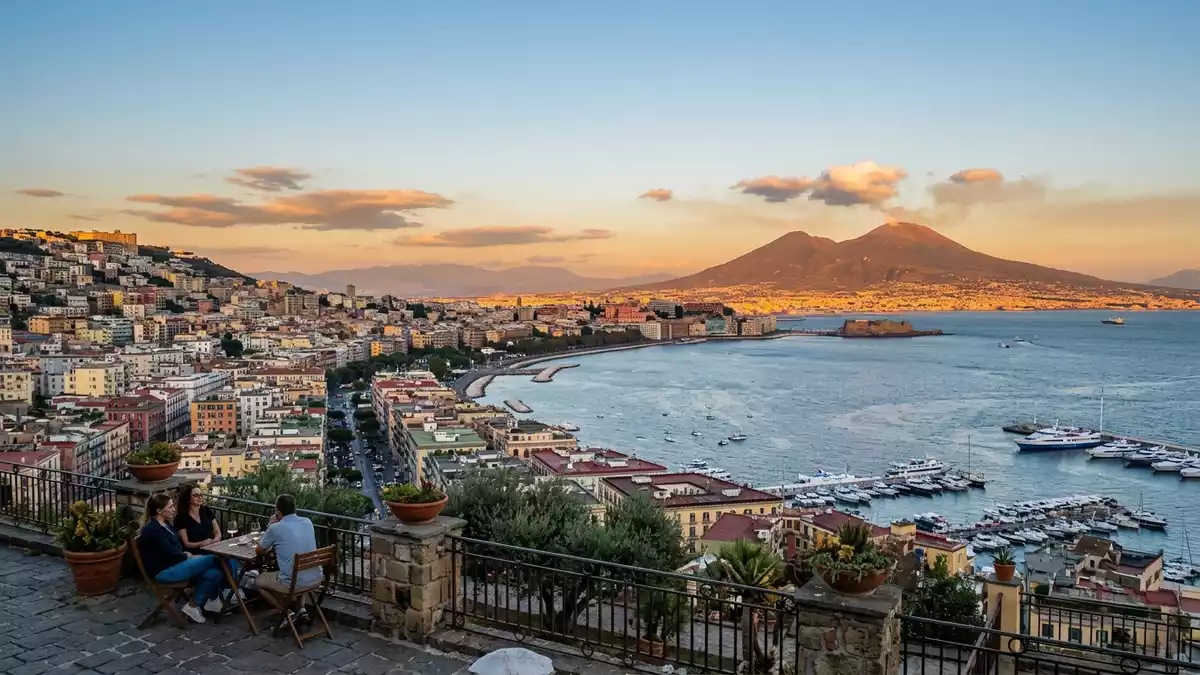
Vesuvio rises above the Gulf of Naples as a stratovolcano on the plain of Campania. Its name belongs to a landscape that combines the cone, the bay and the city of Neapel.
Vesuvio above the Bay of Naples
The mountain is part of the volcanic arc that marks southern Italy, and its profile is visible from a broad sweep of the coast. Mount Vesuvius is the English name used for the same volcano, and the site is usually identified with the eruption that altered Roman history.
That eruption is linked with 79 AD, when Mount Vesuvius buried Pompeii, Herculaneum, Oplontis and Stabiae. The volcano also appears in the long record of Campania, where ash layers and lava flows left a visible trace in the ground.
Ancient destruction and volcanic layers
The best-known historical reference point is the eruption of 79 AD, a named event that fixed Vesuvio in European memory. Vesuvius, active volcano remains the core description, but the place is also a stratovolcano, which means a layered volcanic cone rather than a flat mountain.
Vesuvio belongs to a region of repeated volcanic activity, and its slopes preserve those deposits in a direct way. active stratovolcano is the simplest geological label for it, while the surrounding cityscape gives the volcano an unusually urban frame.
Vesuvio in Neapel's landscape
The volcano stands near Neapel and the Bay of Naples, with the plain of Campania spreading around it. eruption of Mount Vesuvius in 79 AD remains the reference point most visitors and readers recognise first.
The modern setting is not a wilderness scene but a volcanic mountain beside a major city. That contrast between dense urban fabric and a steep volcanic cone gives Vesuvio its lasting presence in the region.
Visiting Vesuvio: what travellers from Western Europe should know
- Vesuvio lies east of Neapel on the edge of the Bay of Naples. The volcano is approached from the Campania side, and its slopes dominate the view from the coast.
- The terrain is volcanic and steep in places. The mountain is a stratovolcano with exposed rock, loose material and paths on the upper slopes.
- The official language is Italian and the currency is the euro.
- Conditions on the mountain change with the seasons; the local cable-car operators and alpine clubs provide information.
Searching for Vesuvio on social platforms
These links open searches for Vesuvio on each platform.
Frequently asked questions about Vesuvio
Where is Vesuvio?
Vesuvio stands on the Bay of Naples in Campania, east of Neapel. It is the volcano that rises over the city and the surrounding plain.
What should a visit feel like?
The place is a volcanic mountain with steep ground, loose material and broad views over the bay. It reads as a landscape of rock, ash and urban edge rather than a cultivated park.
What makes Vesuvio distinctive?
The name carries both the volcano and the historical eruption of 79 AD. Its layered cone and its position beside Neapel make it one of Italy's most recognisable natural landmarks.


