
Vasamuseet and the warship raised from Stockholm harbour
Published on 09/23/2026 at 23:10 | Editorial responsibility: Rafael Müller, Editor-in-Chief AD HOC NEWS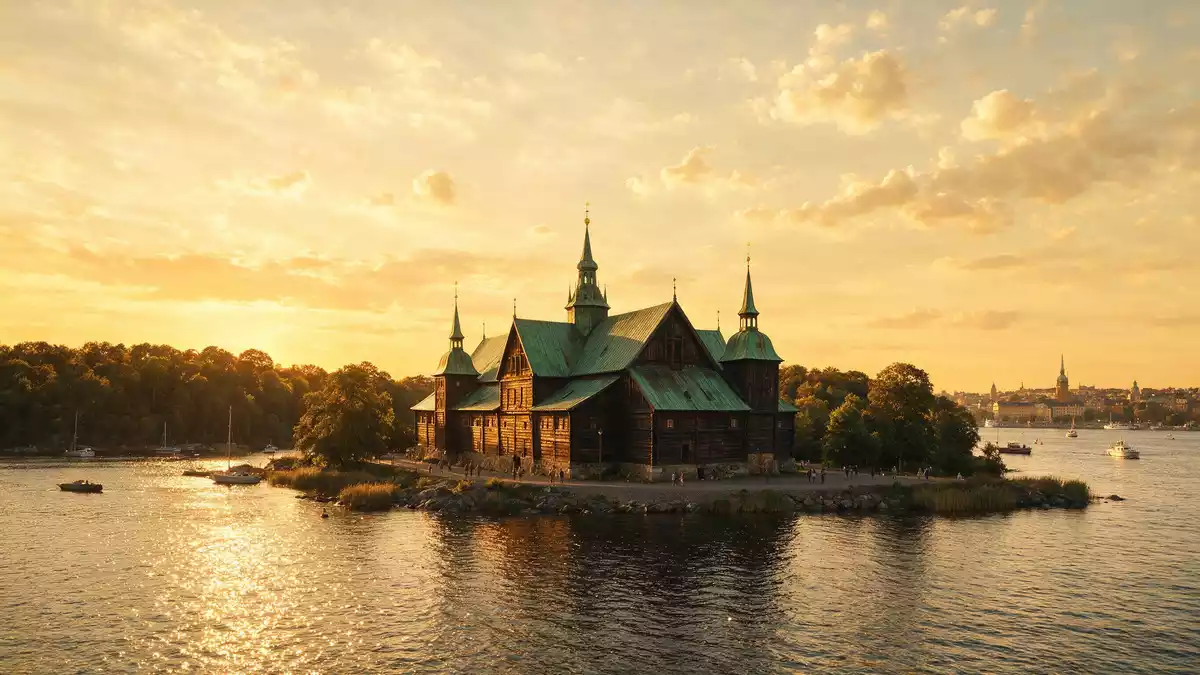
Vasamuseet in Stockholm is built around Vasa, a seventeenth-century warship that sank on its maiden voyage in 1628. The vessel remained underwater for 333 years before returning to the surface, and its tall timber hull now occupies the museum’s central space.
The ship is not a fragment arranged in a case. Vasa survives as a large, reconstructed vessel, surrounded by exhibitions about maritime life, shipbuilding, warfare and the people connected with the wreck. Its carved stern, gun ports, masts and decks make the museum a place where an entire historical object can be read at close range.
Vasa’s short voyage and long underwater history
Vasa left Stockholm harbour on 10 August 1628. Within minutes, wind entered the sails, the ship heeled over and water came through the open gun ports. The warship settled on the seabed, where its timber structure remained beneath the water of Stockholm harbour.
The wreck was located in the 1950s, and salvage work reached its decisive stage in 1961. On 24 April that year, Vasa appeared above the water after 333 years below the surface. Vasa’s recovery in 1961 is the central date in the museum’s modern history.
A ship surrounded by the objects of daily life
Vasa’s significance lies in the material that accompanied the hull. Excavation recovered more than 30,000 objects from the ship, including clothing, tools, coins, weapons, food remains and personal possessions. The finds connect the monumental warship with the routines of sailors, officers and craftsmen.
Archaeologists also recovered parts that had fallen away from the vessel, including sculptures, masts, anchors and the longboat. More than 40,000 objects were found through the excavation and later diving work. The excavation’s recovered objects include evidence of work, travel, food and status aboard a Swedish warship.
The museum building on Djurgården
Vasamuseet stands on Djurgården, an island in Stockholm, in a building created specifically for the ship. Swedish architects Marianne Dahlbäck and Göran Månsson won the design competition with a proposal named Ask. Construction began in 1987.
The building’s exterior rises around the masts, which project above the roofline. Inside, galleries occupy several levels around Vasa, giving views of the hull, decks, stern and carved details. King Carl XVI Gustaf inaugurated the museum on 15 June 1990. The museum’s Djurgården setting links the ship’s display with Stockholm’s maritime landscape.
Vasa’s preservation also shapes the museum’s interior. The building functions as a protective environment for a wooden ship that spent centuries underwater and requires continuous conservation. Exhibitions explain the treatment of the timber, the reconstruction of missing parts and the interpretation of the objects found in and around the wreck.
Visiting Vasamuseet: what travellers from Western Europe should know
- Vasamuseet is on Galärvarvsvägen on Djurgården, east of central Stockholm. Trams, buses, ferries and walking routes connect Djurgården with the city.
- The museum contains several viewing levels around a full-sized ship. Stairs and ramps form part of the route through the galleries.
- The main object is made from conserved timber. Displays also include recovered clothing, tools, coins, weapons, food remains and ship fittings.
- The official language is Swedish and the currency is the Swedish krona.
Searching for Vasamuseet on social platforms
These links open searches for Vasamuseet on each platform.
Frequently asked questions about Vasamuseet
Where is Vasamuseet?
Vasamuseet is on Djurgården, an island in Stockholm. The museum forms part of the island’s group of cultural and maritime attractions.
What can visitors expect inside?
The galleries surround Vasa with displays about the ship, its crew, its cargo, the salvage operation and the conservation of the timber hull.
What makes Vasamuseet distinctive?
Its central object is Vasa, a seventeenth-century warship recovered after 333 years underwater. The vessel remains large enough to show its structure, carvings and working spaces as a connected whole.


