
Varanasi Ghats: stone steps between city and sacred river
Published on 09/04/2026 at 06:17 | Editorial responsibility: Rafael Müller, Editor-in-Chief AD HOC NEWS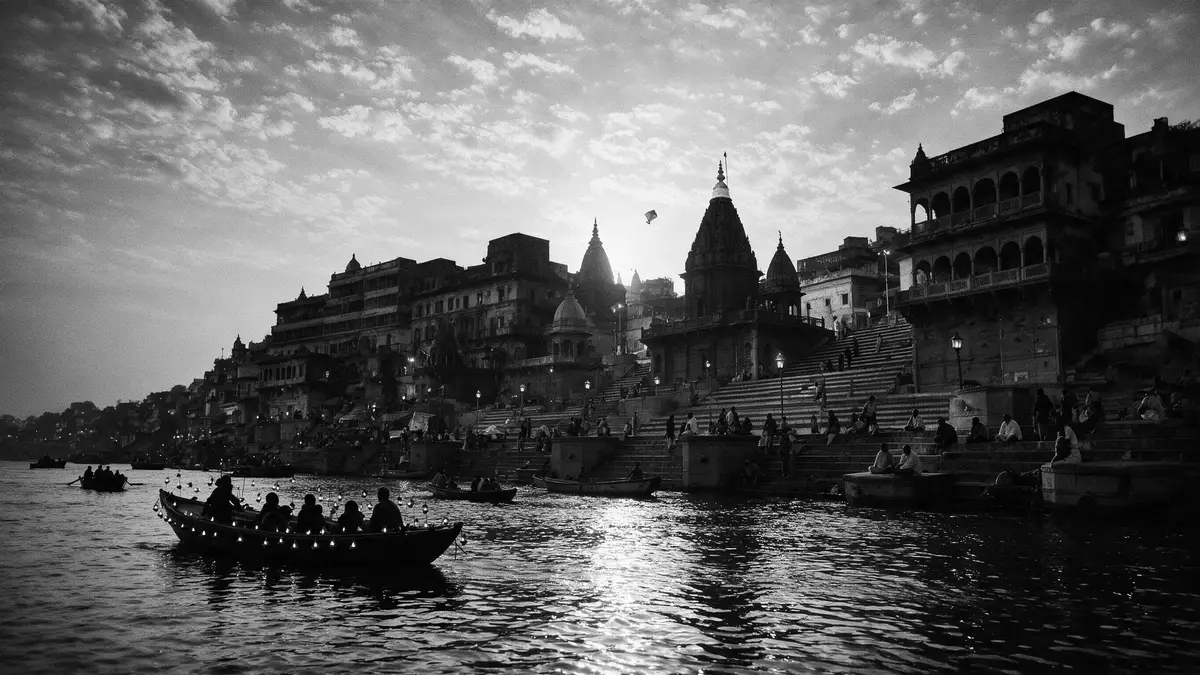
Varanasi Ghats are the stone riverfront of Varanasi, a sequence of stepped embankments along the Ganga that tie the oldest parts of the city directly to the water. Stretching across a long curve of the river, they form a continuous interface between densely built neighbourhoods, historic shrines and the broad surface of the river itself.
A stone riverfront shaped over centuries
The ghats of Varanasi are defined by flights of stone steps that descend from the urban plateau down to the Ganga, creating terraces at different levels where land and water meet.steps leading to the river bank These stone embankments form a nearly continuous riverfront that runs for about 6.5 km (4 miles) along the eastern edge of the city.6.5km long riverfront
The history of the sacred spots along this edge reaches back to the 8th and 9th centuries, while construction of the stone-stepped ghats began in the 14th century and continued into later periods.construction of stone ghats began from the 14th century Many of the structures above the ghats were rebuilt or consolidated under Maratha and other regional patrons in the eighteenth century, creating the dense row of palaces, havelis and temples that now overlooks the water.rebuilt in the 18th century under Maratha patronage
Assi to Adi Keshava: a continuous sequence of ghats
The ghats form a linked sequence along the western bank of the Ganga, traditionally running from Assi Ghat in the south to Adi Keshava Ghat in the north.from Assi Ghat in the south to Adi Keshava in the north Within this sequence, certain ghats mark important points in the religious geography of Varanasi, including Assi, Dashashwamedh, Manikarnika, Panchganga and Adi Keshava, which together form a recognised sacred circuit for pilgrims.Assi, Dashashwamedh, Manikarnika, Panchganga and Adi Keshava form the Pancha Tirtha
Assi Ghat stands at the southern limit of the main ghats, near the confluence where the Assi river meets the Ganga, and marks a traditional boundary of the city.Assi River joins the Ganges at Assi Ghat Adi Keshava Ghat, at the northern end of the line, is associated with the meeting of the Varuna river and the Ganga, expressing another limit of the sacred landscape.Varuna River joins the Ganges at Adi Keshav Ghat Between these points, numerous individual ghats serve neighbourhoods, temples and religious institutions, giving each stretch of the riverfront its own character.
Bathing, cremation and palatial facades
The ghats combine several distinct types of space along one line of stone steps: public bathing areas, cremation grounds and stretches backed by palaces and temples. Bathing ghats provide access for ritual immersion and everyday washing, their broad flights of steps leading down to the Ganga for direct contact with the water.bathing ghats serve ritual purification Cremation ghats, notably Manikarnika and Harishchandra, are associated with funerary rites and the Hindu concept of liberation from rebirth.cremation ghats Manikarnika and Harishchandra
Above the steps, the riverfront displays an architectural row of temples, shrines, havelis and former palaces, many built or patronised by rulers and elites from different regions of India.lofty buildings and holy sites This built edge includes structures linked to dynasties such as the Maharajas of Benares, Marathas, Shindes (Scindias), Holkars, Bhonsles and Peshwas, whose names appear in inscriptions and historical records of the ghats.patrons of current ghats From the river, the effect is of an almost continuous façade, cut into by stairways and platforms that descend to the water.
Visiting Varanasi Ghats: what travellers from Western Europe should know
- Varanasi Ghats line the western bank of the Ganga in the city of Varanasi in northern India, reached overland from Delhi and other major Indian transport hubs.
- The riverfront consists of long sequences of stone steps and platforms, with frequent level changes and uneven surfaces that require steady footing when walking near the water.
- The ghats lie directly beside dense historic neighbourhoods, with narrow alleys connecting the stepped riverfront to inner-city temples and traditional houses.
- The official language is Hindi and the currency is the Indian rupee.
- Entry requirements depend on your nationality; UK travellers can check the FCDO travel advice at gov.uk/foreign-travel-advice, Irish travellers the Department of Foreign Affairs at ireland.ie.
Searching for Varanasi Ghats on social platforms
These links open searches for Varanasi Ghats on each platform.Frequently asked questions about Varanasi Ghats
Where are Varanasi Ghats located?
Varanasi Ghats line the Ganga on the eastern side of Varanasi’s old city in northern India, forming the city’s stepped riverfront along the western bank.
What should visitors expect when walking along the ghats?
Visitors encounter long runs of stone steps, platforms at different levels and direct contact with river life, with historic buildings and narrow alleys rising immediately above the embankments.
What makes Varanasi Ghats distinctive among riverfronts?
The ghats combine a continuous stone riverfront, centuries of temple and palace architecture and spaces for both bathing and cremation within one uninterrupted sequence of steps.


