

Varanasi Ghats and the stone steps of the Ganges
Published on 09/14/2026 at 17:30 | Editorial responsibility: Rafael Müller, Editor-in-Chief AD HOC NEWS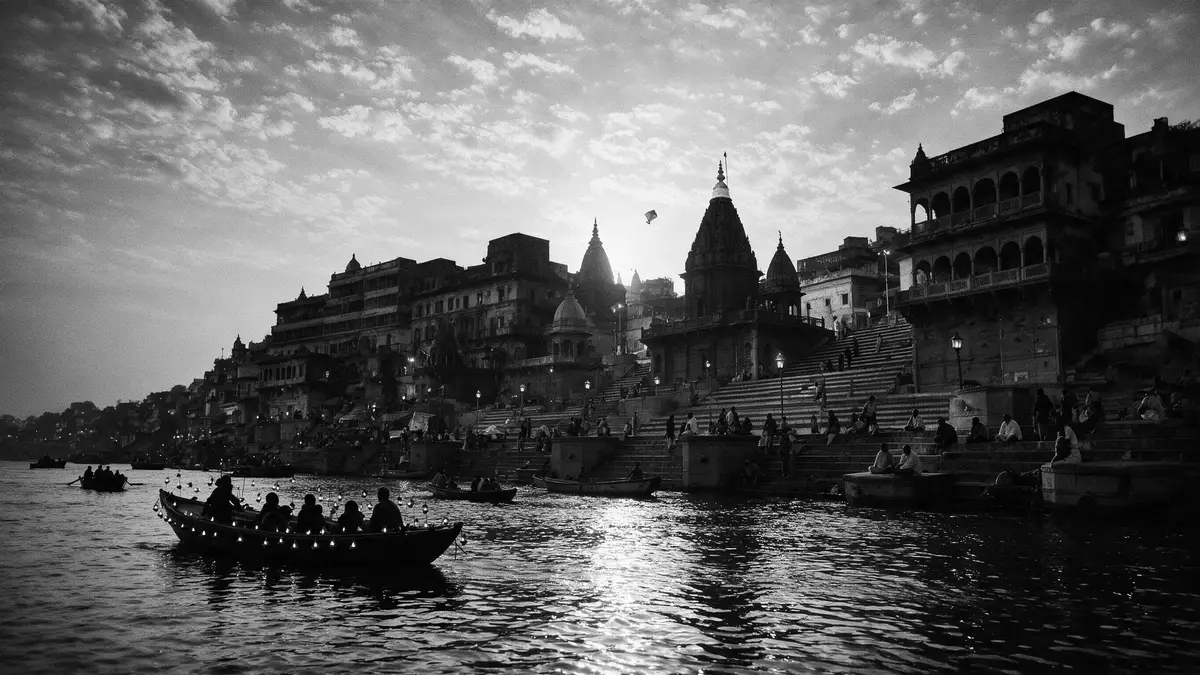
Varanasi Ghats are the long chain of stone steps and riverfront platforms that line the Ganges at Varanasi in northern India, creating a continuous sacred edge between the city and the river. Stretching along the western bank, they form a distinctive landscape where stone, water and ritual meet in a way that defines how Varanasi is experienced.
Stone steps, sacred river and a continuous riverfront
The ghats of Varanasi are essentially flights of stone steps that descend from the urban fabric to the River Ganges, turning the riverbank into a sequence of terraces and platforms rather than a simple shore. At this stretch of the river, the city stands on the west bank facing east, and the steps run for several kilometres, linking neighbourhoods, shrines and palaces in one extended riverfront.Flights of stone steps Each individual ghat has its own name and identity, but together they read as a single band of masonry and ritual activity following the curve of the river.
Varanasi lies in the state of Uttar Pradesh, and the cluster of ghats along the Ganges is among the features that most clearly mark it out as a major centre of Hindu religious practice in the region.Varanasi in Uttar Pradesh Many sources describe a chain of more than eighty named ghats along this riverfront, with stone embankments, platforms and steps that form a near-continuous wall at the water’s edge.Many named ghats The result is a landscape in which the boundary between city and river feels deliberate and constructed, shaped by human hands over centuries.
Bathing ghats, cremation ghats and the rhythm of ritual
Most of the ghats in Varanasi function as bathing and ceremonial spaces, where pilgrims descend to the river for ritual immersion, offerings and prayer. Platforms at different levels allow access to the water as the Ganges rises and falls, and the steps give worshippers sightlines along the river as well as towards temples and shrines set back from the edge.Bathing and ceremonial spaces A visit to the riverfront reveals how dense these functions can be, with priests performing rites near the water, small shrines set into retaining walls and stone platforms acting as stages for daily rituals.
Alongside the bathing ghats stand cremation ghats, where the riverfront is given over to funerary rites and the burning of pyres. Manikarnika Ghat and Harishchandra Ghat are the two principal cremation sites on this stretch, and they have long associations with ideas of liberation and the end of rebirth in Hindu belief.Manikarnika and Harishchandra The contrast between bathing ghats, where pilgrims immerse themselves in the river, and cremation ghats, where bodies are consigned to flame beside the water, is part of what gives the riverfront its distinctive character.
Dashashwamedh, Assi and other named ghats
Within the long chain of Varanasi Ghats, several individual sites stand out for their scale, setting or particular rituals. Dashashwamedh Ghat, close to the Kashi Vishwanath Temple, is widely described as a main ghat of the city, with broad steps and platforms arranged to face the river and accommodate large ceremonial gatherings.Dashashwamedh Ghat Its name refers to a mythic sacrifice involving ten horses, and the ghat has become closely associated with elaborate evening rituals on the riverfront.
At the southern end of the main riverfront lies Assi Ghat, traditionally described as the point where the Assi stream meets the Ganges and marking a boundary of the city’s core riverfront zone.Assi Ghat at the Assi river From there, the named ghats run northwards past sites such as Tulsi Ghat, Kedar Ghat, Man Mandir Ghat and Darbhanga Ghat, forming a sequence that some guides describe as extending for about 6.5 km from Assi Ghat towards the older northern ghats.Around 6.5 km of riverfront Walking this chain from Assi Ghat towards Dashashwamedh Ghat brings out the variety in architecture, from rebuilt concrete embankments to stone palaces rising directly behind the steps.
Visiting Varanasi Ghats: what travellers from Western Europe should know
- Varanasi Ghats line the western bank of the Ganges at Varanasi in the Indian state of Uttar Pradesh, and are reached by road through the dense streets above the river.
- The terrain between city level and river is steep, with long flights of stone steps and occasional ramps; moving along the ghats involves frequent changes of level and uneven paving.
- Varanasi lies in India; the official currency is the Indian rupee and the official language is Hindi, alongside many local languages and English used in tourism.
- Entry requirements depend on your nationality; UK travellers can check the FCDO travel advice at gov.uk/foreign-travel-advice, Irish travellers the Department of Foreign Affairs at ireland.ie.
Searching for Varanasi Ghats on social platforms
These links open searches for Varanasi Ghats on each platform.Frequently asked questions about Varanasi Ghats
Where are Varanasi Ghats located?
Varanasi Ghats line the western bank of the River Ganges at Varanasi in the Indian state of Uttar Pradesh, forming a continuous riverfront of stone steps.
What should visitors expect on a visit to the ghats?
Visitors encounter long flights of steps, shrines and platforms along the river, with bathing areas, cremation zones and narrow lanes connecting the riverfront back into the old city.
What makes Varanasi Ghats distinctive?
The dense succession of named ghats, the mix of bathing and cremation sites and the way the stone steps link the city directly to the Ganges give this riverfront its distinctive character.


