

Valparaiso: hillside port city of colour and heritage
Published on 08/26/2026 at 22:31 | Editorial responsibility: Rafael Müller, Editor-in-Chief AD HOC NEWS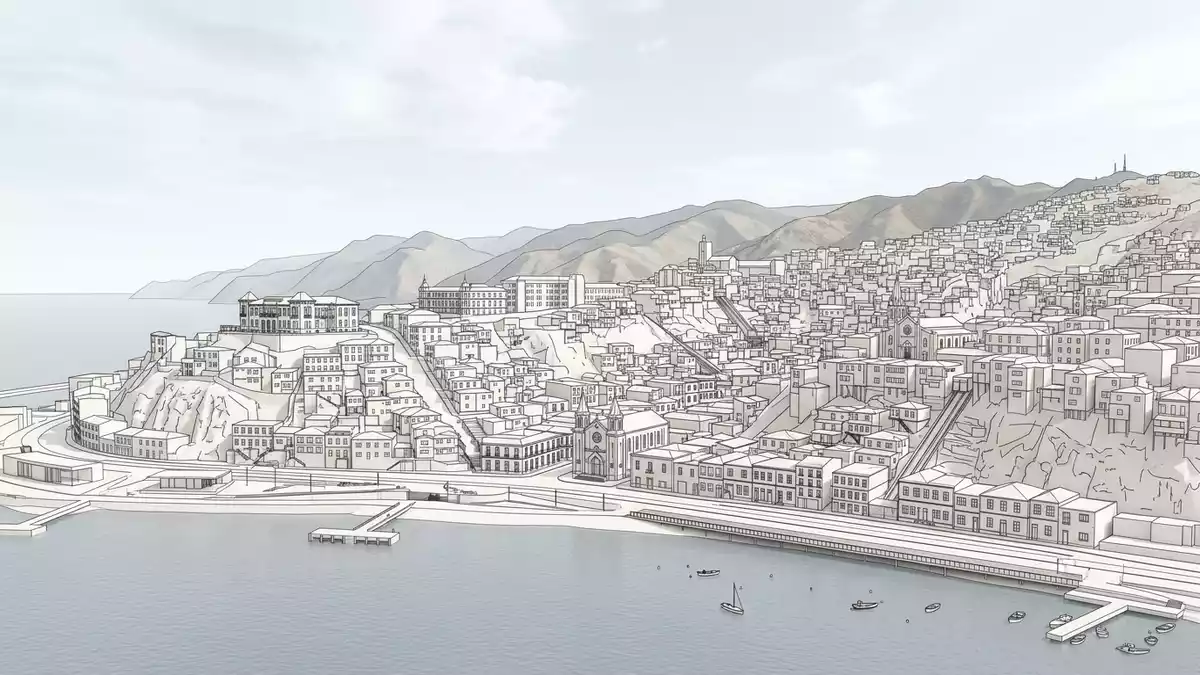
Valparaiso on the Pacific coast of Chile is a port city that rises from the harbour up steep hills lined with houses, stairways and funicular railways. In 2003 its historic quarter was inscribed as a UNESCO World Heritage Site, recognising the seaport’s role in late nineteenth-century global trade and the dense urban landscape that developed between the waterfront and the slopes above it.historic quarter inscription
Harbour city between Pacific and hills
Valparaiso occupies a natural amphitheatre on central Chile’s Pacific seaboard, with a working port on the coastal plain and residential districts climbing the surrounding hills. The historic quarter extends from the waterfront inland, covering parts of the flat area and the slopes where the earliest urban growth took place.coastal plain and hills The city’s role as a merchant port in the late nineteenth and early twentieth centuries is closely tied to this geography, as ships docking at the harbour were served by warehouses, markets and public squares on the plain, beneath hillside neighbourhoods linked by passages and stairways.leading merchant port
Within the World Heritage area, distinct neighbourhoods form a compact ensemble of streets, plazas and viewpoints. Around Plaza Sotomayor and the banking sector of Calle Prat stand monumental civic and commercial buildings, while near La Matriz Church and Santo Domingo Square the streets narrow between the hills and the plain, mixing religious architecture with late nineteenth-century seaport buildings.historic area sectors Higher on the slopes, sectors such as Plaza Echaurren, Cerro Cordillera and Quebrada Márquez show how planners and builders adapted routes and structures to demanding topography, creating a patchwork of stairways, narrow streets and small squares.
Cerro Alegre and Cerro Concepción: hillside viewpoints
Two hills in particular, Cerro Alegre and Cerro Concepción, form a single neighbourhood that became a focus of urban development in the nineteenth century. Planned and built largely by German and English immigrants, these slopes combine viewing platforms, promenades, alleyways and stairways with houses and small hotels that stand above the port.immigrant-planned neighbourhood From terraces such as Paseo Gervasoni on Cerro Concepción the harbour, plains and other hills spread below, giving a clear sense of how the city climbs away from the water.
The hillside streets on these cerros are lined with buildings that reflect late nineteenth-century urban architecture in Latin America, including wooden and masonry houses, small churches and public institutions.late nineteenth-century development On Cerro Concepción, the Anglican church of San Pablo and the Lutheran church built in 1897 stand among residences and guesthouses, recalling the presence of Protestant communities tied to the foreign merchant and shipping interests that used the port in the nineteenth century.Protestant churches on the hill
Funiculars linking port and slopes
One of the most distinctive features of Valparaiso is the system of funicular railways, locally known as ascensores, which link the harbour area and downtown streets with the residential hills above. Ascensor Concepción is regarded as the oldest of these funiculars in the city; it was inaugurated on 1 December 1883 and connects the Elias Alley near the Turri clock tower on the plan of Valparaiso with the Gervasoni Promenade on Cerro Concepción.Ascensor Concepción inauguration Its upper station opens directly onto Paseo Gervasoni, placing visitors among hillside viewpoints and streets above the port.
Ascensor Concepción has been declared a Historic Monument, underscoring the heritage status of the city’s funiculars as well as their everyday role in moving residents between different levels of the urban landscape.historic monument designation Together with other ascensores, it forms part of a wider set of stairways, passages and plazas that make walking in Valparaiso a sequence of level changes and shifting views, from port activity on the plain up to quiet residential corners and small parks on the slopes.
Visiting Valparaiso: what travellers from Western Europe should know
- Valparaiso lies on the central Pacific coast of Chile, north-west of Santiago, and is reached overland from the capital by main roads and regional bus routes.
- The historic quarter includes streets on steep hillsides and long stairways; moving between the port area and the slopes often involves climbs or descents on foot in addition to funicular rides.
- Within the heritage area, named sectors such as Plaza Sotomayor, Cerros Alegre and Concepción, and the banking district on Calle Prat sit close together yet at different levels, so short walks can involve frequent changes of gradient.
- The official language is Spanish and the currency is the Chilean peso.
- Entry requirements depend on your nationality; UK travellers can check the FCDO travel advice at gov.uk/foreign-travel-advice, Irish travellers the Department of Foreign Affairs at ireland.ie.
Searching for Valparaiso on social platforms
These links open searches for Valparaiso on each platform.
Frequently asked questions about Valparaiso
Where is Valparaiso and what is its setting?
Valparaiso is a Chilean port city on the Pacific coast, built on a coastal plain and steep surrounding hills that form a natural amphitheatre above the harbour.
What can visitors expect when exploring the historic quarter?
The historic quarter combines port-side squares, markets and civic buildings with hillside neighbourhoods reached by stairways and funiculars, offering frequent views over the harbour and nearby hills.
What makes Valparaiso distinctive compared with other port cities?
The combination of a nineteenth-century merchant port, steep topography, immigrant-planned hills such as Cerro Alegre and Cerro Concepción, and heritage funicular railways gives Valparaiso a layered urban character tied closely to its slopes.


