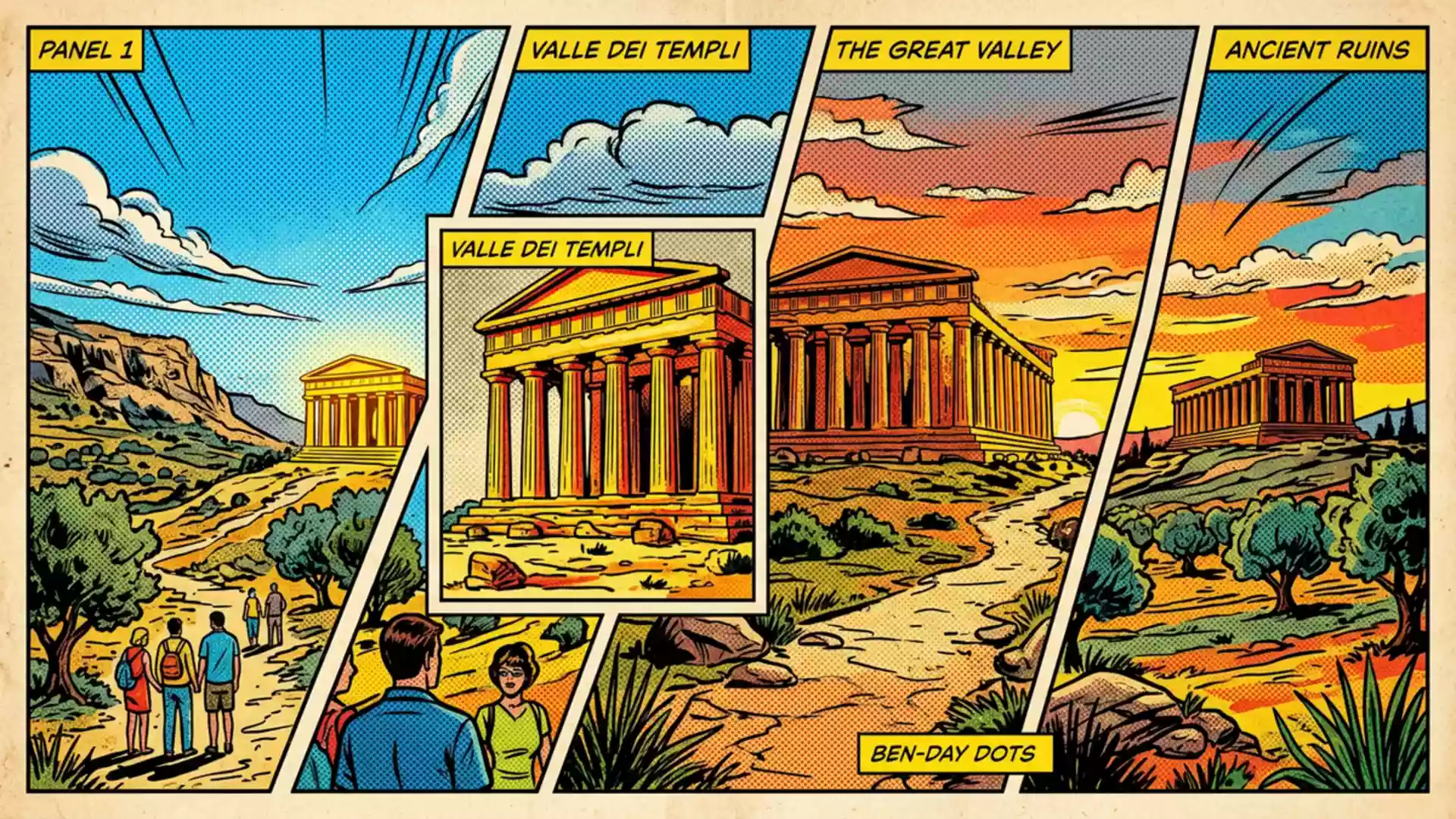
Valle dei Templi and the stone skyline of ancient Akragas
Published on 09/02/2026 at 19:48 | Editorial responsibility: Rafael Müller, Editor-in-Chief AD HOC NEWS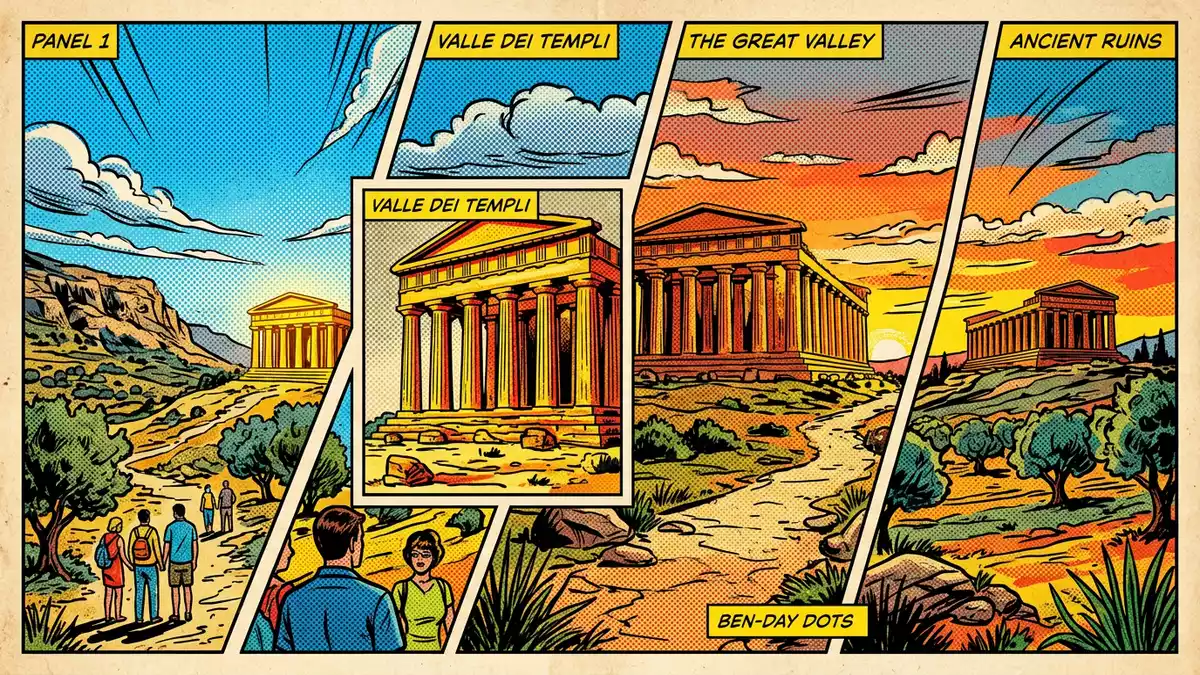
Valle dei Templi stretches along a low ridge south of Agrigento, where a sequence of Doric temples marks the former skyline of the ancient city of Akragas in southern Sicily.
From Akragas to Agrigento in stone
The story of Valle dei Templi begins with the Greek colony of Akragas, founded in the sixth century BC by settlers from Gela and Rhodes on a plateau near the southern coast of Sicily.The colony of Akragas grew into one of the major cities of Greek Sicily during the fifth century BC, and the temples lining the ridge belonged to that period of civic ambition.
Carthaginian forces destroyed much of Akragas in 406 BC during their campaigns in Sicily, yet the stone structures on the hill endured in varying states of ruin and repair.The destruction of Akragas was followed by Roman conquest in 210 BC, when the city took the Latin name Agrigentum and later evolved into present-day Agrigento.
A ridge lined with Doric temples
The ridge known as Valle dei Templi carries a series of temples aligned along its crest, forming a clear stone axis between the inland plateau and the coastal plain.The hill of the temples is part of an archaeological and landscape park that preserves both monumental architecture and traces of the ancient city’s fortifications.
Several of the temples show the characteristic proportions and fluted columns of the Doric order, typical of Greek architecture in Sicily and southern Italy.Great Doric temples stand along the rocky scarp together with other sanctuaries, necropolis areas and stretches of city wall cut into the local calcarenite rock.
A UNESCO landscape of archaeology and light
Valle dei Templi forms the core of the Archaeological and Landscape Park of the Valley of the Temples, established by regional law in 2000 to protect the remains of Akragas and its surroundings.The archaeological and landscape park covers a large area of hills and terraces cut by ancient roads and framed by the modern city on one side and the coastal plain on the other.
In 1997 the Archaeological Area of Agrigento, including Valle dei Templi, entered the UNESCO World Heritage List as a major example of ancient Greek art and architecture in the western Mediterranean.The UNESCO inscription recognises the alignment of temples, necropolis and city walls as a coherent cultural landscape where archaeological remains and open countryside form a single scene.
Visiting Valle dei Templi: what travellers from Western Europe should know
- Valle dei Templi lies just south of Agrigento in Sicily, with the archaeological park stretching along a ridge between the modern city and the coastal plain.
- The ground inside the archaeological park includes uneven rock, worn stone blocks and stretches of path on a gentle gradient, so walking involves sections on rough surfaces.
- The wider Archaeological and Landscape Park of the Valley of the Temples includes the Pietro Griffo Regional Archaeological Museum in Agrigento, which presents finds from the ancient city and the surrounding territory.
- The official language is Italian and the currency is the euro.
Searching for Valle dei Templi on social platforms
These links open searches for Valle dei Templi on each platform.
Frequently asked questions about Valle dei Templi
Where is Valle dei Templi?
Valle dei Templi lies just outside Agrigento in southern Sicily, on a ridge between the modern city and the coastal plain overlooking the Mediterranean.
What can visitors expect to see in Valle dei Templi?
Visitors encounter a sequence of Doric temples, stretches of ancient city wall, necropolis areas and open views across an archaeological landscape shaped by Greek and Roman Akragas.
What makes Valle dei Templi distinctive among archaeological sites?
Valle dei Templi combines a near-continuous line of classical temples with their surrounding necropolis and fortifications, forming a single archaeological and landscape park recognised by UNESCO.