
Valle de la Luna, a sculpted moonscape west of San Pedro de Atacama
Published on 09/04/2026 at 21:49 | Editorial responsibility: Rafael Müller, Editor-in-Chief AD HOC NEWS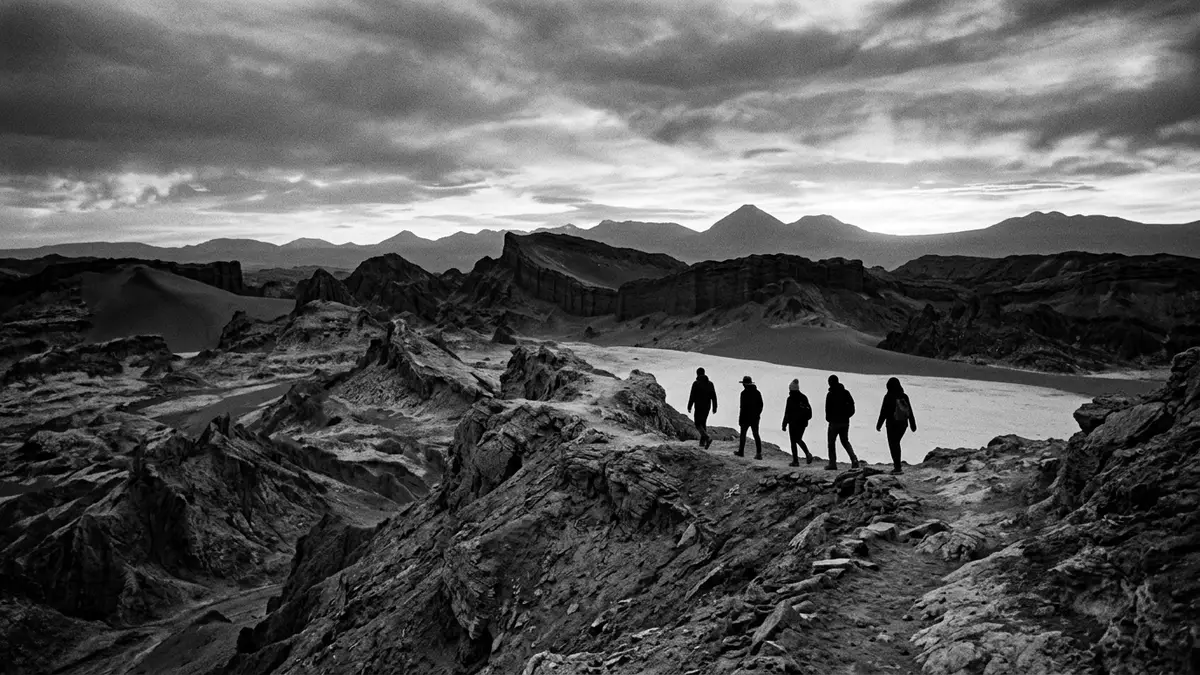
Valle de la Luna in northern Chile is a compact desert basin where salt, sand and rock have been carved into a landscape that recalls the surface of the Moon. Set within the Cordillera de la Sal west of San Pedro de Atacama, this dry, mineral-rich valley brings millions of years of erosion into a space that can be crossed in an afternoon yet feels far removed from everyday scenery.
A desert valley shaped by salt and stone
Valle de la Luna lies west of San Pedro de Atacama in the Región de Antofagasta, within the low ridges of the Cordillera de la Sal that rise from the wider Atacama Desert.Valle de la Luna lies west of San Pedro de Atacama The Cordillera originated as a basin floor where repeated cycles of flooding and evaporation left thick layers of salt, gypsum, clay and other minerals that were later folded and lifted by tectonic movements.salt, gypsum and clay layers
The valley forms part of the Los Flamencos National Reserve, a protected area administered by CONAF that covers several distinct basins and salt flats in the region.part of the Los Flamencos National Reserve Within this reserve, Valle de la Luna occupies a depression of mineral ground where sedimentary rocks have been exposed and sculpted by wind and rare rain, producing ridges, slopes and dunes that catch the desert light at sharp angles.a depression of salt ground
Forms that suggest a lunar landscape
The central draw of Valle de la Luna is the variety of geological forms concentrated in a relatively compact area. Bands of rock and mineral stand in jagged walls and eroded amphitheatre-like hollows, broken by areas of loose sand and scattered boulders.stones and sand formations On the valley floor, fine-grained sediment has accumulated into dunes, with surfaces shaped into ripples by the prevailing winds.
Elsewhere, the mineral crust emerges at the surface as pale outcrops and thin, brittle sheets that contrast with the darker surrounding rock. In certain sections, salt and gypsum deposits give the ground a textured, crystalline appearance, reinforcing the impression of a landscape removed from familiar vegetation and water.salt and gypsum deposits The overall effect is a basin of alternating ridges and hollows that has often been compared with a moonscape, with colours shifting through greys, ochres and muted reds as the light moves across the slopes.landscape that recalls the surface of the moon
Valle de la Luna within the Atacama Desert
Although the valley feels enclosed, it sits within one of the driest regions on Earth, the Atacama Desert, whose wider plateau stretches between the coastal ranges and the main Andes.within the Atacama Desert The Cordillera de la Sal marks the edge of this plateau near San Pedro de Atacama, its low mountains and transverse valleys framing Valle de la Luna and neighbouring basins.Cordillera de la Sal ridges and depressions
The wider reserve, including Valle de la Luna, has been recognised as a nature sanctuary since the late twentieth century, reflecting both its scientific interest and its importance as a representative slice of the Atacama’s desert geomorphology.declared nature sanctuary in 1982 The endorheic nature of the basin, where water has no outlet to the sea and instead evaporates in place, has concentrated minerals over long periods and left the surface patterned with features that appeal to visitors and researchers alike.endorheic depressions concentrating minerals
Visiting Valle de la Luna: what travellers from Western Europe should know
- Valle de la Luna lies west of San Pedro de Atacama in northern Chile, along the road towards Calama through the Cordillera de la Sal, and is reached by vehicle, taxi or bicycle from the town.
- The terrain combines vehicle tracks, compacted paths and sandy sections, with slopes and low ridges inside the basin; footwear suited to dry, uneven ground helps on the dunes and rocky areas.
- The valley sits within Los Flamencos National Reserve in Chile, where the official language is Spanish and the currency is the Chilean peso.
- Entry requirements depend on your nationality; UK travellers can check the FCDO travel advice at gov.uk/foreign-travel-advice, Irish travellers the Department of Foreign Affairs at ireland.ie.
Searching for Valle de la Luna on social platforms
These links open searches for Valle de la Luna on each platform.
Frequently asked questions about Valle de la Luna
Where is Valle de la Luna?
Valle de la Luna is in northern Chile west of San Pedro de Atacama, within the Cordillera de la Sal and inside the Los Flamencos National Reserve.
What should visitors expect inside the valley?
Visitors encounter mineral ground, dunes, ridges and eroded rock formations arranged in a compact basin, with desert light emphasising the textures and colours of the Atacama landscape.
What makes Valle de la Luna distinctive among Atacama landscapes?
Its concentration of salt, gypsum and sedimentary rock forms in one basin, combined with its protected status and proximity to San Pedro de Atacama, gives the valley a distinct lunar character.


