

Uxmal and the Puuc hills: a Maya city of carved stone
Published on 08/28/2026 at 18:05 | Editorial responsibility: Rafael Müller, Editor-in-Chief AD HOC NEWS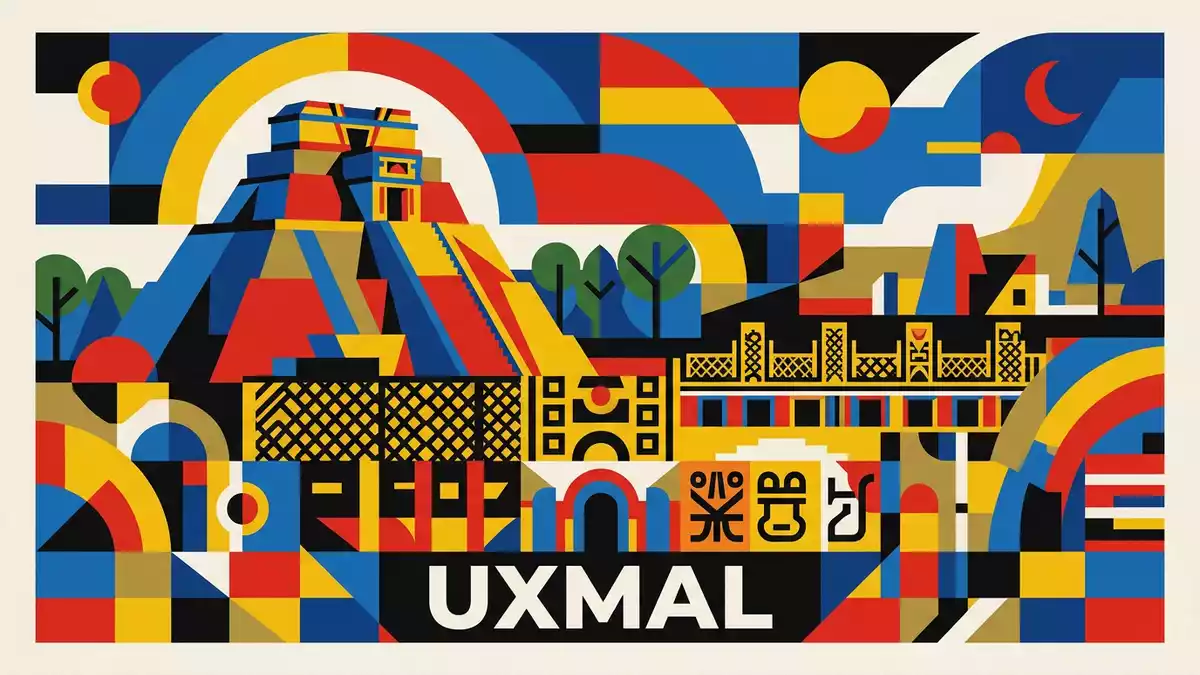
Uxmal in the Yucatán Peninsula of Mexico is a pre?Hispanic Maya city laid out across low limestone hills, known for its finely carved Puuc?style architecture and large ceremonial platforms from the Late Classic period.
Uxmal in the Puuc landscape
Uxmal stands in the Puuc region of south?western Yucatán, a belt of low hills in an otherwise flat peninsula where limestone outcrops give the terrain a gently undulating form. The archaeological zone lies in Santa Elena Municipality in Yucatán state, forming the centre of a wider cultural area that includes Kabah, Sayil and Labná.centre of the Puuc region These surrounding sites share both the geology and the building style that made Uxmal a major Maya city.
The ruins occupy a series of artificial terraces and plazas built over the hills, with masonry platforms carrying temples, palaces and other ceremonial structures. The elevated setting gives long views across the Puuc country while keeping the main buildings close together, so that the site feels like a compact urban ensemble rather than a scattered group of monuments. Limestone from the region provides the basic building material, cut into blocks for walls and sculpted elements.
From Maya city to World Heritage site
Archaeological and documentary work places Uxmal’s major development in the Late Classic and Terminal Classic periods, roughly between the seventh and eleventh centuries AD, when it served as an urban and ceremonial centre for settlements in southern Yucatán.Late Classic period centre The city was part of a wider network of Maya polities across the peninsula and is grouped with other major sites such as Chichén Itzá, Palenque, Tikal and Copán in discussions of Maya culture.one of the important Maya sites
Uxmal and its neighbouring Puuc sites were inscribed on the UNESCO World Heritage List in 1996 as the “Pre?Hispanic Town of Uxmal”, recognising the ensemble of ceremonial structures as a pinnacle of late Maya art and architecture.inscribed on the World Heritage List in 1996 The inscription covers the main urban core at Uxmal and the related centres of Kabah, Labná and Sayil, which together show the social and economic organisation of the Puuc region in this period. Conservation efforts focus on stabilising the masonry, controlling vegetation and managing visitor access while preserving the distinctive relief carvings.
Puuc architecture in stone and stucco
The Puuc style seen at Uxmal is defined by a clear division of building facades into two horizontal zones. The lower zone consists of carefully dressed stone blocks laid in plain courses, with openings for doorways but little ornament. The upper zone carries dense decorative panels, built from small stone elements assembled into mosaics of geometric patterns, masks and symbolic motifs.division into plain lower and ornate upper facades This combination gives the buildings a solid base and visually elaborate crowns, especially when seen across a courtyard.
Several structures at Uxmal are often cited as masterpieces of Puuc architecture, including the complex known in Spanish as the Cuadrángulo de las Monjas, the Palacio del Gobernador and the Pyramid of the Magician, also called the Pyramid of the Soothsayer.Cuadrángulo de las Monjas and Palacio del Gobernador Their upper facades are covered with mosaic friezes featuring repeated masks of the rain god Chaac, abstract lattice patterns and stylised figures, all carved in relief from stone blocks. The arrangement of long palace ranges around enclosed courtyards, combined with the steep profile of the main pyramid, produces a varied skyline when moving through the site.
Visiting Uxmal: what travellers from Western Europe should know
- Uxmal lies in Yucatán state in south?eastern Mexico, around 62 km (about 39 mi) south of Mérida along Highway 261 in the Puuc hill country.located 62 km south of Mérida Long?distance buses on regional routes serve the area.
- The archaeological zone is built on and around low limestone hills, so visiting involves walking over sloping ground and climbing stone steps between terraces and up temple platforms.
- Uxmal sits in a tropical climate zone, with high temperatures and strong sun for much of the year; shade at the site comes mainly from the buildings themselves and scattered trees.
- The site lies outside any major urban centre but within reach of other Puuc?style ruins such as Kabah, Labná and Sayil, which form a recognised cultural route through this part of Yucatán.Puuc Route linking Kabah, Sayil and Labná
- The official language is Spanish and the currency is the Mexican peso; entry requirements depend on your nationality, UK travellers can check the FCDO travel advice at gov.uk/foreign-travel-advice, Irish travellers the Department of Foreign Affairs at ireland.ie.
Searching for Uxmal on social platforms
These links open searches for Uxmal on each platform.
Frequently asked questions about Uxmal
Where is Uxmal and what kind of place is it?
Uxmal is an archaeological site in Yucatán state in south?eastern Mexico, containing the remains of a pre?Hispanic Maya city laid out across Puuc limestone hills.
What should visitors expect when walking around Uxmal?
Visitors encounter stone terraces, courtyards framed by long palace ranges, steep temple platforms and richly carved facades, all reached by walking over uneven ground and stairways.
What makes Uxmal distinctive among Maya ruins?
Uxmal is distinctive for its Puuc architectural style, with plain lower wall zones and highly ornate upper mosaic friezes, and for its World Heritage recognition alongside Kabah, Labná and Sayil.


