
Uxmal and the dense ornament of Puuc masonry
Published on 09/08/2026 at 08:53 | Editorial responsibility: Rafael Müller, Editor-in-Chief AD HOC NEWS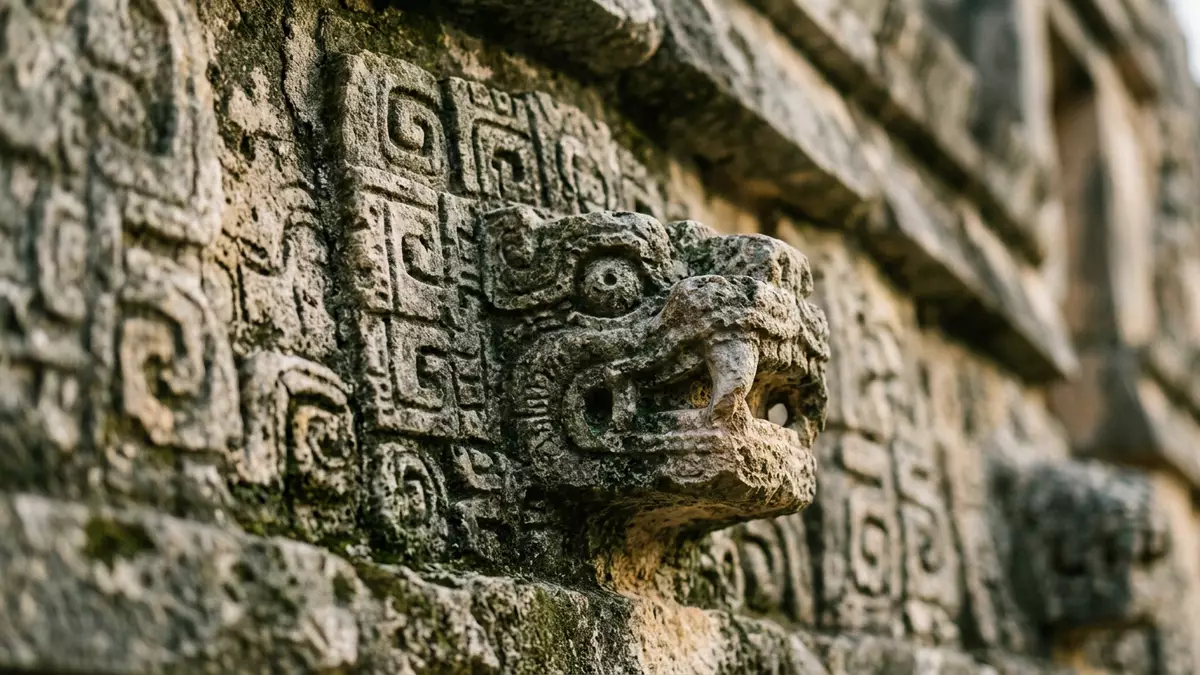
Uxmal in Yucatán is a Maya archaeological site defined by dense Puuc masonry, broad platforms and carefully ordered courtyards. Its ceremonial core was founded around AD 700, and the site is part of the UNESCO-listed Pre-Hispanic Town of Uxmal.
Uxmal’s Puuc surfaces and courtyards
The most striking feature at Uxmal is the contrast between plain lower walls and richly carved upper sections. That pattern appears across the site’s major buildings, including the Nunnery Quadrangle and the Governor’s Palace, where stone ornament gathers above long horizontal basesNunnery Quadrangle.
The Puuc style gives Uxmal a disciplined look rather than a monumental one built around sheer height. The Governor’s Palace is one of the finest examples of that style, and the UNESCO record places Uxmal at the centre of the Puuc region in southern Yucatáncentre of the Puuc region.
Named monuments in the ceremonial core
The Pyramid of the Magician dominates the approach, while the Nunnery Quadrangle opens as a four-sided court of palace-like buildings. The Governor’s Palace stands farther south and sits on a wide terrace, with a stairway leading up to itGovernor’s Palace.
Uxmal is associated with the Late Classic and Terminal Classic phases of Maya history, and the site’s formal record dates its flowering to the period around AD 650 to 1100. That long span helps explain why the monuments feel related yet distinct, each with its own scale, profile and decorative rhythmLate Classic Period.
Uxmal in the history of Maya art
Uxmal holds a place in Maya art because its ornament is not confined to a single façade or temple. The UNESCO listing describes the ceremonial structures as a high point of late Maya art and architecture, and the site was inscribed in 1996 as part of the Pre-Hispanic Town of Uxmalinscribed in 1996.
The wider setting matters too. Uxmal sits in the Puuc landscape south-west of Mérida, a region of low hills in southern Yucatán, and its monuments are linked with Kabah, Labná and Sayil in the same World Heritage propertyKabah, Labná and Sayil.
Visiting Uxmal: what travellers from Western Europe should know
- Uxmal lies in Yucatán, south-west of Mérida, in the Puuc region of Mexico. The site is reached by road, and Mérida is the usual reference point for the approach.
- The terrain is level within the main ceremonial area, but many structures stand on raised platforms and terraces. Stone steps connect the levels.
- The monuments are spread across an archaeological zone rather than gathered into one compact courtyard. The Pyramid of the Magician, the Nunnery Quadrangle and the Governor’s Palace form the core cluster.
- The site is part of a larger Maya cultural landscape that includes Kabah, Labná and Sayil. Uxmal is the main name used for the archaeological centre.
Searching for Uxmal on social platforms
These links open searches for Uxmal on each platform.
Frequently asked questions about Uxmal
Where is Uxmal?
Uxmal is in Yucatán, south-west of Mérida, in Mexico’s Puuc region. It is an ancient Maya site within a broader World Heritage landscape that also includes Kabah, Labná and Sayil.
What does a visit involve?
The site is spread across raised terraces, courtyards and freestanding monuments. The main names to look for are the Pyramid of the Magician, the Nunnery Quadrangle and the Governor’s Palace.
What makes Uxmal distinctive?
Uxmal is known for Puuc architecture, with plain lower walls and heavily decorated upper façades. Its ceremonial buildings belong among the strongest examples of late Maya art and architecture.


