Uxmal and its towering Pyramid of the Magician
Published on 09/11/2026 at 15:51 | Editorial responsibility: Rafael Müller, Editor-in-Chief AD HOC NEWS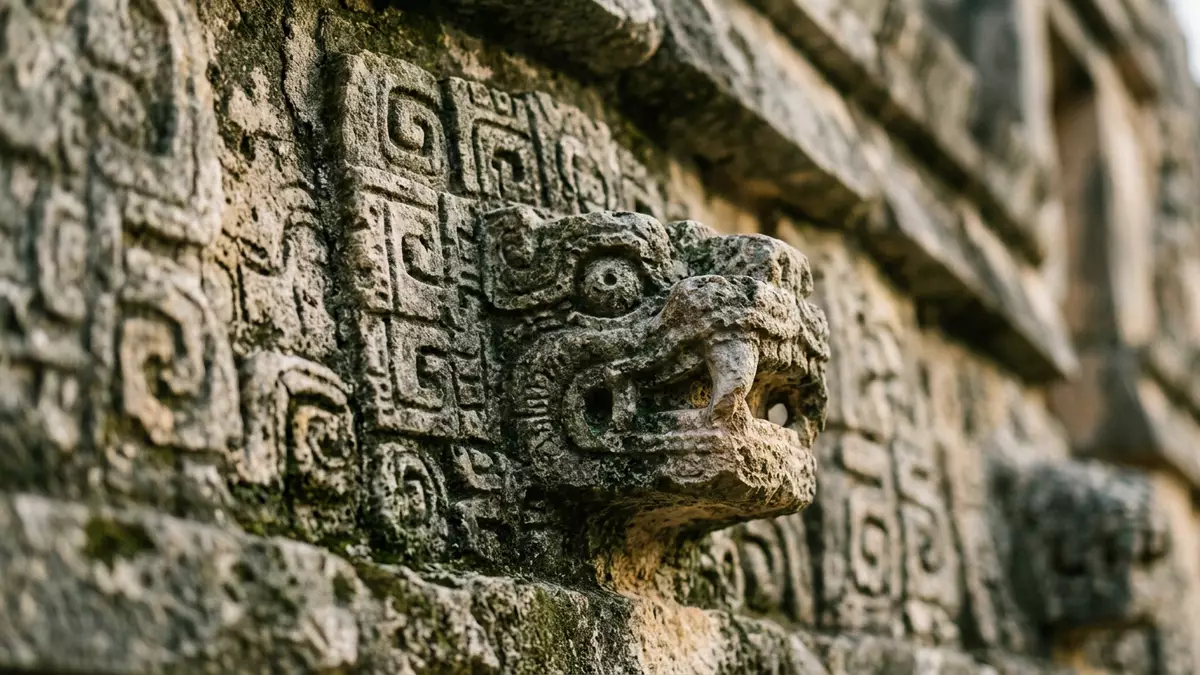
Uxmal in Mexico’s Yucatán Peninsula is an ancient Maya city where a towering stepped pyramid, refined palaces and long carved facades rise from low limestone hills in the Puuc region. The site took shape mainly between the eighth and tenth centuries AD and was later recognised as the “Pre-Hispanic Town of Uxmal” on the UNESCO World Heritage List, reflecting its status as a major centre of late Maya art and architecture.
The Puuc hill country around Uxmal
Uxmal stands in the Puuc hills of western Yucatán, a belt of undulating low mountains and limestone ridges that frame the site and give the region its name. The archaeological zone lies south of Mérida, the capital of Yucatán state, and forms the hub of a wider cluster of ancient settlements that includes Kabah, Labná and Sayil, which share a common architectural tradition and were inscribed together with Uxmal on the UNESCO World Heritage List in 1996.Pre-Hispanic Town of Uxmal
Archaeological and historical descriptions place Uxmal within the Late Classic and Terminal Classic periods of Maya history, broadly between the seventh and eleventh centuries AD, when the Puuc style reached a high degree of refinement.Late Classic to Terminal Classic During this time Uxmal served as an urban and ceremonial centre for surrounding settlements in southern Yucatán, and its buildings show a careful relationship between architecture and astronomy in their orientation and layout.urban and ceremonial centre
The Pyramid of the Magician: Uxmal’s dominant profile
At the heart of Uxmal rises the Pyramid of the Magician, a large stepped monument that dominates the central area of the site and is the first major structure encountered on entering the archaeological zone.central structure in the Maya ruin complex The pyramid is the tallest building at Uxmal, reaching roughly 32–40 m (105–131 ft) in height depending on the measurement used in different surveys, and resting on a broad base about 69 by 49 m (227 by 162 ft).height and base dimensions
The Pyramid of the Magician is unusual among major Maya monuments in Yucatán because it rises from a rounded, elongated plan rather than a sharply rectilinear platform, giving the whole mass a distinctive silhouette within the surrounding complex.tallest and most distinctive structure Archaeological studies identify multiple superimposed construction phases within the pyramid, broadly spanning from the sixth to the tenth centuries AD, with earlier temples encased inside later enlargements.five construction phases The monument’s name recalls a local legend about a dwarf magician who was said to have built the pyramid in a single night, a story that has become part of the site’s cultural lore while standing apart from the archaeological record.legend of the magician dwarf
Palaces, courtyards and carved facades
Beyond the Pyramid of the Magician, Uxmal contains an ensemble of structures that illustrate the Puuc architectural style in detail: long horizontal buildings with plain lower walls and richly ornamented upper zones, laid out around spacious courtyards and terraces. Among the key groups are the Governor’s Palace, the Quadrangle of the Nuns, the House of the Tortoises, the Ball Court, the Great Pyramid and the Pigeon House, all arranged across the core of the site.important buildings at the site
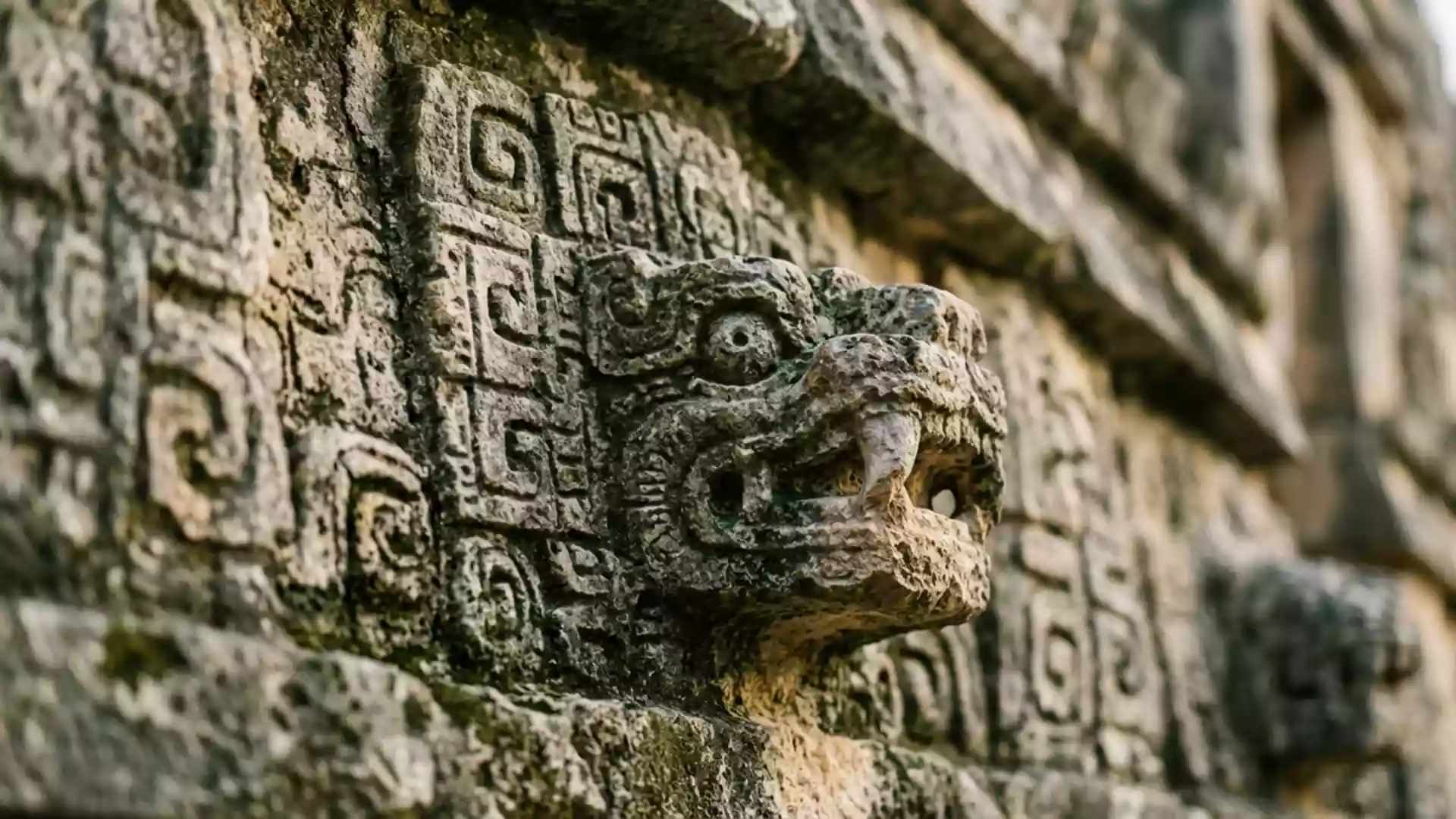
Descriptions of Uxmal highlight the fine stone mosaic work on its facades, with repetitive geometric panels, stylised masks associated with the rain god Chaac and intricate lattice patterns typical of Puuc masonry.Puuc architectural style The Governor’s Palace occupies an extended platform and is known for its long elevation and detailed upper decoration, while the Quadrangle of the Nuns encloses a formal courtyard with buildings on four sides, their ornament reflecting the status of Uxmal as a major centre of elite Maya life in the region.Puuc centres of Uxmal, Kabah, Labná and Sayil
Visiting Uxmal: what travellers from Western Europe should know
- Uxmal lies in Yucatán state in south-eastern Mexico, in the Puuc hill region south of Mérida; it is reached overland from the city on Highway 261 and other regional roads that serve the archaeological zone.
- The ground around the main monuments is uneven limestone and packed earth, with broad platforms and stairways; exploring the site involves walking on sloping terrain and ascending stone steps within the central groups.
- The ancient centres of Kabah, Labná and Sayil stand within the same Puuc region and can be visited on itineraries that link several archaeological sites in southern Yucatán.
- For Mexico the official language is Spanish and the currency is the Mexican peso.
- Entry requirements depend on your nationality; UK travellers can check the FCDO travel advice at gov.uk/foreign-travel-advice, Irish travellers the Department of Foreign Affairs at ireland.ie.
Searching for Uxmal on social platforms
These links open searches for Uxmal on each platform.
Frequently asked questions about Uxmal
Where is Uxmal and what kind of place is it?
Uxmal is an ancient Maya city and archaeological site in Yucatán state in south-eastern Mexico, set in the Puuc hill region south of Mérida.
What should visitors expect when walking around Uxmal?
Visitors encounter large stepped pyramids, extended palace platforms and long stone facades, linked by paths over uneven ground and courtyards that open onto broad stairways.
What makes Uxmal distinctive among Maya sites?
Uxmal is distinctive for the dominant Pyramid of the Magician and for Puuc-style palaces whose upper walls carry detailed stone mosaics of geometric patterns and deity masks.