
UNESCO status marked at Sidi Bou Saïd on 25 September
Published on 09/27/2026 at 11:21 | Editorial responsibility: Rafael Müller, Editor-in-Chief AD HOC NEWS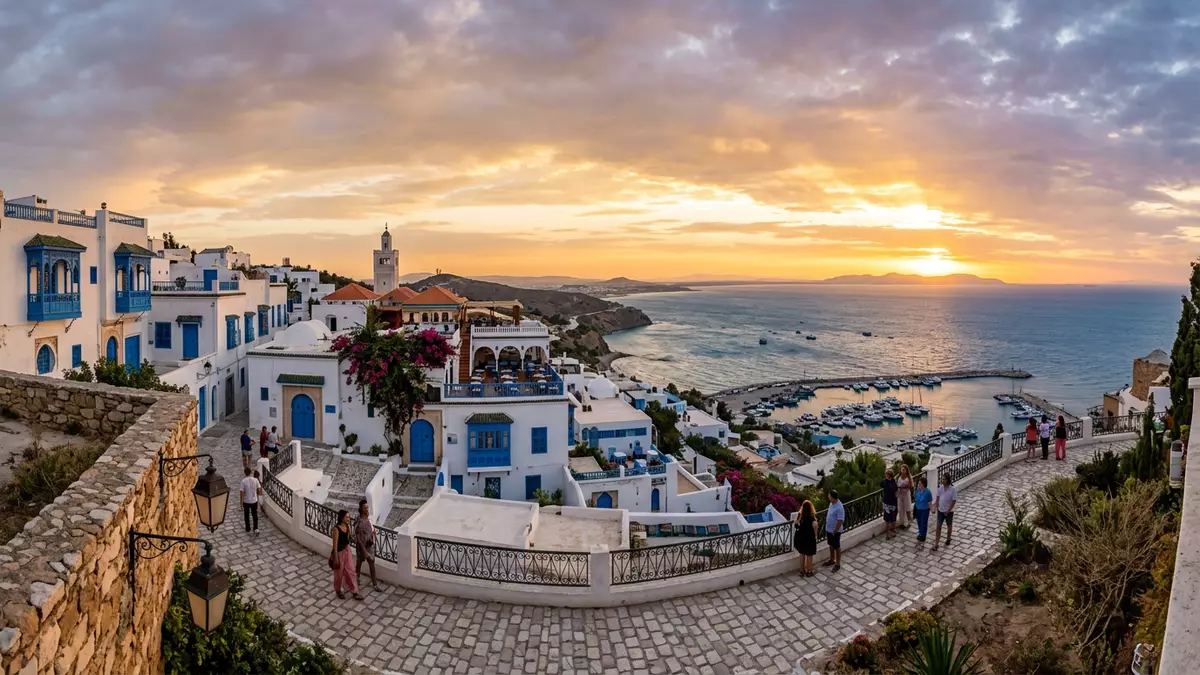
UNESCO World Heritage inscription was marked at Sidi Bou Saïd in Tunis on 25 September 2026, with a ceremony at the Baron d’Erlanger Palace. The Tunisian village, also known locally as Sidi Bou Saïd, had been added to the list during the World Heritage Committee’s July session.
The recognition concerns the inhabited village and its setting above the Mediterranean, rather than a single monument. For travellers from Western Europe, the change is chiefly a new heritage designation for a place that remains a living urban area.
World Heritage inscription marked at Sidi Bou Saïd
The ceremony followed the official handover of Tunisia’s World Heritage certificate in Paris on 24 September. Business News reported that Culture Minister Amina Srarfi led the gathering at the Baron d’Erlanger Palace, with representatives of Tunisia’s National Heritage Institute, the governor of Tunis and ambassadors present.
The World Heritage Committee had adopted the inscription by consensus on 25 July 2026 in Busan, South Korea. UNESCO gives the property the title Village of Sidi Bou Saïd and describes it as a centre of cultural and spiritual inspiration in the Mediterranean. The 25 September ceremony at the palace was reported the following day.
UNESCO links Sidi Bou Saïd to landscape and spirituality
UNESCO places the village on a promontory overlooking the Mediterranean and says its buildings and urban planning are integrated with the cliff topography. Its character combines geomorphology, architecture and spirituality, including traditions associated with a Sufi master who lived in the twelfth and thirteenth centuries.
The inscription therefore connects the white-and-blue streets with the wider hillside and its cultural history. That relationship gives the 25 September ceremony a specific setting: it took place at the Baron d’Erlanger Palace, itself one of the village’s named cultural landmarks, rather than at a separate conference venue. UNESCO’s description of the property identifies the village’s position, topography and spiritual history.
The palace is also known as Ennejma Ezzahra, the Centre of Arab and Mediterranean Music. Tunisia’s cultural music centre states that the building was listed as a historic monument by decree in 1989, and that it stands within a protected district. The palace’s protected status helps explain its use for the recognition ceremony.
Visiting Sidi Bou Saïd: what travellers from Western Europe should know
- The World Heritage ceremony took place on 25 September 2026 at the Baron d’Erlanger Palace, also known as Ennejma Ezzahra.
- The UNESCO inscription changes the site’s heritage status, but the ceremony itself has ended; no special visitor access was announced in the cited programme.
- Sidi Bou Saïd is north of Tunis on a Mediterranean promontory. The TGM railway links Tunis with La Goulette, Carthage, Sidi Bou Saïd and La Marsa.
- The village occupies a hillside setting, with streets, buildings and natural terrain integrated into the landscape. Visitors should expect slopes and uneven urban routes.
- Tunisia’s official language is Arabic, and its national currency is the Tunisian dinar.
- Entry requirements depend on your nationality; UK travellers can check the FCDO travel advice at gov.uk/foreign-travel-advice, Irish travellers the Department of Foreign Affairs at ireland.ie.
Searching for Sidi Bou Saïd on social platforms
These links open searches for Sidi Bou Saïd on each platform.
Frequently asked questions about Sidi Bou Saïd
When did the World Heritage ceremony take place at Sidi Bou Saïd?
The ceremony took place on 25 September 2026 at the Baron d’Erlanger Palace in the village.
What is Sidi Bou Saïd?
It is a Tunisian Mediterranean village on a promontory, recognised by UNESCO for its architecture, landscape and spiritual heritage.
Where is Sidi Bou Saïd and how do you get there?
The village is north of Tunis and is served by the TGM railway, which connects it with Tunis, Carthage, La Goulette and La Marsa.


