
Ueno Koen: Tokyo’s park of museums, cherry trees and water
Published on 09/12/2026 at 20:58 | Editorial responsibility: Rafael Müller, Editor-in-Chief AD HOC NEWS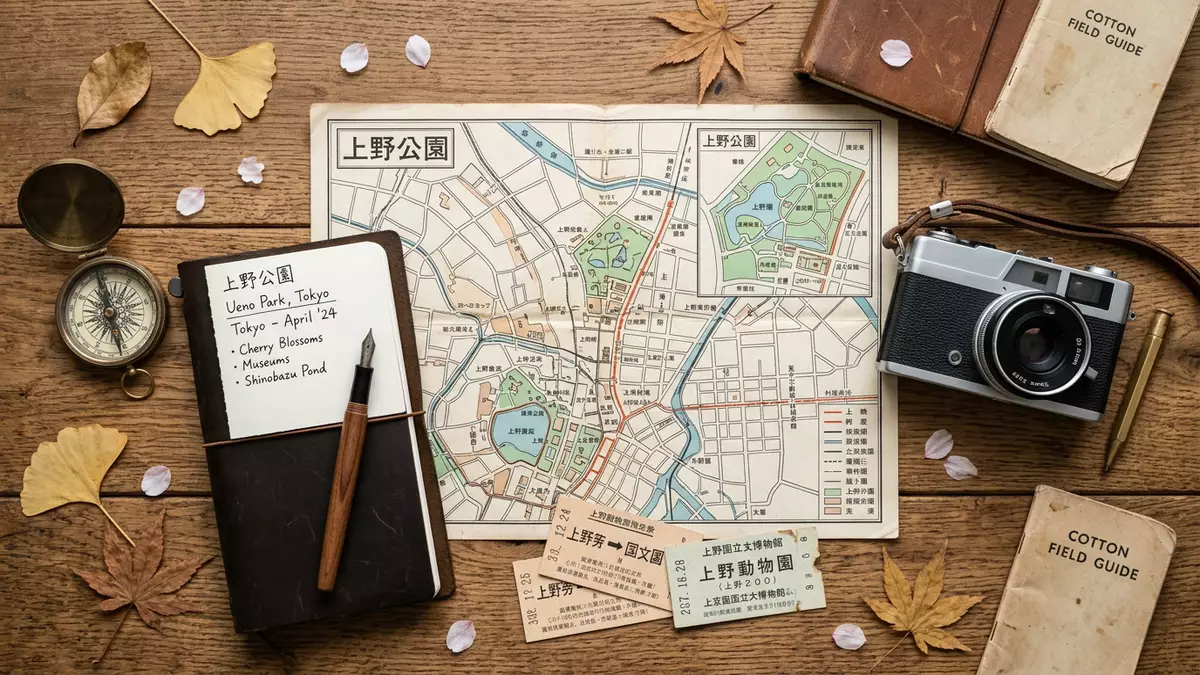
Ueno Koen, known in English as Ueno Park, spreads over a rise in Tokio where temple precincts became one of Japan’s earliest public parks in the nineteenth century. Created in 1873 during the Meiji era on former Kan’eiji temple land, it combines avenues of cherry trees, museum terraces and the waters of Shinobazu Pond in a single city landscape.
From Kan’eiji temple grounds to Meiji-era public park
The ground beneath Ueno Koen once belonged to Kan’eiji, a Tendai Buddhist temple that developed across the height known as Mount Ueno in the Edo period.Kan’eiji temple was founded in the early seventeenth century by the monk Tenkai, supported by Tokugawa shoguns during the time when Edo grew as the seat of power.monk Tenkai In 1868 fighting during the Battle of Ueno destroyed many of the temple buildings, leaving a plateau that the new government reimagined as parkland.
Ueno Koen was established as a public park in 1873, part of a Meiji-era programme that introduced Western-style parks to the capital.established in 1873 It is widely recorded as Japan’s first public park, and became a venue for Domestic Industrial Expositions in 1877, 1881 and 1890 that presented industry and technology to visitors.Domestic Industrial Expositions The park’s official designation as Ueno Onshi-Koen, meaning an imperial gift park, dates from a transfer of administration to Tokyo City in 1924, linking its name to imperial patronage while keeping it open as metropolitan green space.Ueno Onshi-Koen name
Cherry trees, avenues and water across the plateau
Walking through Ueno Koen, the most immediate impression is the park’s broad paths lined with cherry trees, which follow the rise of the land from Ueno Station towards Shinobazu Pond. The tradition of hanami — admiring cherry blossoms — on this hill dates back to the planting of trees by Tokugawa Iemitsu, the third Tokugawa shogun, in the seventeenth century.cherry trees from Yoshino In the flowering season the paths form continuous bands of pale colour above the stone and gravel surfaces.
On the western side of the park, Shinobazu Pond introduces water into the composition of Ueno Koen. Around the pond edge stand Bentendo, a hall dedicated to Benzaiten, and causeways that connect dry land with the central island.Shinobazu Pond and Bentendo In places lotus plants cover broad sections of the water, creating a thick carpet of leaves in warmer months. The relationship between the raised park plateau, the pond and the surrounding streets of Taito ward gives Ueno Koen a varied topography within a relatively compact area.
Ueno Koen as a museum and cultural district
Ueno Koen is closely associated with its museums, which stand in a cluster along the main promenade and surrounding squares. The Tokyo National Museum occupies a prominent position, presenting Japanese art and archaeology in buildings that look out over lawns and paths.Tokyo National Museum Nearby, the National Museum of Western Art adds galleries devoted to European painting and sculpture, while the National Science Museum and Tokyo Metropolitan Art Museum provide further exhibition spaces and lecture halls.
Animals form another element of Ueno Koen through Ueno Zoo, which opened in the 1880s and is described as Japan’s first zoological garden.Japan’s first zoological garden Within the wider park, statues and memorials mark figures from the Meiji era and beyond, including a bronze statue of Saigo Takamori erected in 1898 that stands near one of the main promenades.Saigo Takamori statue The presence of Tokyo University of the Arts and other cultural institutions around the park’s edges reinforces Ueno Koen’s character as a district where education, exhibition spaces and outdoor recreation share the same ground.
Visiting Ueno Koen: what travellers from Western Europe should know
- Ueno Koen lies in Taito ward in north-eastern Tokio, directly beside JR Ueno Station on the Yamanote Line and other railway services that cross the city.
- The park rises gently above surrounding streets, with long pedestrian avenues, flights of stone steps between levels and paved routes around Shinobazu Pond that involve walking on firm surfaces.
- Within the grounds, the Tokyo National Museum, National Museum of Western Art, National Science Museum and Ueno Zoo stand within walking distance of one another, so a visit can combine outdoor paths with time inside galleries and animal enclosures.
- The official language is Japanese and the currency is the yen.
- Entry requirements depend on your nationality; UK travellers can check the FCDO travel advice at gov.uk/foreign-travel-advice, Irish travellers the Department of Foreign Affairs at ireland.ie.
Searching for Ueno Koen on social platforms
These links open searches for Ueno Koen on each platform.
Frequently asked questions about Ueno Koen
Where is Ueno Koen in Tokio?
Ueno Koen is in Taito ward in north-eastern Tokio, on a hill immediately beside JR Ueno Station and close to the old downtown districts.
What can visitors expect on a visit to Ueno Koen?
Visitors encounter tree-lined promenades, museums, Ueno Zoo, statues, shrines and Shinobazu Pond, with paths that link cultural buildings and waterside areas across the park.
What makes Ueno Koen distinctive among Tokio’s parks?
Ueno Koen combines Meiji-era public park origins with a concentration of national museums, zoo grounds and historic cherry tree avenues on land that once formed a major temple precinct.


