
Ueno Koen, Tokyo’s historic park of museums and cherry trees
Published on 08/20/2026 at 21:51 | Editorial responsibility: Rafael Müller, Editor-in-Chief AD HOC NEWS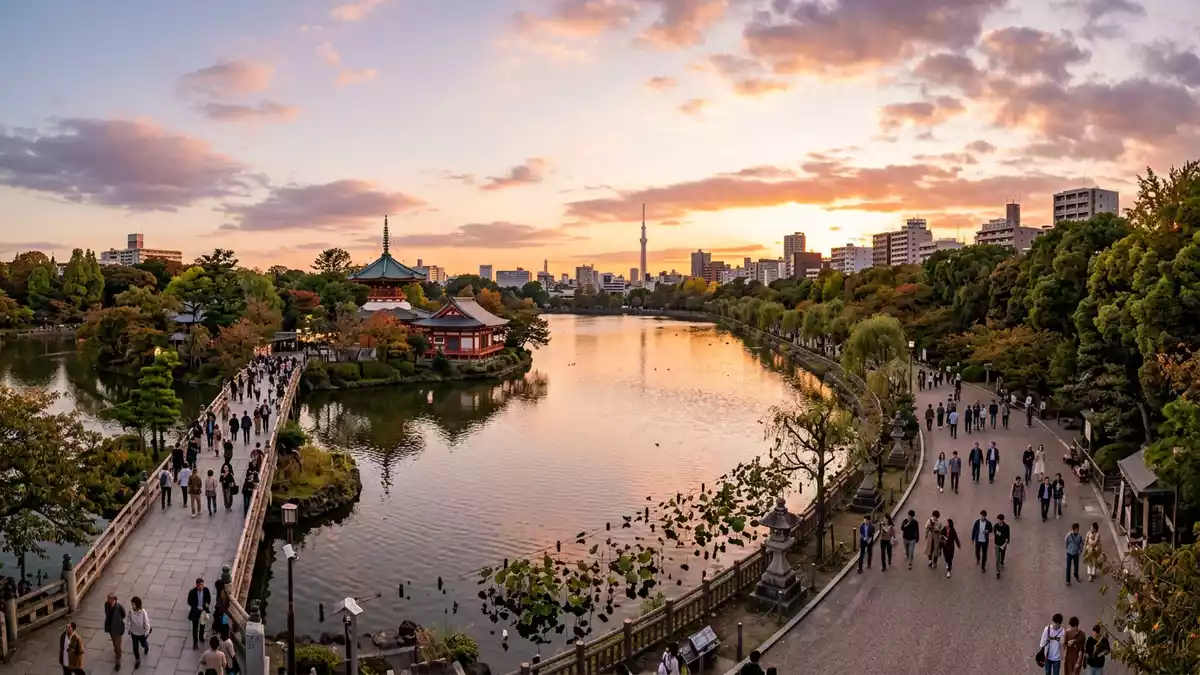
Ueno Koen in Tokio is a wide expanse of greenery and cultural institutions on a plateau above the city’s older districts, known for its long avenues of cherry trees and dense cluster of museums. Created in the nineteenth century on land that had belonged to the Buddhist temple Kan’eiji, it became one of Japan’s earliest public parks and a showcase of the Meiji era’s engagement with Western-style urban spaces.Ueno Park was established in 1873
From temple plateau to Meiji-era public park
The ground that holds Ueno Koen once formed the precincts of the temple Kan’eiji, a major religious complex of the Edo period that served the Tokugawa shogunate as a family temple and spiritual protection for the city. The transformation from temple lands to civic park followed the turmoil of the Boshin Civil War, during which many of the temple buildings were destroyed in the Battle of Ueno in 1868.Kaneiji Temple once occupied the area
In 1873 the Meiji government designated the plateau as a public park, part of a wider effort to introduce Western-style institutions into the capital. Three years later, on 9 May 1876, Emperor Meiji attended an official opening ceremony, underlining the status of Ueno Koen as a national space for gatherings and exhibitions.The park’s opening ceremony in 1876 marked its new role In the decades that followed, it hosted domestic industrial expositions, receptions for foreign dignitaries and large-scale events that linked the new park to Japan’s modernising economy and international contacts.Meiji-era expositions were held on the grounds
A plateau of museums, zoo and monuments
Walking through Ueno Koen today reveals how the park became a concentration point for national institutions. The Tokyo National Museum stands near one edge, holding extensive collections of Japanese art and archaeology in buildings that look out across lawns and paths.Tokyo National Museum is one of several museums in the park Nearby, the National Museum of Western Art introduces European painting and sculpture, while the National Science Museum explores natural history and technology. Together, these museums turn the park into a place where visitors can move between galleries and open air without leaving the same district.
On another part of the grounds lies Ueno Zoo, Japan’s first zoological garden, with enclosures arranged on terraces above and below the main pathways.Ueno Zoo opened as Japan’s first zoo Monuments and statues punctuate the routes through the trees, including a bronze statue of Saig? Takamori, a central figure of the Meiji Restoration whose likeness in hunting attire has become a recognised feature of the park landscape.The statue of Saigo Takamori dates from 1898 Cultural venues such as Tokyo University of the Arts and exhibition halls add further layers, so that arts education, display and leisure share the same ground.Tokyo University of the Arts stands within the park area
Cherry trees, Shinobazu Pond and seasonal park life
Ueno Koen is also a landscape of water and trees. Cherry trees line many of the main paths, creating extended corridors of blossom in spring and green shade later in the year. The tradition of viewing cherry blossoms on this plateau reaches back to the seventeenth century, when the monk Tenkai, founder of Kan’eiji, arranged for cherry trees from Yoshino to be planted on the temple heights, embedding seasonal flower viewing in the urban calendar.Cherry trees from Yoshino were planted here
On the park’s lower side lies Shinobazu Pond, a broad body of water divided into areas that include lotus-covered sections and open stretches. Paths and bridges reach small islands, some carrying shrines, allowing visitors to cross between water and land with views back to the museums and trees above.Shinobazu Pond forms part of the park landscape The surrounding streets belong to Tokyo’s shitamachi, the “old heart of town”, so that traditional shopping streets and transport hubs sit just beyond the park’s edges.Ueno Park lies within the Ueno shitamachi area
Visiting Ueno Koen: what travellers from Western Europe should know
- Ueno Koen lies in the Ueno district of Tokio, north of the Imperial Palace area, and is reached by rail at Ueno Station on major JR lines and the Tokyo Metro.
- The park itself sits on a raised plateau above nearby streets, with broad paths, stairways and gentle slopes, and some routes around Shinobazu Pond involving longer walks on level ground.
- English is not an official language in Japan, and the national currency is the Japanese yen.
- Entry requirements depend on your nationality; UK travellers can check the FCDO travel advice at gov.uk/foreign-travel-advice, Irish travellers the Department of Foreign Affairs at ireland.ie.
Searching for Ueno Koen on social platforms
These links open searches for Ueno Koen on each platform.
Frequently asked questions about Ueno Koen
Where is Ueno Koen in Tokio?
Ueno Koen is a metropolitan park in the Ueno district of Tokio, on a plateau near Ueno Station and close to the city’s older downtown neighbourhoods.
What can visitors expect on a visit to Ueno Koen?
Visitors encounter broad parkland with cherry-lined paths, major museums, Ueno Zoo, shrines and monuments, as well as walks by Shinobazu Pond and views into surrounding streets.
What makes Ueno Koen distinctive among Tokio’s parks?
Its combination of Meiji-era public park history, dense concentration of national museums, longstanding cherry-blossom viewing traditions and temple-related origins give Ueno Koen a layered character.


