Tsodilo Hills and Botswana’s quartzite hills
Published on 09/09/2026 at 12:52 | Editorial responsibility: Rafael Müller, Editor-in-Chief AD HOC NEWS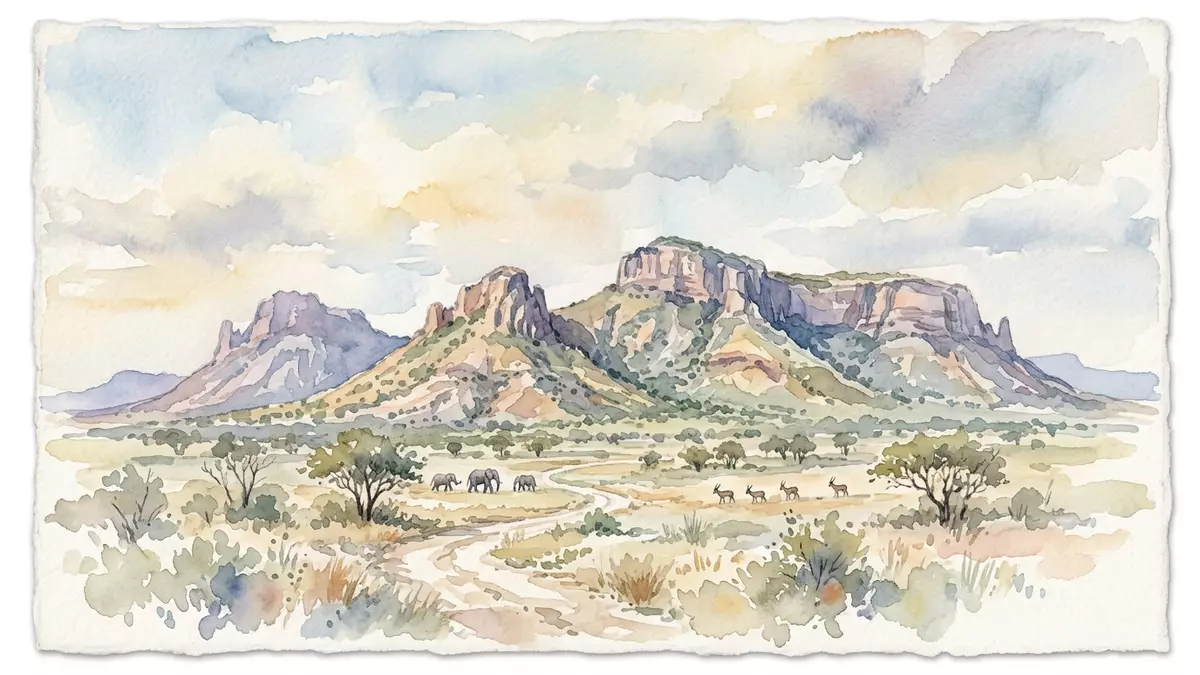
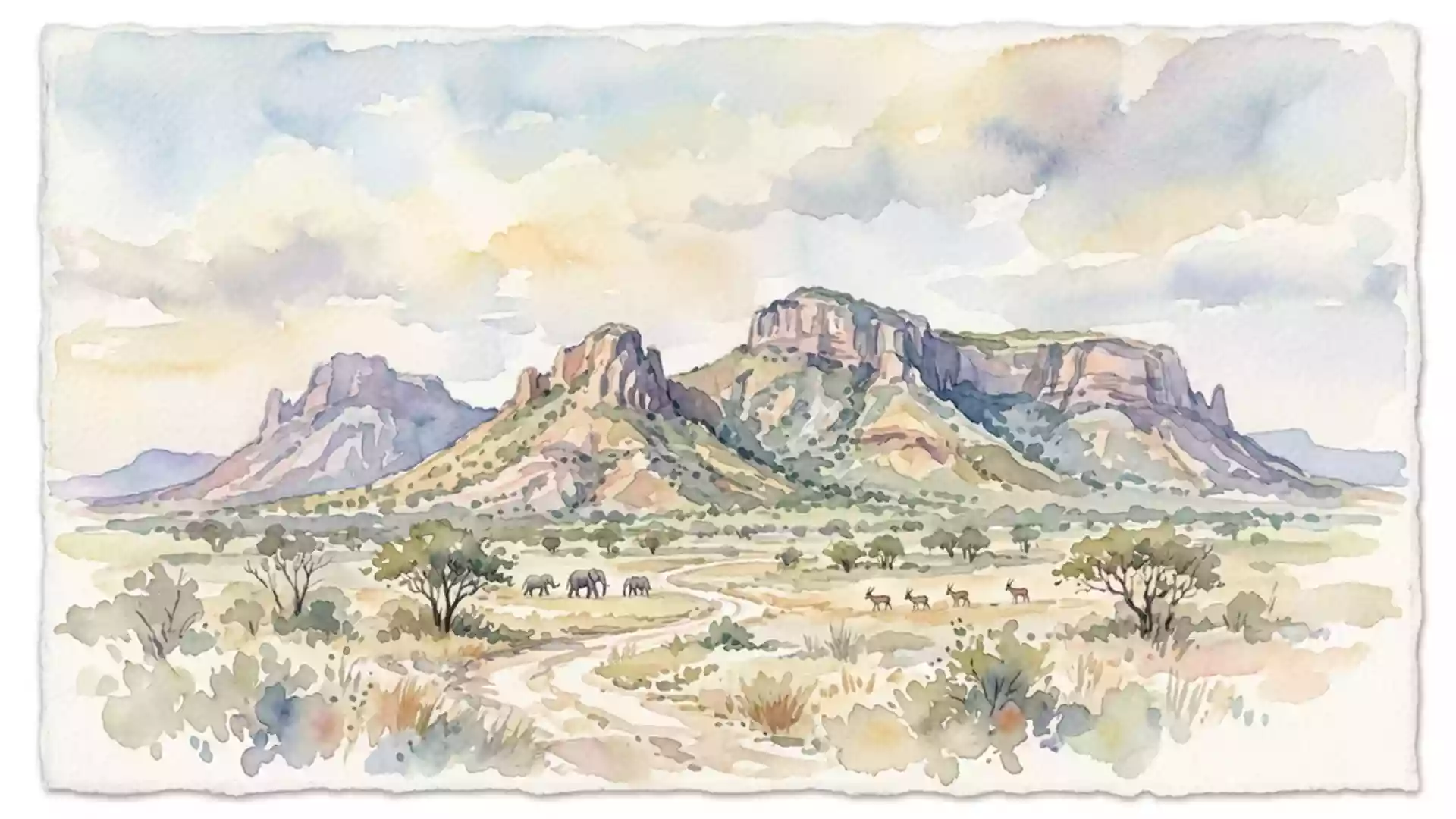
Tsodilo Hills rises in north-west Botswana near Shakawe, a cluster of quartzite outcrops set against Kalahari sand. It is a UNESCO World Heritage Site, and its hills carry rock art, shelters and caves across the landscape.
Quartzite outcrops in the Kalahari
The hills stand apart as a small group of rocky masses in a dry, open setting. Their main names are Male, Female, Child and North Hill, and the site is known for rock art on all four.
The rock itself is part of the attraction: pale quartzite surfaces, ledges and overhangs create a rugged profile. The settlement and ritual history of the place reaches back across millennia, and the hills have remained tied to San and Hambukushu traditions.
Rock art, shelters and named hills
Tsodilo Hills has one of Africa’s densest concentrations of rock paintings, with thousands of images distributed across shelters and exposed surfaces. The artworks range across long periods, and some panels preserve human figures, animals and abstract forms.
The British Museum’s African Rock Art record and UNESCO’s site description both place the hills within a broader archaeological landscape, not a single painted wall. That breadth matters: the hills combine image, geology and ritual space in one terrain.
UNESCO status and a layered past
The site was inscribed on the World Heritage List in 2001, and that status reflects both its art and its long record of human presence. The hills are linked with evidence of occupation stretching back tens of thousands of years, along with later farming and mining traces.
What remains visible is a landscape of stone and image rather than a reconstructed monument. Male, Female, Child and North Hill form a named group whose surfaces carry traces from different periods and different communities.
Visiting Tsodilo Hills: what travellers from Western Europe should know
- The hills lie west of Shakawe in north-west Botswana, near the Namibian border. Road access runs through the region around Shakawe.
- The terrain is rocky and uneven, with quartzite surfaces, ledges and exposed slopes. The hills rise from flat sand and fossil lake-bed country.
- The site includes a museum and campsite facilities. The hills themselves remain the main focus of the visit.
- Male, Female, Child and North Hill are the names used for the main hills. Those names appear across the site and in the interpretation of the landscape.
Searching for Tsodilo Hills on social platforms
These links open searches for Tsodilo Hills on each platform.
Frequently asked questions about Tsodilo Hills
Where are Tsodilo Hills?
The hills are in north-west Botswana near Shakawe, close to the Namibian border. They rise from the Kalahari as a compact cluster of quartzite outcrops.
What does a visit involve?
Visitors encounter rocky slopes, shelters and painted surfaces spread through a wide archaeological landscape. The site also includes a museum and campsite facilities.
What makes Tsodilo Hills distinctive?
The combination of quartzite hills, rock art and long human history gives the place its character. Male, Female, Child and North Hill form a named landscape with paintings and traces from different periods.
UNESCO World Heritage Site
quartzite outcrops in the Kalahari
rock art on all four
UNESCO World Heritage Siterock art on all four