
Trinidad’s cobbled streets and sugar-era houses
Published on 09/23/2026 at 10:36 | Editorial responsibility: Rafael Müller, Editor-in-Chief AD HOC NEWS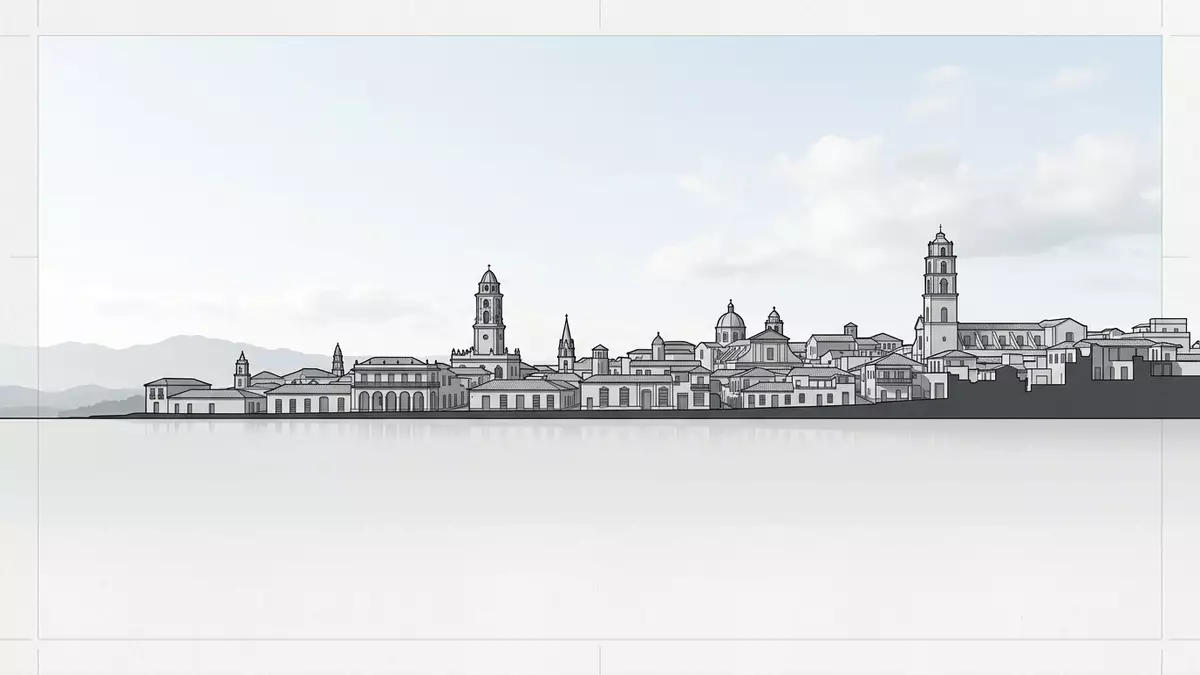
Trinidad is a Cuban town where cobbled streets, pastel façades and tiled roofs form a continuous historic scene. Founded in the early sixteenth century, it grew around Plaza Mayor and the sugar economy of the nearby Valle de los Ingenios.
Trinidad around Plaza Mayor
The historic centre lies in Sancti Spíritus Province on Cuba’s southern coast. Its compact streets gather around Plaza Mayor, a formal square with gardens, palms, statues and a low balustrade.
The square is framed by churches, museums and former residences. The campanile of the Convento de San Francisco rises above the townscape, while the Iglesia de la Santísima Trinidad faces the square with its late nineteenth-century structure.
Colonial houses in wood, clay and lime
Trinidad’s architecture combines modest domestic buildings with elaborate mansions. Traditional materials include lime mortar, timber, terracotta roof tiles and cobbles, producing a closely related palette across the old town.
Early eighteenth-century houses carry Andalusian and Moorish influences. Nineteenth-century buildings introduce European neoclassical forms, while courtyards, shutters, balconies and thick masonry walls remain part of the Cuban domestic pattern. The 37-hectare historic centre preserves this mixture within an irregular network of squares and lanes.
Palacio Brunet, also known as the Museo Romántico, occupies a former residence associated with Trinidad’s wealthy sugar families. Its rooms contain colonial furniture and decorative details. Palacio Cantero houses the municipal history museum in a neoclassical building overlooking Plaza Mayor.
From sugar wealth to World Heritage
Trinidad was founded in 1514 by Diego Velázquez de Cuéllar under the name Villa de la Santísima Trinidad. Its importance changed during the eighteenth and nineteenth centuries, when sugar production expanded in the surrounding valleys.
The Valle de los Ingenios contains former mills, plantation houses, barracks, roads and archaeological remains. At the industry’s peak, more than fifty sugar mills operated in the valley, whose history also records the enslavement of African people.
Trinidad and the Valley de los Ingenios entered the World Heritage List in 1988. The designation joins the urban centre with the rural landscape, linking mansions and plazas in town to the agricultural and industrial remains beyond it.
The combined site covers the town’s architectural fabric and a much larger valley. UNESCO records the valley as a landscape associated with seventy-five former sugar mills and related facilities, while Trinidad preserves the domestic and civic architecture of the period. World Heritage details
Visiting Trinidad: what travellers from Western Europe should know
- Trinidad lies in central Cuba’s Sancti Spíritus Province, on the southern coast. Road travel connects the town with Sancti Spíritus, the Valle de los Ingenios and the Sierra del Escambray.
- The historic centre is explored on foot over uneven cobbles. Streets around Plaza Mayor include slopes, narrow pavements and changing surfaces.
- The Valle de los Ingenios lies northeast of Trinidad. Its rural landscape contains former sugar estates, mill remains, plantation houses and the Manaca-Iznaga tower.
- The official language is Spanish and the currency is the Cuban peso.
Searching for Trinidad on social platforms
These links open searches for Trinidad on each platform.
Frequently asked questions about Trinidad
Where is Trinidad?
Trinidad is in Sancti Spíritus Province on Cuba’s southern coast. Its historic centre sits near the Valle de los Ingenios and the Sierra del Escambray.
What can visitors expect in the historic centre?
Visitors find cobbled streets, pastel houses, churches, former mansions, courtyards and museums clustered around Plaza Mayor. Walking involves uneven surfaces and sloping streets.
What makes Trinidad distinctive?
Trinidad connects an intact colonial townscape with the sugar landscape of the Valle de los Ingenios. The combined cultural property has been listed as a World Heritage Site since 1988.


